Top Korean Niacinamide Ampoules for Dark Spots 2026
10% niacinamide plus 4% TXA is the 2026 brightening pair to watch, with clinical PIH data and Korean serum picks for dark spots.
Key takeaways
- The most evidence-backed 2026 dark spot pairing in this category is 10% niacinamide with 3% to 4% tranexamic acid.
- A clinical evaluation found 10% niacinamide plus 3% to 4% tranexamic acid reduced PIH color intensity by 13% in eight weeks.
- Anua’s formula adds ceramides, hyaluronic acid, and polyglutamic acid for discoloration, comfort, and dryness support.
The State of Korean Niacinamide Serums in 2026
Korean niacinamide serums in 2026 are judged by active transparency, brightener pairing, tolerability, and price accessibility.
The category has moved away from vague “glow” claims and toward formulas that name active percentages. For dark spots, the practical shopping question is no longer just “does it contain niacinamide?” It is “what percentage is used, what is it paired with, and can my skin tolerate it for eight to twelve weeks?”
Two price signals matter. Anua and COSRX are both grouped among budget-friendly Korean skincare brands in the 2026 market landscape, while premium Korean serums are increasingly appearing in the USD 20 to USD 25 range (Biodance, 2026). That makes the category more competitive: shoppers can now compare higher-active formulas without jumping into prestige pricing.
In K-beauty, the choice between formats often depends on the specific formulation rather than the category label alone. For shoppers comparing popular Korean niacinamide products in 2026, the strongest buying criteria center on active transparency and price accessibility.
The primary buying considerations include:
- A disclosed niacinamide level
- A texture that allows for easy layering in a daily routine
- A price point that supports consistent use for at least one full fading cycle
The Niacinamide TXA Serum for Brightening and Dark Spots reflects these market priorities, offering transparency within an accessible price range.
How Niacinamide and Tranexamic Acid Tackle Dark Spots
Niacinamide and tranexamic acid target discoloration, making the pairing useful for post-blemish marks.
Niacinamide is used in skincare for its effect on skin tone. Tranexamic acid, often shortened to TXA, is used topically in brightening formulas because it helps address excess pigment appearance. For post-inflammatory hyperpigmentation, the value of the pairing is supported by clinical observation.
The strongest clinical anchor in the supplied research is an evaluation of a 10% niacinamide and 3% to 4% tranexamic acid blend. The study reported a 13% reduction in PIH color intensity and a 6% reduction in the total area of dark spots after eight weeks of consistent use (MDPI, 2024).
That matters because many dark spot routines fail for two reasons: the active is too mild for the concern, or the routine is too irritating to continue. A high-active formula needs enough supporting ingredients to keep regular use realistic.
Safety is also part of the 2026 search conversation, especially around pregnancy, clotting concerns, and sensitive skin. The same clinical source reports that topical tranexamic acid at 3% to 4% showed no detectable systemic absorption (MDPI, 2024). That distinction is important because the clotting concerns commonly associated with tranexamic acid relate to oral medication use, not the topical exposure described in that evaluation.
Still, sensitive users should treat a 10% niacinamide formula as an active step, not a casual hydrating toner. Patch testing is sensible, and high-percentage actives are usually better introduced every other night before daily use.
Spotlight Formula: Anua Niacinamide TXA Serum
Anua’s serum is a focused dark spot pick with added arbutin and barrier support.
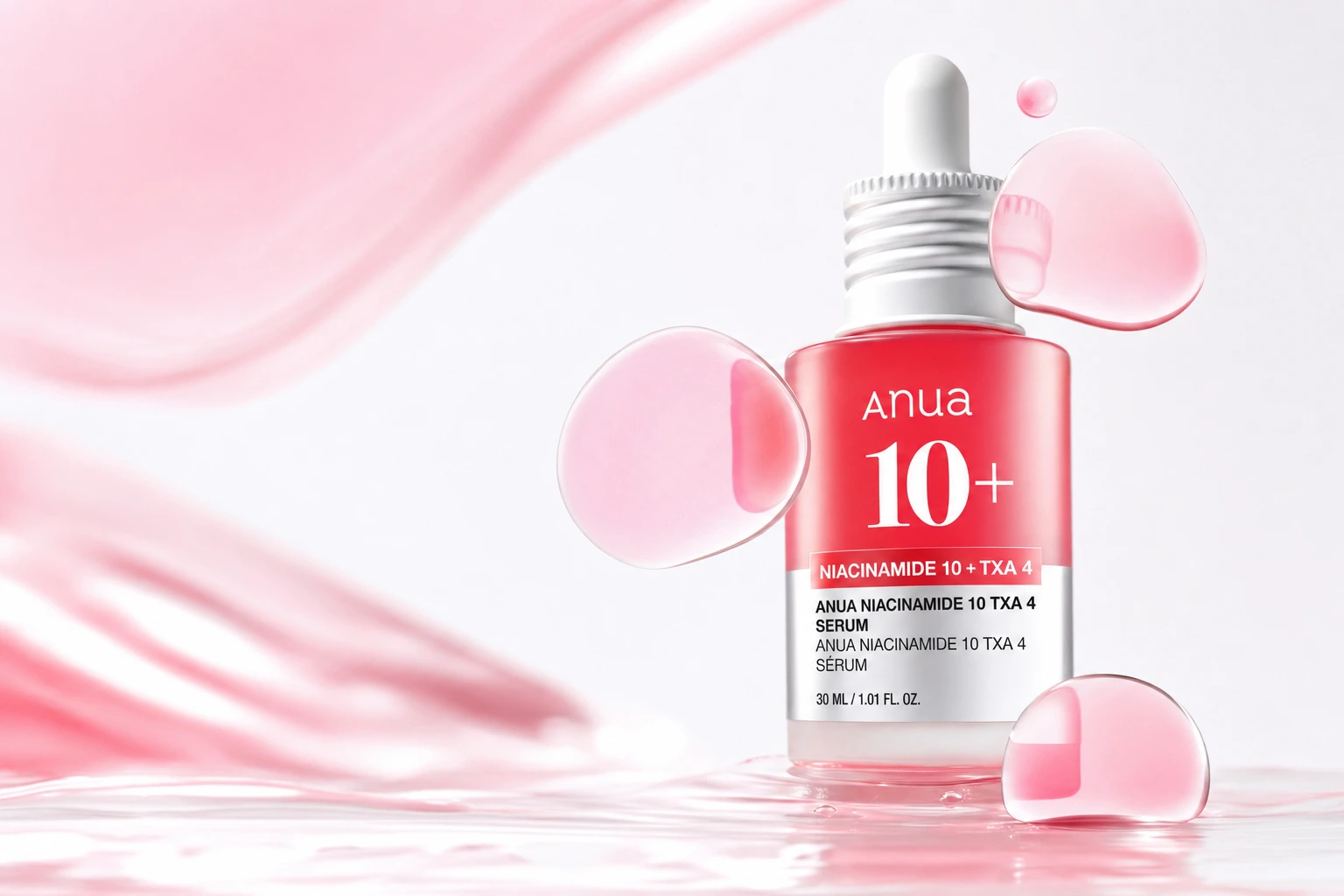
For shoppers prioritizing post-blemish marks, sun spots, or uneven tone, Niacinamide TXA Serum for Brightening and Dark Spots is the Anua formula to consider first. It combines targeted ingredients for skin tone improvement.
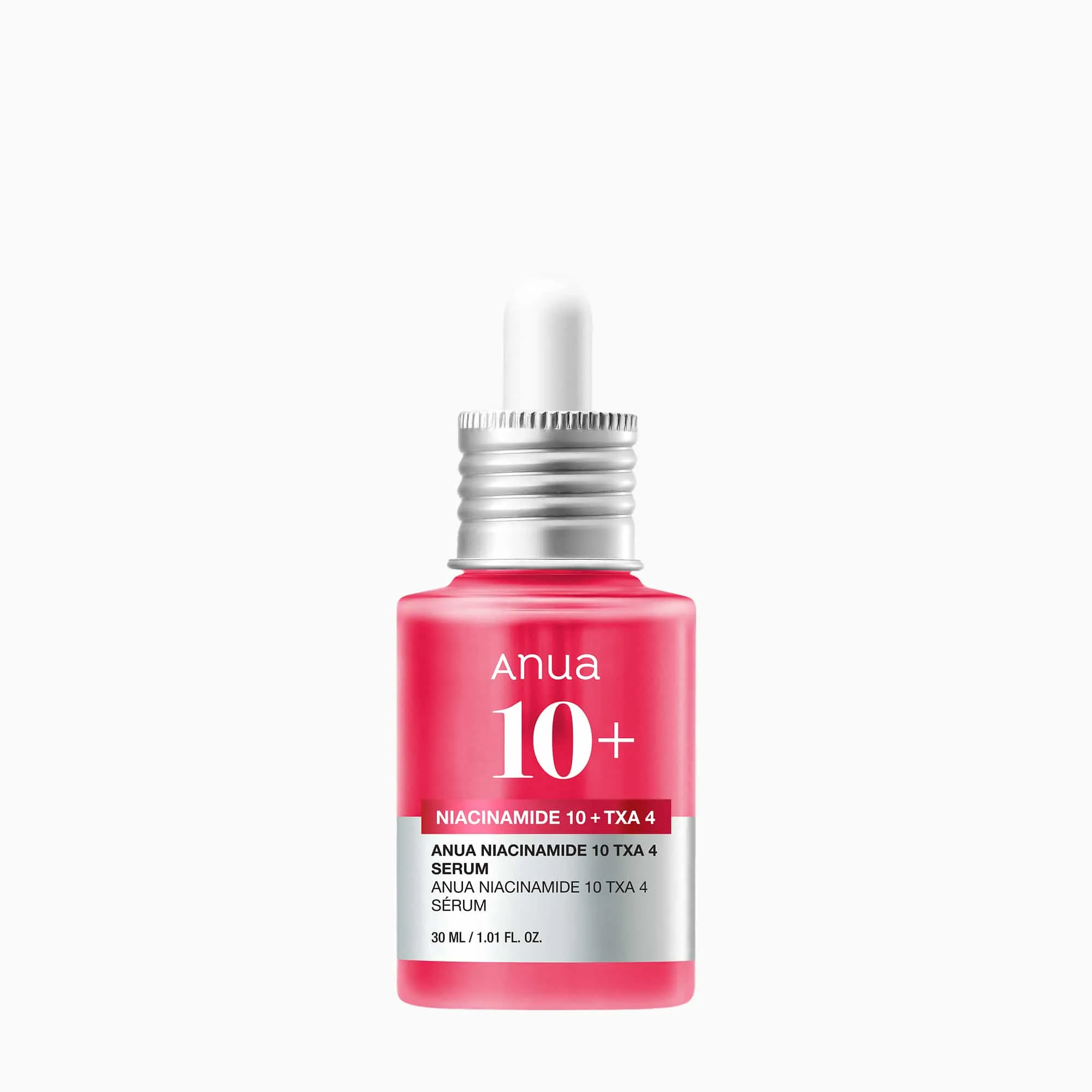
Niacinamide 10 TXA 4 Serum for Brightening and Dark Spots
A 30 ml serum formulated with niacinamide and TXA, designed to look more radiant and balanced.
The formulation is especially relevant for stubborn discoloration because it supports an approach to melanin-related uneven tone. For shoppers with deeper post-blemish marks, that combination is more targeted than a simple low-dose niacinamide product.
The formula also includes ceramides and hyaluronic acid, which helps explain why it is positioned as a high-active serum rather than a harsh spot treatment. Ceramides help mitigate irritation, while hyaluronic acid helps with water-binding comfort. Polyglutamic acid is another hydration-supporting ingredient in the formula, making the serum a better fit for dry indoor environments than a stripped-down brightening active.
Use it where it belongs in a routine: after cleansing and watery toner or essence, before moisturizer, and always before daytime sunscreen. The goal is steady use, not aggressive overuse. Applying too much of a high-active serum does not make pigment fade proportionally faster, and it can raise the chance of stinging or barrier stress.
Ampoule vs Essence vs Serum for Dark Spots
The choice between formats often depends on the specific formula rather than the name on the bottle. The more reliable test is looking for active ingredients, supporting components, and a texture that can be used consistently.
For dark spots, the most practical routine does not require every category of treatment. Instead, users often prioritize layering a targeted treatment with a reliable moisturizer and daily sunscreen. This approach focuses on consistency and protection rather than the total number of steps in a routine.
A shopper choosing between an ampoule and an essence should ask four questions:
- Is the main goal fading existing spots or maintaining general radiance?
- Does the formula disclose niacinamide or tranexamic acid percentages?
- Does the texture layer cleanly under moisturizer and SPF?
- Can the product be used consistently for at least eight weeks?
If the answer to the first question is “fading existing marks,” a focused ampoule or serum is usually the better category. If the answer is “my skin looks dull and dry,” a niacinamide essence or ferment essence may be the more comfortable first step.
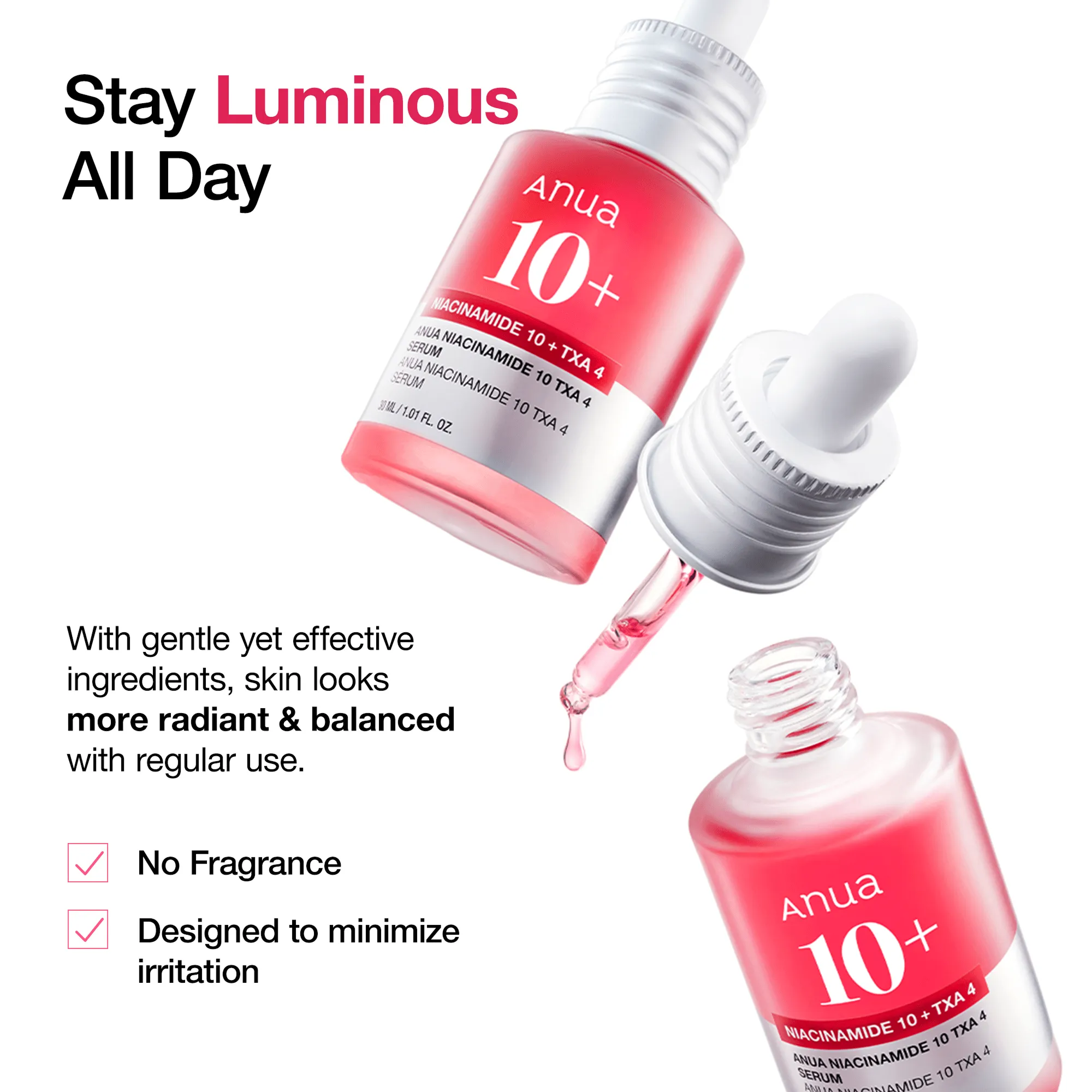
Korean Niacinamide Picks for 2026
The best 2026 shortlist favors disclosed ingredient levels, complementary brighteners, and textures users can keep using.
A targeted approach is often the most effective for addressing discoloration.
The Niacinamide TXA Serum for Brightening and Dark Spots is a primary option for this goal because its blend of niacinamide and tranexamic acid maps to clinical evidence on PIH improvement. When selecting a product, the most important factor is finding an active level that matches the skin concern while ensuring the formula remains comfortable for daily use.
The takeaway is simple: choose the active level for the mark you are treating. Early dullness can respond well to lower-strength niacinamide or ferment-led formulas. Persistent PIH usually calls for a more targeted pairing such as niacinamide with tranexamic acid, used patiently and protected with sunscreen.
Layering Ampoules for Maximum Barrier Support
Potent niacinamide ampoules work best when layered with hydration first and sealed with a barrier-supporting moisturizer.
A dark spot routine should not feel like a punishment. If skin becomes tight, flaky, or stings every time the treatment is applied, consistency usually drops. That is why layering strategy matters as much as the active percentage.
For indoor AC dryness, the research points to layering the Anua ampoule under a ceramide-rich moisturizer as a recommended routine. This makes sense because the Niacinamide TXA Serum for Brightening and Dark Spots already includes hydration-supporting ingredients such as hyaluronic acid and polyglutamic acid, while a moisturizer helps reduce water loss.
A practical evening order looks like this:
- Apply a thin layer of Niacinamide TXA Serum for Brightening and Dark Spots to the skin.
- Follow with a ceramide-rich moisturizer, especially in dry indoor air.
- Use sunscreen every morning to protect the results and maintain the fading timeline.
Ferment layering can also be useful as a supportive step, particularly for those whose skin becomes reactive when strong actives are applied directly after cleansing. A daily essence can help prep the skin barrier for later treatment steps.
For post-procedure or recently irritated skin, be more conservative. After microneedling, facial waxing, or visible barrier disruption, high-percentage actives can sting. A cautious approach is to wait 24 to 48 hours and restart only when the skin no longer feels hot, raw, or tender.
Fading Timelines and the Critical Role of Sun Protection
Dark spot routines need eight to twelve weeks, and UV exposure can restart the fading timeline even with strong actives.
Hyperpigmentation is slow because visible pigment changes depend on skin turnover, inflammation control, and prevention of new darkening. Anua’s guide notes that initial brightening may often be seen around week 4, while the full clinical cycle for hyperpigmentation treatment is typically 8 to 12 weeks (Anua, 2026).
The eight-week clinical data should be read in that context. The 13% PIH intensity reduction and 6% spot-area reduction reported for a 10% niacinamide and 3% to 4% tranexamic acid blend happened after consistent use, not after a few applications (MDPI).
Sunscreen is the non-negotiable step. UV exposure can reset the 8-to-12-week fading timeline achieved by tranexamic acid and niacinamide (Anua, 2026). For daytime, use broad-spectrum SPF 50, apply enough to cover the face and neck, and reapply when outdoors or sweating.
A realistic progress plan looks like this:
- Week 1 to 2: check for stinging, dryness, or breakouts before increasing frequency
- Week 3 to 4: look for early brightness and less dullness, not full spot clearance
- Week 5 to 8: assess visible PIH intensity and spot edges under the same lighting
- Week 9 to 12: decide whether to continue, adjust frequency, or simplify if irritated
Take progress photos in consistent light once every two weeks. Daily mirror checks make small changes harder to judge and can encourage overuse.
Who Should Choose 5% vs 10% Niacinamide?
Choose 5% niacinamide for maintenance or sensitivity, and 10% for persistent marks if your barrier tolerates actives.
The choice should be based on both the discoloration and the skin condition around it. A stronger serum is not automatically better for every face. If skin is dry, reactive, or recently over-exfoliated, a lower-strength niacinamide product or a barrier-first routine may be the better starting point.
Choose a 5% niacinamide direction when:
- Your main concern is dullness rather than distinct dark spots
- Your skin stings easily with active serums
- You are building a routine after irritation or over-exfoliation
- You prefer an essence or ferment-led layer for daily use
Choose a 10% niacinamide direction when:
- Marks remain visible after blemishes heal
- You want a focused treatment step rather than general glow support
- Your skin already tolerates niacinamide well
- The formula includes supporting ingredients for comfort
For dry or sensitive users, the Niacinamide TXA Serum for Brightening and Dark Spots is more approachable than a bare high-active formula because it includes ceramides, hyaluronic acid, and polyglutamic acid. Even then, frequency matters. Start with two or three nights a week, then increase only if the skin stays comfortable.
If you are pregnant, managing a medical condition, or using prescription skincare, ask your clinician before adding a high-active brightening product. The topical TXA absorption data is reassuring for the studied 3% to 4% range, but personal medical context still matters.
Build a steady dark spot routine
Choose a focused treatment step, pair it with moisturizer, and protect the results with daily sunscreen. Anua’s shop includes the niacinamide and TXA formula featured here.
FAQS