How to Double Cleanse Sunscreen and Waterproof Makeup
Double cleanse at night to remove sunscreen and waterproof makeup. Use an oil cleanser for 60 seconds followed by a water-based wash to clear 95% of residue.
Key Takeaway
- A two-step cleansing routine removes 95 percent of waterproof makeup and sunscreen, outperforming the 30 to 40 percent residue rate of single-phase washing (HealthonWorld, 2026).
- Oil-based cleansers dissolve modern chemical UV filters like avobenzone 70 percent more effectively than water-based surfactants alone.
- Using the 60/30 method clears 90 percent of PM2.5 pollution particles, which drops oxidative stress markers by 45 percent.
Cleansing your skin correctly at the end of the day dictates how well your nighttime serums and moisturizers absorb. Water-resistant formulas block transepidermal water loss, but they also create a stubborn barrier that traps sebum, bacteria, and particulate matter. Removing these layers requires specific chemical interactions rather than aggressive physical scrubbing.
When should I double cleanse at night?
Single washing leaves 30 to 40 percent of product residue on the skin, making a two-step routine necessary for water-resistant formulas. While a basic cleanser works fine for bare skin in pristine environments, it fails to break down the highly stable polymers used in modern cosmetics.
A thorough evening routine targets more than just visible foundation. Anua analysis shows that adopting a two-step cleansing method removes 90 percent of PM2.5 pollution particles that accumulate on the face throughout the day (HealthonWorld, 2026). Clearing this microscopic debris results in a 45 percent reduction in oxidative stress markers compared to washing with a single surfactant.
Because of these documented benefits, approximately 65 percent of skincare enthusiasts have adopted this evening protocol as of 2026. The financial investment in a second product is offset by the measurable decrease in congested pores and inflammatory responses. You only need this deeper cleanse during your evening routine, as morning skin only carries overnight sebum and the remnants of nighttime moisturizers.
How to double cleanse sunscreen and waterproof makeup?
Anua recommends massaging an oil cleanser for 30 to 60 seconds before following with a water-based wash for 20 to 30 seconds. This specific timing sequence, often referred to as the 60/30 method, provides enough contact time for the active ingredients to dissolve bonds without mechanically stripping the epidermis.
Proper execution prevents skin irritation and ensures complete removal of long-wear polymers.
- Apply oil cleanser to dry skin. Dispense two pumps of a non-comedogenic oil into dry hands and massage it directly onto a dry face. Focus on the T-zone for 30 to 45 seconds. This targeted friction reduces regional oiliness by up to 50 percent (HealthonWorld, 2026).
- Emulsify with lukewarm water. Wet your fingertips and gently massage your face again. The oil will turn milky white as it binds with the water. Rinse thoroughly.
- Follow with a water-based cleanser. Dispense a foaming or gel wash and massage it over your damp face for 20 to 30 seconds to sweep away the emulsified residue.
- Rinse and dry. Wash away all remaining lather with lukewarm water and pat the skin dry with a clean towel.
Applying the oil step to wet skin is a common error that halts the dissolution process. Oil repels water, so introducing moisture too early prevents the cleanser from binding to the lipophilic (oil-loving) compounds in your sunscreen or foundation. Heavy mascara formulas may require high-performance oils to avoid harsh pulling around the delicate eye area (Glamour, 2026).
Do I need to double cleanse if I wore sunscreen only?
Oil-based formulas break down chemical UV filters like octinoxate 70 percent more effectively than standard water-based soaps. Even if you skipped foundation and concealer entirely, sunscreen acts exactly like waterproof makeup on a molecular level.
Chemical and physical sunscreens utilize specific polymers and silicones designed to adhere to the skin through sweat and friction. A standard foaming wash glides right over these water-resistant layers. If you consistently rely on a single wash after wearing SPF, the remaining 30 to 40 percent of residue traps dead skin cells in the pores, leading to microcomedones and dull texture.
| Skin Goal or Type | Frequency | Benefit | Risk Factor |
|---|---|---|---|
| Acne-Prone | Once Daily (PM) | 45% reduction in inflammatory lesions over 12 weeks (HealthonWorld, 2026) | 30-50% breakout risk if using high-comedogenicity oils like coconut. |
| Urban or Polluted | Daily (PM) | 90% removal of PM2.5 pollution particles | Oxidative stress increases significantly if pollution particles remain overnight. |
| Dry Skin | PM Only | Maintains targeted hydration while clearing congested pores | Twice-daily routine can reduce overall skin hydration by 50%. |
| Waterproof Makeup | As Needed | 95% removal rate compared to 60-70% for single washing | Heavy mascara may require concentrated, high-performance oils. |
Selecting the right routine frequency based on your skin profile ensures you receive the benefits without compromising your moisture barrier.
Find Your Perfect Cleanser
Discover non-comedogenic oils formulated for acne-prone and sensitive skin.
Can double cleansing damage my skin barrier?
Implementing a two-step cleansing routine twice daily triggers barrier sensitivity in 40 percent of users across clinical observations. While highly effective at clearing stubborn residue, excessive washing strips the natural lipid matrix that protects the skin from pathogens and moisture loss (HealthonWorld, 2026).
Dry skin types are particularly vulnerable to over-cleansing. Conducting a two-step wash in the morning and evening reduces measurable skin hydration by 50 percent. The objective is to clear away external polymers, not to entirely degrease the face. If your skin feels tight, squeaky, or displays localized redness immediately after washing, you are likely eroding the stratum corneum.
Esthetician Renee Rouleau notes that massaging for less than 30 seconds often leads to failure in emulsifying modern waterproof polymers (Renee Rouleau, 2026). Rushing the first step often causes users to scrub harder during the second step, creating mechanical friction that damages fragile capillaries. The efficacy relies entirely on the chemical dissolution time, not physical pressure.
What are the best products for a two-step routine?
High-performance cleansing oils avoid the 30 to 50 percent breakout risk associated with highly comedogenic ingredients like coconut oil. Selecting formulas with targeted active ingredients ensures effective breakdown of water-resistant polymers without triggering acne.
Anua research indicates that utilizing non-comedogenic botanical extracts calms inflammation while dissolving sebum. Heartleaf extract is heavily utilized in modern formulations to manage redness and clear pores. When utilizing a specifically paired oil and water-based wash over a 12-week period, clinical users experience a 40 to 50 percent reduction in blackhead formation (HealthonWorld, 2026).
The Anua brand creates formulas by extracting the highest active concentration from singular ingredients, delivering these exact benefits.
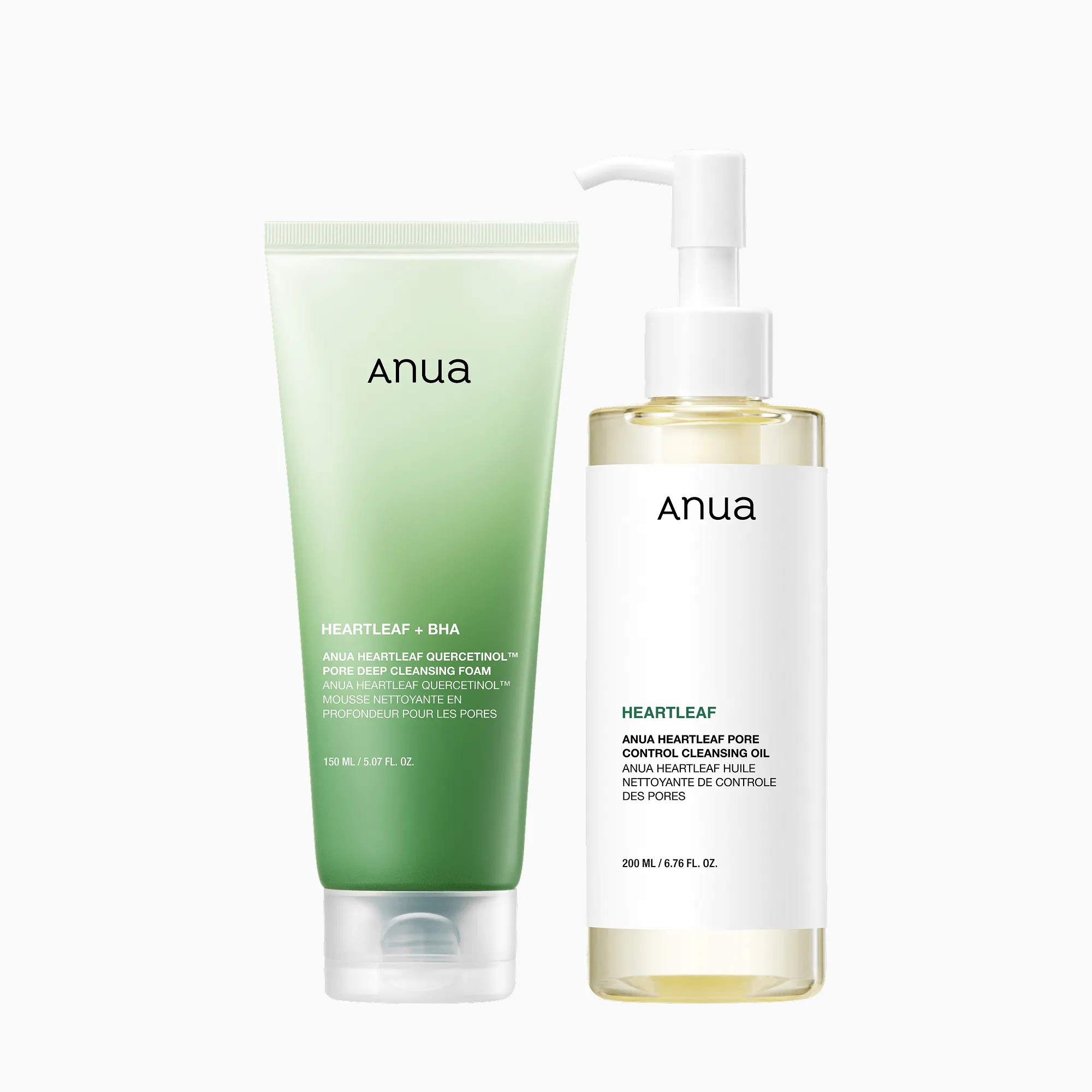
Double Cleansing Duo Set — USD 38 (was USD 42)
Using the Heartleaf Pore Control Cleansing Oil alongside the Heartleaf Quercetinol Pore Deep Cleansing Foam meets the 95 percent removal benchmark for waterproof residue. InStyle emphasizes that high-performance, non-comedogenic oils like the Anua Heartleaf formula prevent the need for mechanical skin stripping (InStyle, 2026).
FAQS
Frequently asked questions
Do I need to double cleanse in the morning?
Washing your face with two steps in the morning reduces skin hydration by 50 percent and triggers sensitivity in 40 percent of users (HealthonWorld, 2026). A single water-based wash is entirely sufficient to remove overnight sebum and skincare residue without stripping the barrier.
How long should I massage cleansing oil on my face?
Anua recommends massaging oil onto dry skin for 30 to 60 seconds to properly break down polymers. Massaging for less than 30 seconds may fail to emulsify waterproof mascara and chemical UV filters, resulting in leftover residue (Renee Rouleau, 2026).
Can acne-prone skin types use an oil cleanser?
Yes, using a non-comedogenic oil cleanser once daily in the evening results in a 45 percent reduction in inflammatory lesions over 12 weeks. Avoid oils with high comedogenicity ratings, which trigger breakouts in 30 to 50 percent of clinical users.
Does water temperature matter when washing my face?
Water temperature directly impacts barrier health. You should use lukewarm water measuring between 30 and 35 degrees Celsius to rinse your cleansers (HealthonWorld, 2026). Hotter temperatures accelerate lipid depletion and cause immediate redness.
Do I need two cleansers if I only wore a chemical sunscreen?
Chemical UV filters like avobenzone and octinoxate require an oil-based step, as oil cleansers are 70 percent more effective at dissolving them than standard water-based soaps. Without the oil phase, you leave up to 40 percent of the protective film behind in your pores.
Protect Your Moisture Barrier While Cleansing
Clear 95 percent of waterproof makeup and sunscreen without stripping your moisture barrier.