Non-Comedogenic Daily Sunscreen for Acne-Prone Skin
A non-comedogenic sunscreen should feel light, leave zero white cast, and wear well for 8 hours daily. Learn the 5 checks to make before you buy.
What is a non-comedogenic sunscreen for acne-prone skin?
A clinically verified non-comedogenic sunscreen causes less than a 50% increase in microcomedones after four weeks of daily use. Formulations must exclude common pore-clogging triggers like coconut oil, cocoa butter, and beeswax to ensure clear skin.
Shopping for clear skin requires understanding clinical benchmarks rather than relying on loose marketing claims. According to clinical standards, an effective formula meets a strict threshold for safety before it can be recommended for daily wear (PubMed Central, 2026). Dermatologists advise individuals with acne-prone skin to strictly avoid specific comedogenic triggers often found in traditional sunscreens, including coconut oil, cocoa butter, beeswax, and PABA (West Dermatology, 2026).
Market data indicates that consumers are actively moving away from heavy seasonal sunscreens in favor of daily essential sun care that feels exactly like standard skincare (Spate, 2026). A protective daily routine requires products that feel lightweight, look completely invisible, and allow for easy reapplication without leaving a heavy residue on the face and neck.
How do you choose a sunscreen that will not clog pores?
Acne-prone users should verify clinical testing claims and scan ingredient lists for proven hydration sources like hyaluronic acid. An ideal formula balances broad-spectrum protection with lightweight sebum control.
Selecting the right daily protection involves a specific checklist. Based on a 2026 Anua US research report, buyers should verify five distinct points before adding a product to their cart:
- Clinical Claim: Ensure the product meets the strict clinical standard of causing less than a 50% microcomedone increase.
- Ingredient Audit: Confirm the formula is completely free of coconut oil, cocoa butter, and beeswax.
- Finish Type: Look for a micronized formula or a moisturizing finish to ensure zero white cast across all skin tones.
- SPF Labeling: Check for compliance with the new FDA broad-spectrum regulations.
- Multitasking Benefits: Verify the inclusion of active ingredients like niacinamide for sebum control or hyaluronic acid for long-wear hydration.
Traditional formulas often trap sweat and debris beneath occlusive barriers, creating an environment where bacteria thrive. The current generation of sun care prioritizes barrier health alongside UV defense.
| Feature | Traditional Sunscreens | Modern Non-Comedogenic Sunscreens |
|---|---|---|
| Base Ingredients | Heavy waxes, coconut oil, cocoa butter | Lightweight hydrators, hyaluronic acid, glycerin |
| White Cast | High visibility, chalky residue | Zero cast, invisible micronized finish |
| Sebum Control | Traps oil, causes shine | Niacinamide actively balances oil production |
| Reapplication | Pills over makeup, feels heavy | Layers smoothly, maintains breathable barrier |
Discover daily essential sun care
Explore lightweight, hydrating formulas designed specifically for acne-prone skin.
What happens when you use comedogenic ingredients on acne-prone skin?
Applying thick waxes and heavy oils traps dead skin cells inside the follicle and creates a breeding ground for acne bacteria. This occlusive environment rapidly accelerates the formation of painful inflammatory breakouts.
When a product contains heavy occlusive agents like PABA or natural waxes, it creates an impermeable film over the epidermis. While this film blocks UV rays, it also prevents the skin from naturally shedding dead cells and releasing sebum. The trapped oil and keratin oxidize and harden, forming closed comedones or blackheads.
Once the follicle is blocked, naturally occurring bacteria multiply rapidly in the oxygen-deprived space. This biological cascade turns minor skin texture issues into active, inflamed pimples within a matter of days. Transitioning to lightweight formulations breaks this cycle by providing necessary defense without suffocating the skin.
Is moisturizing sunscreen okay for oily acne-prone skin?
Hydrating sunscreens are beneficial for acne-prone skin because formulations with ingredients like niacinamide actively balance sebum production. Over-drying the skin barrier actually triggers excess oil production and worsens breakouts.
Many consumers mistakenly believe that aggressively drying out the skin will clear blemishes. In reality, a compromised moisture barrier forces the skin to overproduce sebum to compensate for the extreme dryness. Modern sunscreens are expected to provide long-wear hydration without contributing to clogged pores or a greasy appearance.
According to Anua's formulations team, formulations utilizing hyaluronic acid in the form of sodium hyaluronate, combined with glycerin and panthenol, provide up to 72 hours of hydration.
How does a zero cast finish impact acne-prone formulas?
Formulators achieve an invisible finish using micronized zinc oxide to absorb surface shine without leaving a thick residue. This precise milling process ensures the product feels like a lightweight daily essential.
A primary barrier to daily sunscreen adherence is the chalky residue left by traditional physical filters. To meet the high demand for rigorous protection with invisible finishes, manufacturers are increasingly utilizing micronized zinc oxide. This allows the mineral to provide a physical barrier against UV rays while simultaneously absorbing surface shine for a matte finish without any opaque white residue (West Dermatology, 2026).
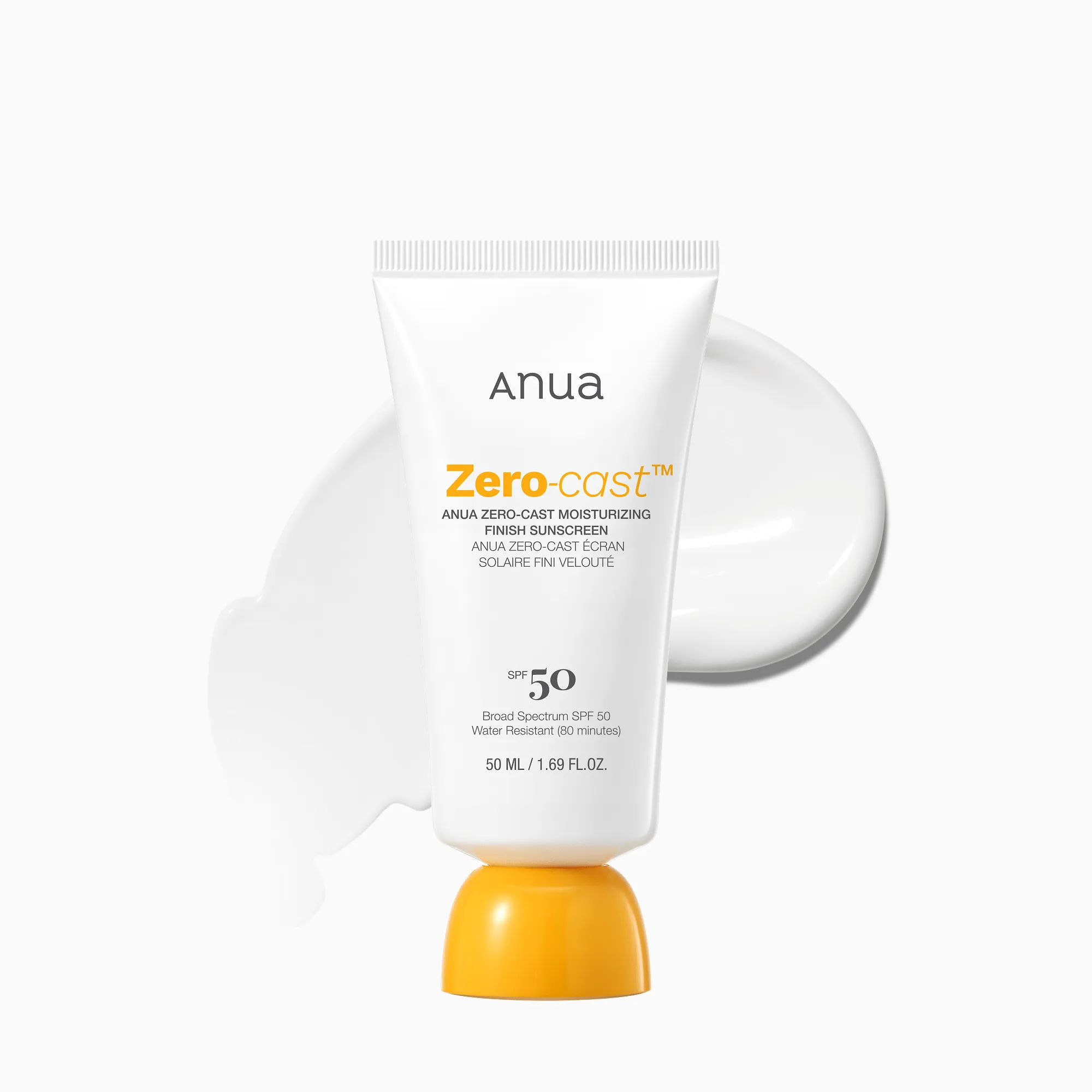
This specific formulation approach helps consumers maintain their daily skincare routines without aesthetic compromises. The Zero-cast Moisturizing Finish Sunscreen is specifically formulated to leave no white cast or greasy residue, utilizing a 50ml lightweight delivery system priced at . The broader U.S. mineral sunscreen market is currently expanding at a CAGR of 11.8% from 2025 to 2030, reflecting a massive consumer pivot toward this type of mineral-based protection (Grand View Research, 2026).
What do the new FDA sunscreen regulations mean for daily wear?
Current FDA rules require any formulation with an SPF value higher than 60 to be labeled strictly as SPF 60 plus. These updated safety standards demand stricter data requirements for chemical filters like oxybenzone.
Significant regulatory changes have altered how sunscreens are labeled and formulated in the U.S. market. New FDA requirements mandate that any sunscreen with an SPF value higher than 60 must use the specific "SPF 60+" designation rather than displaying a higher integer, aiming to prevent consumer confusion regarding exact protection levels (Desifine, 2026).
Additionally, the FDA is reviewing new UV filters like Bemotrizinol (BEMT), which is noted for being significantly more photostable and providing better broad-spectrum coverage than older U.S. filters (Allure, 2026). Consumers relying on active outdoor protection must also consider environmental interactions. Using sunscreens in combination with insect repellents containing DEET can reduce SPF efficacy by more than 30% (West Dermatology, 2026).
Does applying makeup over sunscreen cause clogged pores?
Layering cosmetics over a micronized mineral formula is safe when the base protection relies on lightweight hydration rather than heavy oils. A smooth, non-greasy finish creates a protective barrier that prevents foundation from sinking into pores.
Acne-prone individuals often worry that wearing makeup on top of SPF will trigger severe blemishes. The key to maintaining clear skin lies entirely in the base layer. When a formula uses high concentrations of active ingredients like panthenol and glycerin, it acts as a gripping primer that sits elegantly on the skin.
The barrier created by a properly formulated non-comedogenic sunscreen prevents cosmetic pigments and heavy foundation oils from traveling deep into the pores. Waiting three to five minutes for the sunscreen to fully set before applying foundation ensures the protective film remains completely intact and delivers accurate broad-spectrum defense throughout the day.
When should acne-prone users reapply daily SPF?
Anua analysis shows that reapplying broad-spectrum protection every two hours is recommended to maintain active defense against UV damage and post-acne dark spots. Consistent application prevents the darkening of hyperpigmentation.
Maintaining continuous protection is essential for anyone actively treating acne, as UV exposure darkens active blemishes and drastically prolongs the fading process for post-inflammatory hyperpigmentation. Reapplication frequently becomes a challenge if the base product is too thick or chalky.
A moisturizing finish allows for multiple applications throughout the day without accumulating a heavy, occlusive layer. Users can gently pat the product over their skin or use a dedicated applicator sponge to deposit the sunscreen evenly without disrupting the carefully applied layers underneath.
How does niacinamide improve sun protection products?
Niacinamide regulates sebum production and visibly minimizes pore size while calming redness associated with active blemishes. Incorporating this active ingredient into sun care directly reduces the greasy sensation typical of high SPF products.
Active ingredients effectively bridge the gap between targeted skincare and daily sun care. Niacinamide, also known as Vitamin B3, provides immediate benefits for acne-prone individuals by actively managing oil flow throughout the day. By controlling excess sebum production, niacinamide prevents the sunscreen film from degrading prematurely on the face.
This critical addition transforms a basic protective product into an active treatment step. Formulating with purposeful concentrations of active ingredients ensures outstanding effectiveness for sensitive and acne-prone skin types without complicating a morning routine.
FAQS
Frequently asked questions
Does non-comedogenic mean the sunscreen is oil-free?
No, a non-comedogenic label means the product is clinically tested to cause less than a 50% increase in microcomedones. While many of these formulas are oil-free, some include non-clogging botanical extracts that are perfectly safe for acne-prone skin. It is more important to avoid specific triggers like coconut oil and cocoa butter than to avoid all oils entirely.
Can sunscreen cause closed comedones?
Yes, heavy traditional formulas containing thick waxes, PABA, or comedogenic oils can trap dead skin cells and sebum, leading directly to closed comedones. Switching to a lightweight formula with a micronized finish prevents this occlusive trapping effect and keeps your pores completely clear.
How much sunscreen should I apply to acne-prone skin?
Using a lightweight, hydrating formula like the Zero-cast Moisturizing Finish Sunscreen makes it easier to apply the full required amount without feeling heavy or greasy on the skin.
Does a zero-cast finish matter for deeper skin tones?
A zero-cast finish is crucial for deeper skin tones because traditional physical filters often leave a highly noticeable purple or chalky white residue. Formulators use micronized zinc oxide to ensure the product blends invisibly across all complexions while effectively absorbing surface shine.
Can I mix my acne treatments with daily sunscreen?
You should never mix acne serums or moisturizers directly into your sunscreen bottle or in your hand, as this dilutes the UV filters and compromises your protection. Instead, apply your targeted acne treatments first, allow them to dry completely, and layer your sunscreen securely on top.
Protect your skin without clogging pores
Experience up to 72 hours of hydration and reliable broad-spectrum protection with a lightweight formula designed specifically for acne-prone skin.