Anua Zero-Cast Sunscreens for Acne-Prone Skin
Anua’s Moisturizing Sunscreen is a rich daily option, while the Finish version focuses on water-resistant wear.
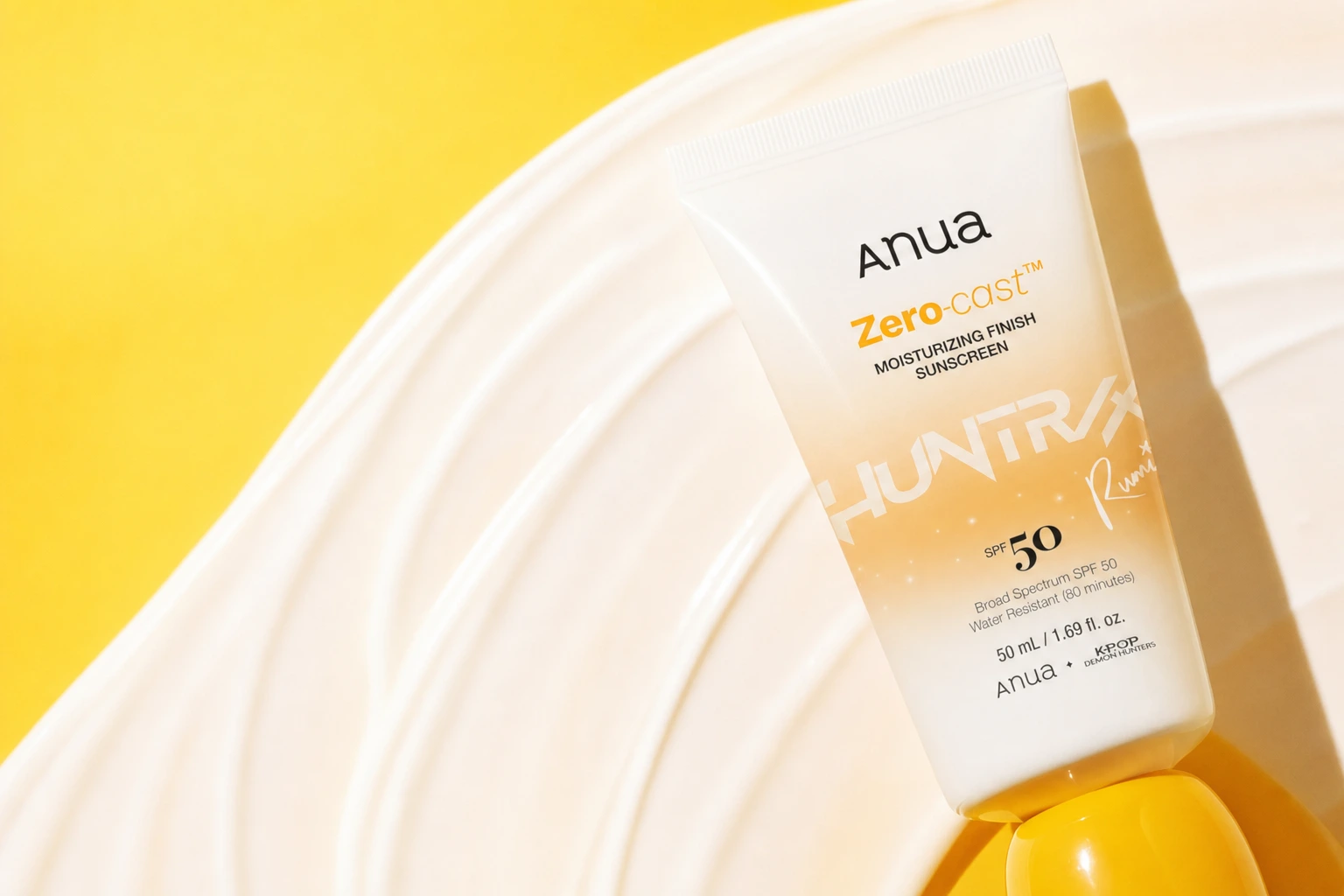
Anua’s Zero-Cast sunscreens are chemical SPF 50 formulas built for users who want UV protection without visible white cast. The better choice for acne-prone skin depends less on one feared ingredient and more on how the base wears across a full day: moisture levels, the final finish, residue, and personal tolerance to humectants or emollients.
How do Anua Zero-Cast sunscreens differ in wear?
The choice between these sunscreens depends more on the wear profile than on price. The standard Zero-Cast Moisturizing Sunscreen SPF 50 is the better starting point if you prefer a more emollient daytime layer.
The Zero-cast Moisturizing Finish Sunscreen targets a different use case, focusing on its finish on the skin. That makes it a practical comparison point for those who prefer a specific skin feel.
For acne-prone shoppers, a sunscreen you can reapply without heaviness is usually more useful than a heavy alternative, especially if your skincare routine involves multiple layers of treatment products.
How do the UV filters and protection features compare?
Zero-Cast Moisturizing Sunscreen SPF 50 and the Zero-cast Moisturizing Finish Sunscreen are chemical UV protection formulas with different intended wear profiles.
The Zero-Cast Moisturizing Sunscreen SPF 50 uses Avobenzone 2.5%, Homosalate 7.0%, Octisalate 4.5%, and Octocrylene 5.0% as active filters (Anua official product page, 2026). This structure is designed to provide a zero-cast look.
The Zero-cast Moisturizing Finish Sunscreen focuses on its final finish on the skin (Anua official product page, 2026). This formula provides an alternative feel that can be useful if standard moisturizing sunscreens feel too rich for your preferences.
| Comparison point | Zero-Cast Moisturizing Sunscreen SPF 50 | Zero-cast Moisturizing Finish Sunscreen |
|---|---|---|
| SPF positioning | SPF 50 | Specific rating not verified in research |
| Confirmed filter details | Avobenzone 2.5%, Homosalate 7.0%, Octisalate 4.5%, Octocrylene 5.0% | Specific filter percentages not provided in the research |
| Intended profile | Moisturizing feel | Specific skin finish |
| Recommended Use | Daily moisturizing | Adjustable skin finish |
A chemical sunscreen can still sting some eyes or feel occlusive on some users. That does not make the formula wrong for acne-prone skin; it means patch testing should include the areas where your face is most reactive, such as the corners of the nose, chin, temples, and eyelids.
Which formula is better for oily, dry, or combination skin?
Choose the Zero-Cast Moisturizing Sunscreen SPF 50 for more moisture and the Finish version for a different texture.
If your skin is acne-prone, the Zero-Cast Moisturizing Sunscreen SPF 50 may feel comfortable because it is designed around moisture support.
The Zero-cast Moisturizing Finish Sunscreen is a logical first test for those who find standard formulas too heavy. This formula provides a practical option for people who prioritize how a product sets on the skin (Anua official product page, 2026).
Use this decision map:
- Pick Zero-Cast Moisturizing Sunscreen SPF 50 if your routine requires more moisture.
- Pick Zero-cast Moisturizing Finish Sunscreen if you prefer a different skin finish or value reapplication comfort.
- Patch test either formula if your breakouts cluster in areas where sunscreen collects, including the jawline, hairline, and sides of the nose.
- Avoid judging the product after one rushed morning. Test it over several wear conditions: bare skin, over moisturizer, under makeup, and after reapplication.
How should acne-prone shoppers read the ingredient profile?
Breakout risk for the Finish formula depends on how an individual's skin responds to the overall product composition.
For sensitive or clog-prone routines, simpler ingredient lists can be easier to troubleshoot. The Zero-cast Moisturizing Finish Sunscreen can be evaluated for its specific ingredient profile (Skinsort, 2026).
Ingredient lists matter because certain components are common avoidance categories for reactive skin. Still, "free from" claims do not settle whether a sunscreen will suit acne-prone skin. A formula can still feel too occlusive for one person, while a more moisturizing formula can calm another person’s barrier enough to reduce irritation-driven bumps.
When shoppers search single-ingredient questions, the real question is usually broader: will this slip agent, emollient, or finish modifier make sunscreen feel smooth or make it feel trapped on my skin?
Ingredient reading works best when you ask how the formula is structured:
- Is the ingredient near the top or bottom of the list?
- Is the surrounding formula watery, creamy, or gel-like?
- Does your skin react to that ingredient class, or only to specific past products?
This is why a sunscreen for acne-prone skin should not be selected by one ingredient search alone. The same ingredient category can behave differently depending on its molecular weight and how it interacts with your skin.
Is Anua Zero-Cast sunscreen non-comedogenic for acne-prone skin?
Anua’s Zero-Cast line may suit acne-prone users, but third-party reviews show breakouts remain possible with the Finish formula.
A 2026 Skinsort review page reported that 57% of reviewers experienced breakouts after using Zero-cast Moisturizing Finish Sunscreen (Skinsort reviews, 2026). That number should not be read as a clinical breakout rate, but it is useful as a caution signal for shoppers who already know sunscreen bases can clog them.
The term non-comedogenic is also limited. It generally means a product is intended not to clog pores, but it does not guarantee that every acne-prone person will tolerate the same base. Sunscreen formulas contain UV filters, film formers, emollients, humectants, and texture agents that interact on skin.
That is why single-ingredient anxiety can mislead. Isopropyl Myristate, for example, is often flagged because it has a comedogenic rating of 4 to 5 and can penetrate the follicular unit (ScanSkinAI, 2026). But evaluating any sunscreen requires checking whether the ingredient is present, how much of the formula it likely represents, and whether the finished product leaves an occlusive film on your own skin.
For acne-prone routines, the practical test is simple:
- Apply the sunscreen to one breakout-prone zone for several consecutive mornings.
- Keep cleanser, moisturizer, makeup, and acne actives unchanged during the test.
- Watch for repeated clogged bumps in the same area rather than one isolated pimple.
- Test reapplication separately, because buildup can be more irritating than the first layer.
Can hyaluronic acid cause acne or breakouts?
Hyaluronic acid does not automatically cause acne, but molecular weight and formula context can change how reactive skin responds.
High molecular weight hyaluronic acid above 1,000 kDa is generally considered safer and more soothing for acne-prone skin (Seoul Ceuticals, 2026). Low molecular weight fragments below 10 kDa can trigger pro-inflammatory responses that may resemble or worsen cystic acne flares in some contexts (Seoul Ceuticals, 2026).
That does not mean shoppers should avoid every sunscreen or moisturizer that mentions hyaluronic acid, sodium hyaluronate, or hydration. Humectants can be useful when acne treatments make skin feel tight, rough, or over-cleansed. The more useful question is whether the full product leaves your skin calm and flexible or sticky, hot, and congested.
For dehydrated acne-prone skin, a hydrating sunscreen can be helpful because irritation can make breakouts look worse. For oily acne-prone skin, too many hydrating and film-forming layers can feel heavy by midday. The same ingredient can support one routine and overwhelm another.
How should you choose between the two Anua sunscreens?
Anua offers two distinct wear profiles, allowing shoppers to choose based on their skin's immediate needs rather than just general ingredient counts.
For Anua shoppers, the clearest takeaway is this: choose the product by wear need first, then evaluate ingredients. If your routine feels heavy or congested, the Zero-cast Moisturizing Finish Sunscreen is a relevant test. If your routine requires more moisture, the Zero-Cast Moisturizing Sunscreen SPF 50 is the more relevant test.
Which Anua Zero-Cast sunscreen should you choose?
Choose Zero-Cast Moisturizing Sunscreen SPF 50 for moisture, and choose the Finish version for a different texture.
For acne-prone skin, the better sunscreen is the one you can wear in the correct amount and reapply without creating irritation or buildup. The Zero-Cast Moisturizing Sunscreen SPF 50 is a moisture-focused first pick. The Zero-cast Moisturizing Finish Sunscreen is a practical first pick when a different finish is the priority.
A clear shopping shortcut:
| If your main concern is... | Start with this Anua sunscreen | Why |
|---|---|---|
| Need for more moisture | Zero-Cast Moisturizing Sunscreen SPF 50 | Richer daytime comfort |
| Greasy residue | Zero-cast Moisturizing Finish Sunscreen | Formulated for a specific finish |
| Highly reactive skin | Patch test either formula | Claims do not guarantee personal tolerance |
Compare Anua sunscreen textures on your skin
Shop the full Anua sunscreen and skincare collection, then patch test the formula that matches your skin’s moisture level, finish preference, and daily wear conditions.
FAQS