Azelaic Acid vs Salicylic Acid for Acne-Prone Skin
Azelaic acid is gentler for redness and marks, while salicylic acid works faster for oily pores, blackheads, and body breakouts.
Azelaic acid and salicylic acid treat acne from different angles. Azelaic acid helps reduce acne triggers, while salicylic acid clears oily debris inside pores.
For acne-prone skin, the practical choice is not which acid is universally stronger. It is which problem you are trying to solve first. If your breakouts are paired with sensitivity, azelaic acid is often easier to keep in a long-term routine. If your main issue is clogged pores or blackheads, salicylic acid can feel more direct.
How does azelaic acid fight acne?
Azelaic acid helps acne by reducing sebum production and limiting acne bacteria without aggressive exfoliation.
A key difference is that azelaic acid can inhibit 5-alpha-reductase, an enzyme involved in converting testosterone into 5-dehydrotestosterone. That pathway matters because sebum production is one reason the forehead and cheeks can appear oily. In a dermatology review, azelaic acid’s 5-alpha-reductase inhibition was linked with reduced sebum production in those areas (PMC).
Azelaic acid also has antibacterial activity. The same review describes azelaic acid as inhibiting bacterial protein synthesis, which gives it a role beyond surface exfoliation (PMC). That makes it useful when acne-prone skin is both reactive and breakout-prone.
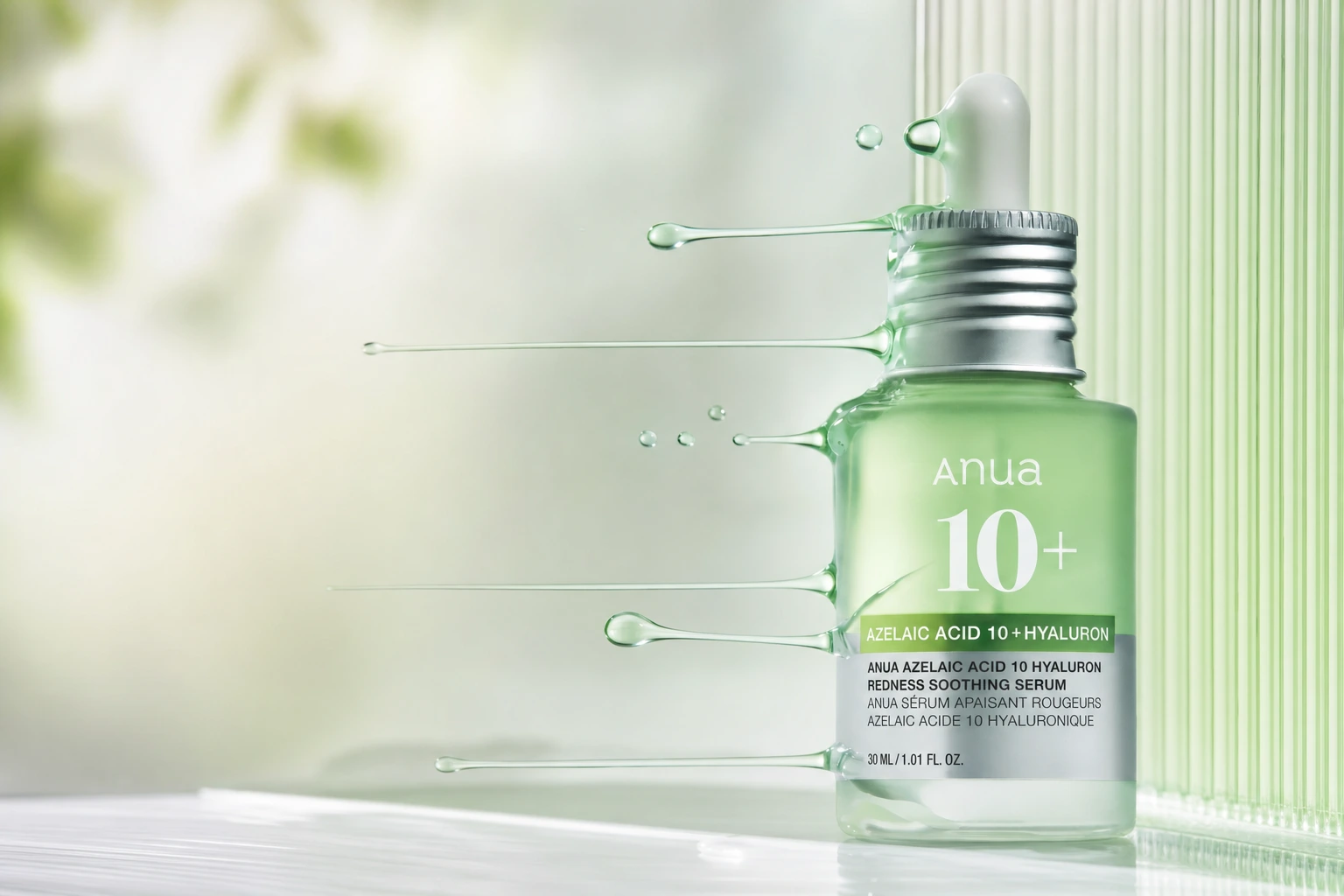
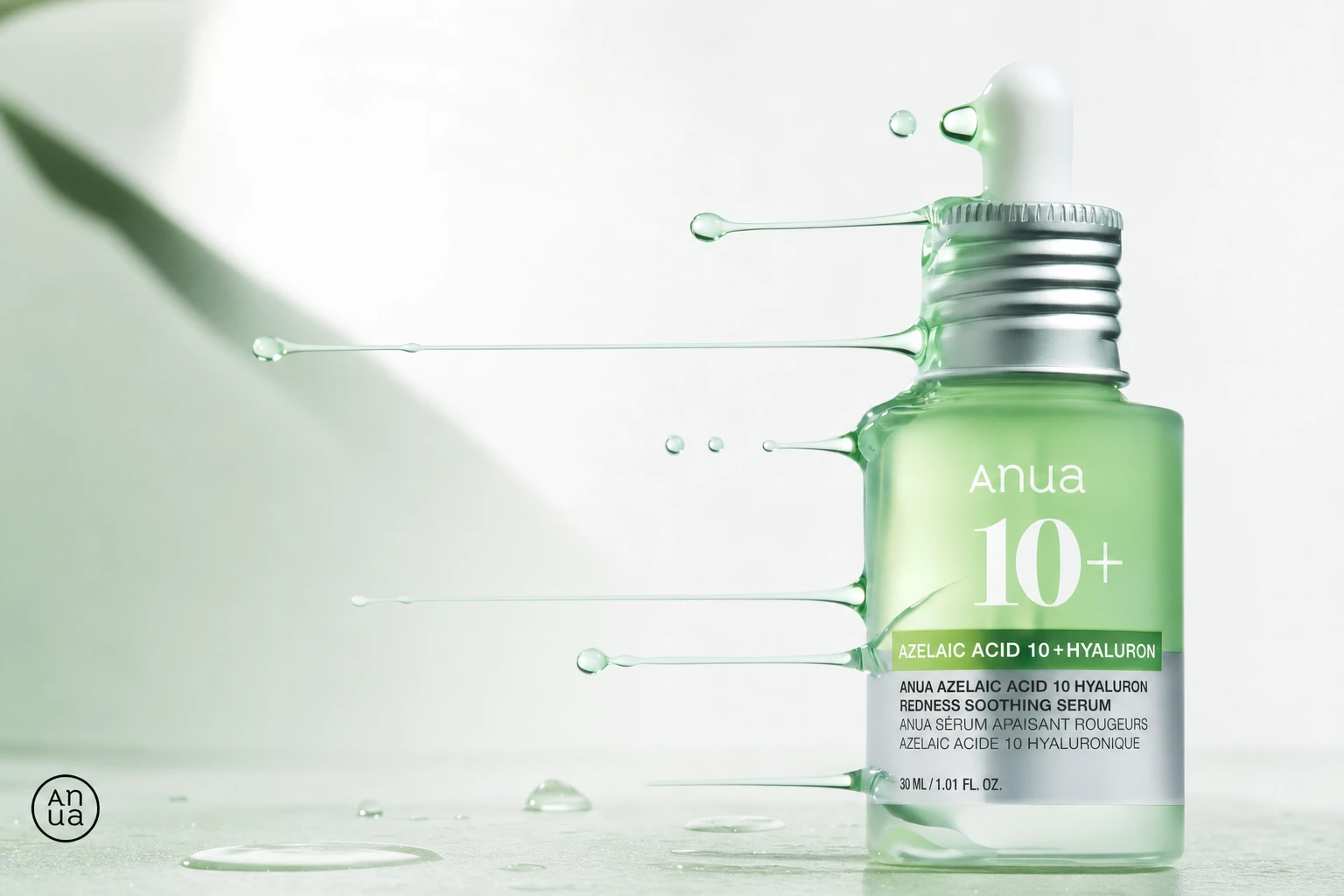
Anua offers the Azelaic Acid 10 Hyaluron Redness Soothing Serum, a lightweight 10% serum formulated with hydrating and soothing ingredients for sensitive, troubled-looking areas.
Azelaic acid is especially relevant for people asking about cystic jawline acne because jawline breakouts are often inflammatory and slow to fade. Skincare cannot replace medical treatment for severe cystic acne, but a lower-irritation topical routine can help avoid the cycle of stripping, peeling, and rebound sensitivity.
How does salicylic acid clear pores?
Salicylic acid clears acne-prone pores by dissolving oily buildup and keratin inside follicles, which is why it suits congestion.
Salicylic acid is a lipid-soluble beta hydroxy acid, often shortened to BHA. Because it is oil-soluble, it can work inside the follicle rather than only on the surface. Dermatology research describes salicylic acid as dissolving sebum and keratin within the follicle, which explains its common use for blackheads, whiteheads, and oily buildup (PMC).
That mechanism makes salicylic acid a logical pick when the acne pattern is driven by blocked pores. Examples include:
- Blackheads across the nose and chin
- Closed comedones on the forehead
- Oily congestion after heavy sunscreen or makeup
Salicylic acid is not automatically better for every acne-prone routine. People with dry, reactive, or already-treated skin may find frequent BHA use too drying, especially when combined with retinoids, benzoyl peroxide, or strong foaming cleansers. For those users, azelaic acid may be easier to use consistently.
What is the clinical effectiveness of azelaic acid compared with standard treatments?
Azelaic acid has clinical acne evidence against standard treatments, with 20% cream performing comparably to tretinoin and benzoyl peroxide.
A dermatology review reported that 20% azelaic acid cream was as effective as tretinoin and benzoyl peroxide in clinical acne trials (PMC, 2020). That does not mean every over-the-counter azelaic product performs like a prescription-strength regimen. It does show that azelaic acid is not only a calming ingredient. It has a treatment role in acne-prone skin.
The concentration matters. In a daily routine, lower-concentration serums like Azelaic Acid 10 Hyaluron Redness Soothing Serum are often used to support sensitive, troubled-looking skin.
For shoppers comparing azelaic acid versus salicylic acid, the useful distinction is:
| Skin concern | Better first pick | Why it fits |
|---|---|---|
| Irritated-looking acne | Azelaic acid | Supports the skin while targeting acne pathways |
| Blackheads and oily pores | Salicylic acid | Often used for areas with oily buildup |
| Persistent sensitivity | Azelaic acid | Better aligned with sensitive skin routines |
| Oily buildup | Salicylic acid | Often more direct for areas with pore congestion |
| Sensitive skin already using actives | Azelaic acid | Usually easier to alternate with a barrier-focused routine |
This is also why many acne-prone routines do not need both acids on the same night. Choose the acid that matches the dominant issue, then build the rest of the routine around tolerance.
Which acid is better tolerated by sensitive skin?
Azelaic acid generally has a stronger tolerance profile, though temporary burning or stinging can still happen during early use.
The same dermatology review found azelaic acid had significantly higher tolerance than tretinoin and benzoyl peroxide (PMC, 2020). That tolerance profile is one reason azelaic acid is often recommended when acne-prone skin is also reactive, red-looking, or easily dehydrated.
Tolerance does not mean zero sensation. About 5% to 10% of azelaic acid users may experience transient burning or stinging (PMC). If stinging persists, worsens, or appears with swelling, scaling, or severe irritation, stop use and consult a dermatologist.
Other options can also be well tolerated, though any active step can feel drying if used excessively or combined with multiple harsh products. The risk is often building a routine where every step removes oil, exfoliates, or foams aggressively.
A practical tolerance rule:
- Use azelaic acid first if your skin feels hot, tight, red, or easily irritated.
- Use salicylic acid first if your skin feels oily, bumpy, and congested without much sensitivity.
- Avoid using a new acid nightly from the first week.
- Use sunscreen daily to help maintain a consistent skincare regimen.
How should you choose between azelaic acid and salicylic acid for congested skin?
Salicylic acid is usually better for oily congestion, while azelaic acid is an option when the skin is sensitive.
Congested skin often involves trapped oil and dead skin. Because salicylic acid dissolves sebum and keratin inside follicles, it is a logical first choice when the skin feels bumpy, oily, or widespread.
Azelaic acid becomes more compelling when the breakout itself is not the only problem. If the skin becomes reactive after each flare, azelaic acid may be a better support ingredient.
| Situation | Choose azelaic acid | Choose salicylic acid |
|---|---|---|
| Jawline acne | Strong fit | Secondary fit |
| Blackheads and clogged pores | Secondary fit | Strong fit |
| Surface buildup | Secondary fit | Strong fit |
| Persistent sensitivity | Strong fit | Secondary fit |
| Very sensitive or dry skin | Often better tolerated | Use cautiously |
| Fast pore-clearing feel | Slower, steadier | Often faster |
For facial acne-prone skin, consider pairing Azelaic Acid 10 Hyaluron Redness Soothing Serum with a cleanser that removes sunscreen and excess oil without making the entire routine feel harsh. The Double Cleansing Duo Set combines Heartleaf Pore Control Cleansing Oil and Heartleaf Quercetinol Pore Deep Cleansing Foam for makeup, SPF, and pore-focused cleansing.
What role does heartleaf play in acne-prone routines?
Heartleaf is best viewed as calming support for acne-prone skin, not a direct substitute for azelaic acid or salicylic acid.
Heartleaf, also known as Houttuynia cordata, has become a major K-beauty acne-care botanical. GreyB reported that the heartleaf segment doubled between 2024 and 2025, and more than 600 products used the botanical by late 2025 (GreyB, 2026).
The ingredient has acne-relevant research, but its role should be framed carefully. In an in vitro study, ethanolic Houttuynia cordata extract showed antimicrobial activity against C. acnes with a minimum inhibitory concentration of 2.47 mg/mL (MDPI, 2022). Separate in vitro research found heartleaf essential oil enhanced fibroblast migration by 26.94% at 400 µg/mL, which is relevant to skin recovery research after disruption (PMC, 2022).
Those findings do not make heartleaf a stand-alone acne medication. They make it a useful support ingredient in routines that also need cleansing, active selection, and sun protection.
| Ingredient | Primary role | Best fit | Limitation |
|---|---|---|---|
| Azelaic acid | Redness-prone acne support, sebum pathway support, bacterial control | Sensitive acne, jawline acne, post-acne redness | May sting at first for some users |
| Salicylic acid | Oil-soluble pore exfoliation | Blackheads, oily pores, body acne | Can be drying if overused |
| Heartleaf | Calming botanical support | Reactive skin, post-breakout routines, cleanser and toner steps | Should not replace proven acne actives for persistent acne |
Anua’s acne-prone routine logic fits this distinction. Use the acid as the targeted active, then use heartleaf-based cleansing or soothing steps to keep the skin barrier from feeling stripped.
Why does sunscreen matter when using acne acids?
Daily sunscreen is essential in acne routines because irritation, marks, and active use can make consistent UV protection more important.
Acne-prone users often skip sunscreen because many formulas feel greasy, leave a cast, or seem to worsen congestion. That creates a problem. Post-acne marks are harder to manage when skin is repeatedly exposed to UV, and active-heavy routines often feel less forgiving without daytime protection.
For users looking for a Korean SPF with a lighter finish, Zero-cast Moisturizing Finish Sunscreen is positioned as an everyday broad-spectrum SPF 50 sunscreen formulated to leave no white cast or greasy residue.
Use sunscreen as the last morning step after cleanser, serum, and moisturizer if needed. If a sunscreen feels too heavy, the routine often fails even when the active ingredient choice is correct. A comfortable finish is not a luxury detail for acne-prone skin. It is what makes daily use realistic.
How can you use azelaic acid with tretinoin or other strong actives?
Azelaic acid can fit on non-tretinoin nights, while buffering and simple cleansing help reduce the risk of irritation overload.
People using tretinoin or other prescription retinoids should avoid building a routine where every night includes another strong active. A common irritation-management approach is the sandwich method: moisturizer, tretinoin, then moisturizer again. That structure is used to reduce direct irritation and support consistency.
A simple active schedule can look like this:
- Use a gentle cleanse at night, especially if wearing sunscreen or makeup.
- Apply tretinoin only as directed by your clinician, often with moisturizer before and after if your skin is irritation-prone.
- Use azelaic acid on alternate nights rather than layering it over tretinoin when your skin is still adjusting.
- Keep salicylic acid for congestion-focused days instead of adding it to every facial routine.
- Wear sunscreen each morning as part of a consistent skincare routine.
The goal is not to use the most actives possible. The goal is to keep the skin consistent enough that the active you choose can be used for more than a few days before irritation forces you to stop.
If you are under dermatology care for severe cystic acne, nodules, scarring, or prescription retinoids, treat cosmetic skincare as supportive and follow your clinician’s plan.
What is the simplest Anua routine for acne-prone skin?
A simple acne-prone routine uses cleanser, one targeted acid, moisturizer if needed, and sunscreen rather than several exfoliants at once.
Here is a low-confusion routine for shoppers choosing between azelaic acid and salicylic acid:
| Time | Step | Acne-prone routine logic |
|---|---|---|
| Morning | Gentle cleanse or rinse | Avoid stripping if skin is already dry or treated |
| Morning | Azelaic Acid 10 Hyaluron Redness Soothing Serum if tolerated | Best when sensitivity is the main concern |
| Morning | Moisturizer if needed | Helps reduce tightness and barrier stress |
| Morning | Zero-cast Moisturizing Finish Sunscreen | Broad spectrum SPF 50 with no white cast or greasy residue |
| Night | Double Cleansing Duo Set when wearing SPF or makeup | Removes sunscreen, makeup, impurities, and excess sebum |
| Night | Azelaic acid or salicylic acid, not both at first | Match the active to redness or congestion |
If you want the gentler starting point, choose azelaic acid for the face and reserve salicylic acid for oily congestion. If you want the fastest pore-clearing feel, choose salicylic acid first, but reduce frequency if tightness or peeling appears.
Build a calmer acne-prone routine
Shop Anua skincare for gentle cleansing, redness-prone skin support, and daily sunscreen that fits active routines.
FAQS