Niacinamide vs Vitamin C for Dull Skin
Niacinamide suits sensitive, oily skin, while Vitamin C targets sun-related dullness through a low-pH melanin pathway.
Key takeaways
- Niacinamide and Vitamin C brighten skin through different pigment pathways, so the better choice depends on sensitivity, oiliness, and skin concerns.
- Vitamin C can address dark spots, but pure L-ascorbic acid requires specific formulation pH levels.
- Niacinamide is an option for uneven tone and oiliness, especially in Anua brightening serums.
Niacinamide is usually the better brightening choice for sensitive, oily, or barrier-stressed skin, while Vitamin C is better for sun-related dullness. The practical difference is tolerance: Vitamin C works closer to the start of melanin production, while niacinamide helps reduce the visible transfer of pigment to surface skin cells.
That makes the decision less about which active is universally stronger and more about which brightening route your skin can use consistently. If low-pH formulas tend to sting, niacinamide is often the easier daily option. If your main concern is visible sun damage and your skin tolerates acidic serums well, Vitamin C can be a strong morning active alongside sunscreen.
How does Vitamin C brighten the skin?
Vitamin C brightens by inhibiting tyrosinase, the enzyme involved in melanin synthesis, before pigment becomes visible on skin.
In skincare, L-ascorbic acid is a widely used form of Vitamin C. Its brightening role is tied to tyrosinase inhibition, a pathway involved in melanin production (MDPI, 2024). In simpler terms, Vitamin C works upstream to help reduce excess pigment formation by inhibiting tyrosinase.
GoodRx notes that L-ascorbic acid concentrations of 10% to 20% are recommended for reducing the look of dark spots (GoodRx, 2026). That potency is why Vitamin C is often chosen for dullness linked to sun exposure, visible aging, and uneven-looking tone.
The tradeoff is formulation comfort. L-ascorbic acid typically needs a pH of 3.0 to 3.5 for effective skin penetration (Marianella, 2026). That acidic range can feel active on the skin, especially for people who already experience stinging, redness, or a disrupted barrier.
For people who want Vitamin C benefits but cannot tolerate pure L-ascorbic acid, magnesium ascorbyl phosphate is an alternative Vitamin C derivative (GoodRx, 2026). Derivatives can be less irritating, though the experience depends heavily on the full formula, not just the active name.
How does niacinamide fade dark spots?
Niacinamide fades uneven tone by reducing melanosome transfer.
Niacinamide takes a different route from Vitamin C. Rather than primarily focusing on melanin creation, it helps block the transfer of melanosomes to keratinocytes (MDPI, 2024).
That pathway is one reason niacinamide is a strong option for dullness, post-breakout marks, and uneven-looking tone. Elchemy reports that 5% niacinamide can reduce hyperpigmentation by 15% to 20% over 8 weeks (Elchemy, 2026).
Niacinamide is also easier to formulate at a more skin-friendly pH. Marianella reports that niacinamide is more stable than Vitamin C (Marianella, 2026). That stability matters in real bathrooms, where heat, light, and repeated air exposure can affect some brightening formulas.
GoodRx describes niacinamide as a universal antioxidant suitable for all skin types, including sensitive skin (GoodRx, 2026). That does not mean every niacinamide serum is automatically perfect for every person, but it does make the ingredient easier to recommend for people who struggle with harsh brightening actives.
Which ingredient is better for your skin type?
Choosing between niacinamide and Vitamin C depends on your specific skin concerns and goals.
The clearest way to choose is to match the ingredient to your main concerns. Sebum-related issues and excess shine often point toward niacinamide. Supporting skin renewal may point toward Vitamin C.
| Skin concern | Better first choice | Why it fits |
|---|---|---|
| Excess sebum | Niacinamide | It can help with sebum reduction. |
| Skin renewal care | Vitamin C | Vitamin C can support epidermal renewal activity (Marianella, 2026). |
If your skin is reactive, start with niacinamide before adding Vitamin C. If your skin is resilient and your dullness is mostly sun-related, Vitamin C may be worth testing. If you are building a routine for sensitivity first, Anua’s guide to a daily face wash for easily irritated skin can help keep the cleansing step from undermining your brightening routine.
Can you use niacinamide and Vitamin C together?
Niacinamide and Vitamin C can be used together, and applying Vitamin C first helps avoid a possible pH conflict.
The old claim that niacinamide and Vitamin C cancel each other out is not the practical rule for modern routines. Marianella reports that niacinamide can help stabilize Vitamin C and prevent oxidation (Marianella, 2026). The main concern is not ingredient incompatibility, but how your skin handles pH, concentration, and layering.
A simple layering order keeps the routine easier to tolerate:
- Apply Vitamin C first to allow it to absorb into the skin.
- Wait a few minutes so the Vitamin C layer can settle.
- Apply niacinamide after Vitamin C as part of your layering routine.
GoodRx recommends applying Vitamin C first and waiting before applying niacinamide to avoid a pH conflict (GoodRx, 2026).
People with flaky or reactive skin should keep exfoliation separate from strong brightening steps. If surface flakes are part of the dullness problem, this comparison of a glow pad vs peeling gel for flaky sensitive skin can help you decide how much resurfacing your routine can handle.
Top brightening serums to try
Anua’s niacinamide serums focus on stable brightening, with one option for glow and another for stubborn uneven-looking tone.
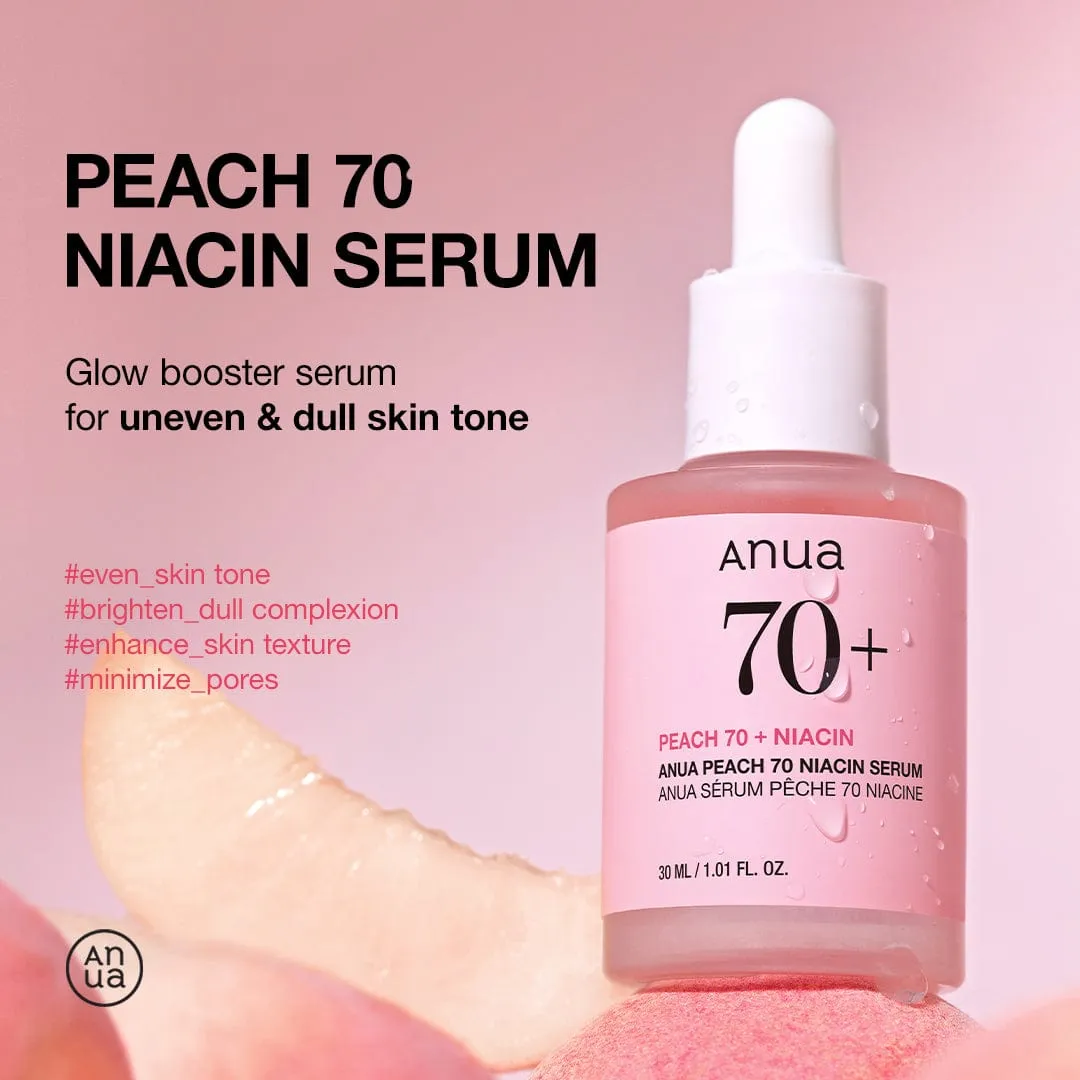
For a glow-focused routine, Peach 70% Niacinamide Serum combines 70% peach fruit extract with niacinamide in a serum designed for radiant, glass-like skin (Anua, 2026). It is the better fit if your dullness comes with dryness, uneven texture, or a lack of surface radiance.
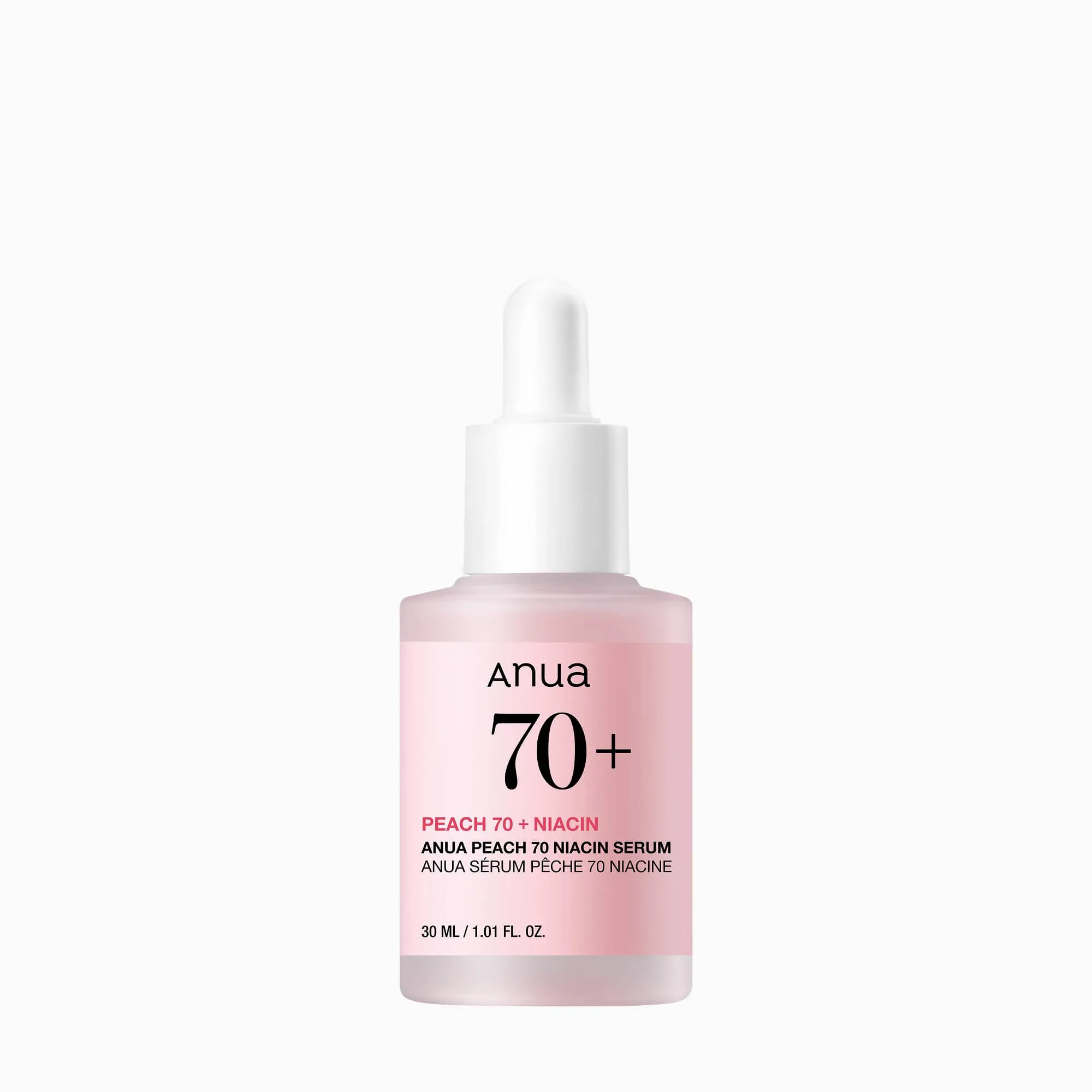
Peach 70% Niacinamide Serum
A glow-focused niacinamide serum for dull, uneven-looking skin that needs radiance and moisture.
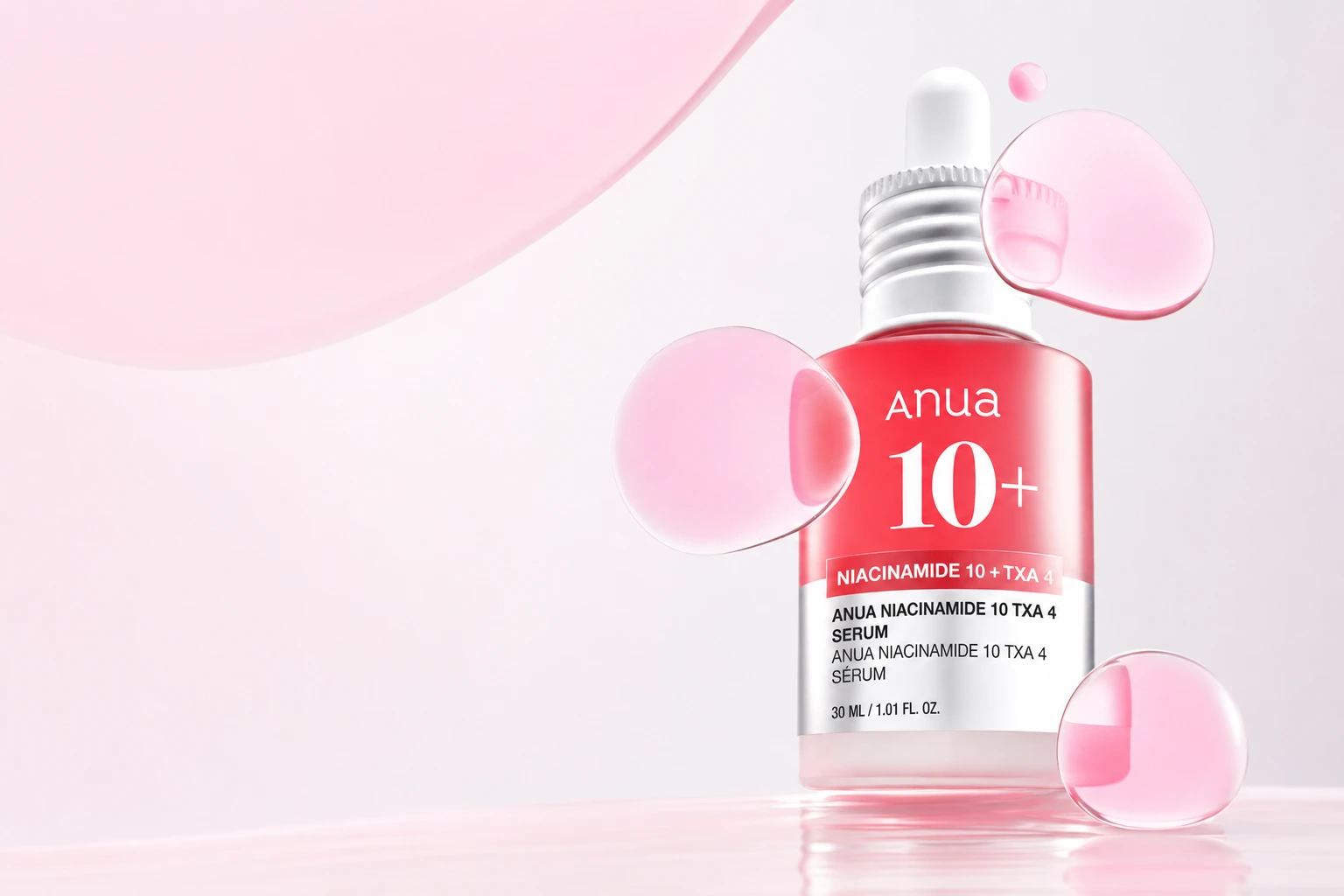
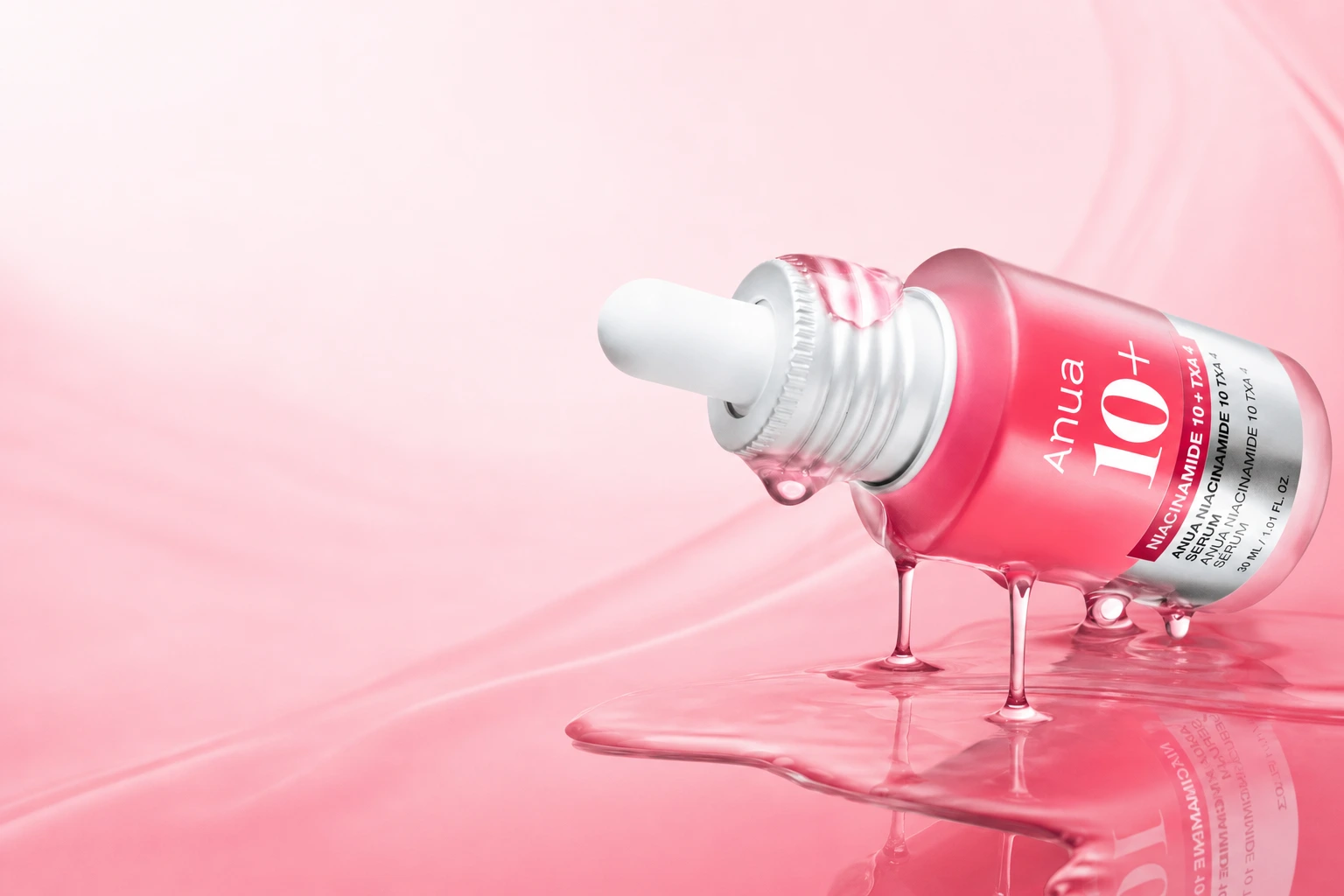
For targeted dark spots and post-breakout marks, Niacinamide 10 TXA 4 Serum for Brightening and Dark Spots contains 10% niacinamide and 4% tranexamic acid (Anua, 2026). The formula also includes ceramides and hyaluronic acid to help skin feel moisturized while addressing uneven-looking tone (Anua, 2026).
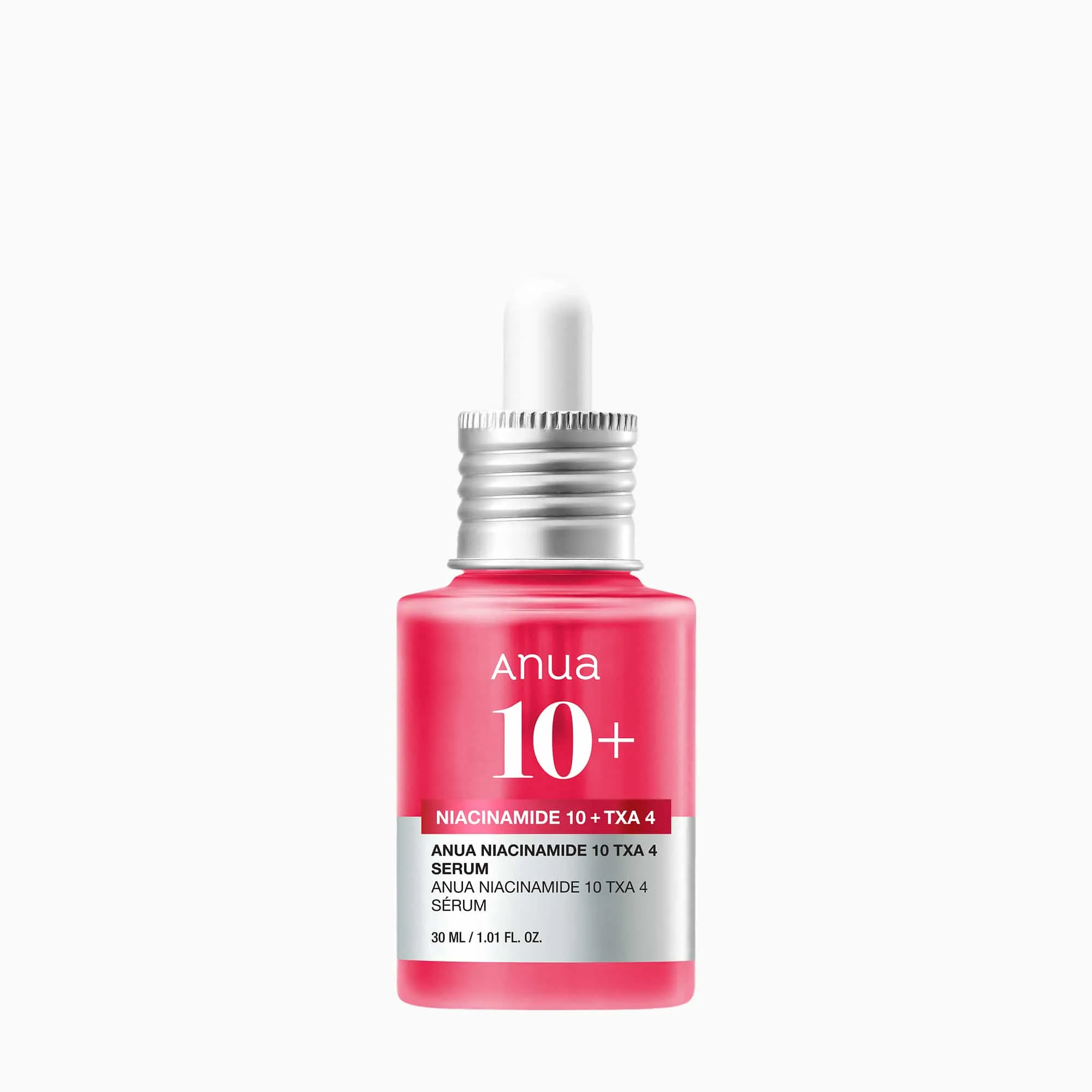
Niacinamide 10 TXA 4 Serum for Brightening and Dark Spots
A targeted brightening serum for uneven-looking tone, post-breakout marks, and skin that still needs moisture support.
The easiest way to choose between the two is to decide whether your goal is glow or correction. Choose Peach 70% Niacinamide Serum when your skin looks flat, dry, or tired. Choose Niacinamide 10 TXA 4 Serum for Brightening and Dark Spots when uneven tone, post-breakout marks, or more stubborn discoloration are the main concern.
If sensitivity is a major part of your routine planning, Anua’s comparison of the Glass Skin Set vs Redness Soothing Duo for sensitive skin can help you think beyond one serum and build around your skin’s tolerance.
Choose a brighter routine your skin can keep using
Browse Anua formulas for dullness, uneven-looking tone, and moisture support, then build a routine around the level of activity your skin tolerates.
FAQS