Azelaic Acid for Rosacea-Prone Skin, Gentle Guide
Azelaic acid can be a gentler resurfacing option for rosacea-prone skin than scrubs, especially when started 2 to 3 nights weekly.
Azelaic acid can be a gentler 1-step resurfacing choice for rosacea-prone skin because it avoids scrub friction. Start low and watch for stinging.
Rosacea-prone skin often reacts less to one well-chosen active than to a routine stacked with exfoliants, scrubs, acids, fragrance, and heat. For many redness-prone users, the goal is not aggressive peeling. The goal is a smoother-looking texture, fewer troubled areas, and less visible redness without setting off a flare.
Why does rosacea-prone skin need gentle resurfacing?
Physical scrubs can trigger friction-related inflammation in reactive rosacea-prone skin. Azelaic acid and PHAs resurface without scrubbing.
Redness-prone skin can look rough, bumpy, or congested, which makes exfoliation tempting. However, some exfoliation methods rely on mechanical pressure. Physical rubbing and scrub grains can cause friction, which is a trigger for inflammation in reactive skin.
Resources on exfoliation for rosacea-prone skin recommend avoiding traditional physical scrubs for sensitive or erythematotelangiectatic rosacea because friction can worsen inflammation (The Korean Style). These sources identify azelaic acid and gentle polyhydroxy acids as resurfacing options that avoid mechanical scrubbing (The Korean Style).
That distinction matters. A gentle Korean exfoliant for rosacea-prone skin should not feel like a peel, burn like a strong acid, or leave skin shiny and tight from over-cleansing. It should fit into a minimal routine and be easy to reduce if skin starts feeling warm, itchy, or unusually sensitive.
Azelaic acid formulations, such as a 10% serum, are often selected by those seeking an alternative to mechanical scrubs in their daily routine.
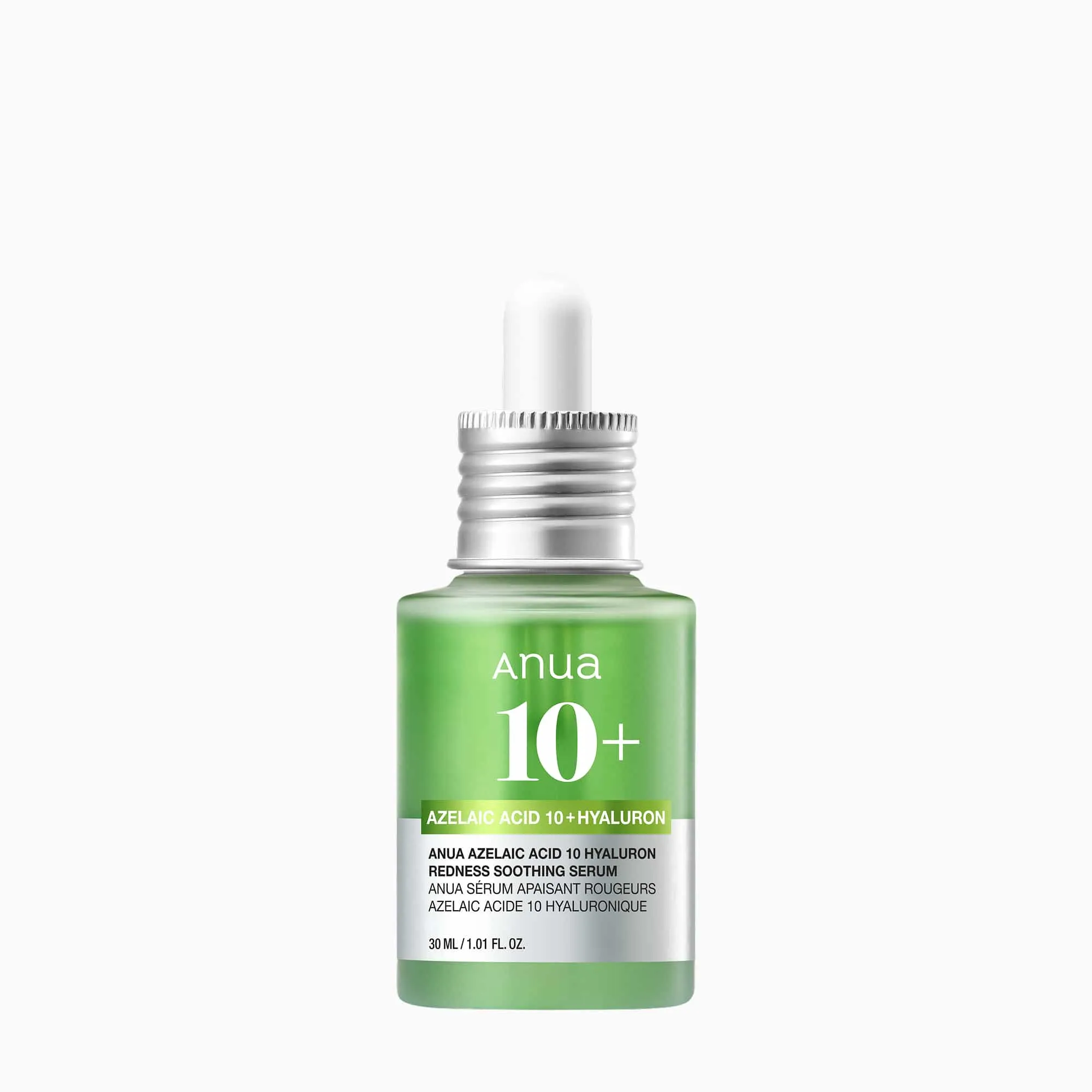
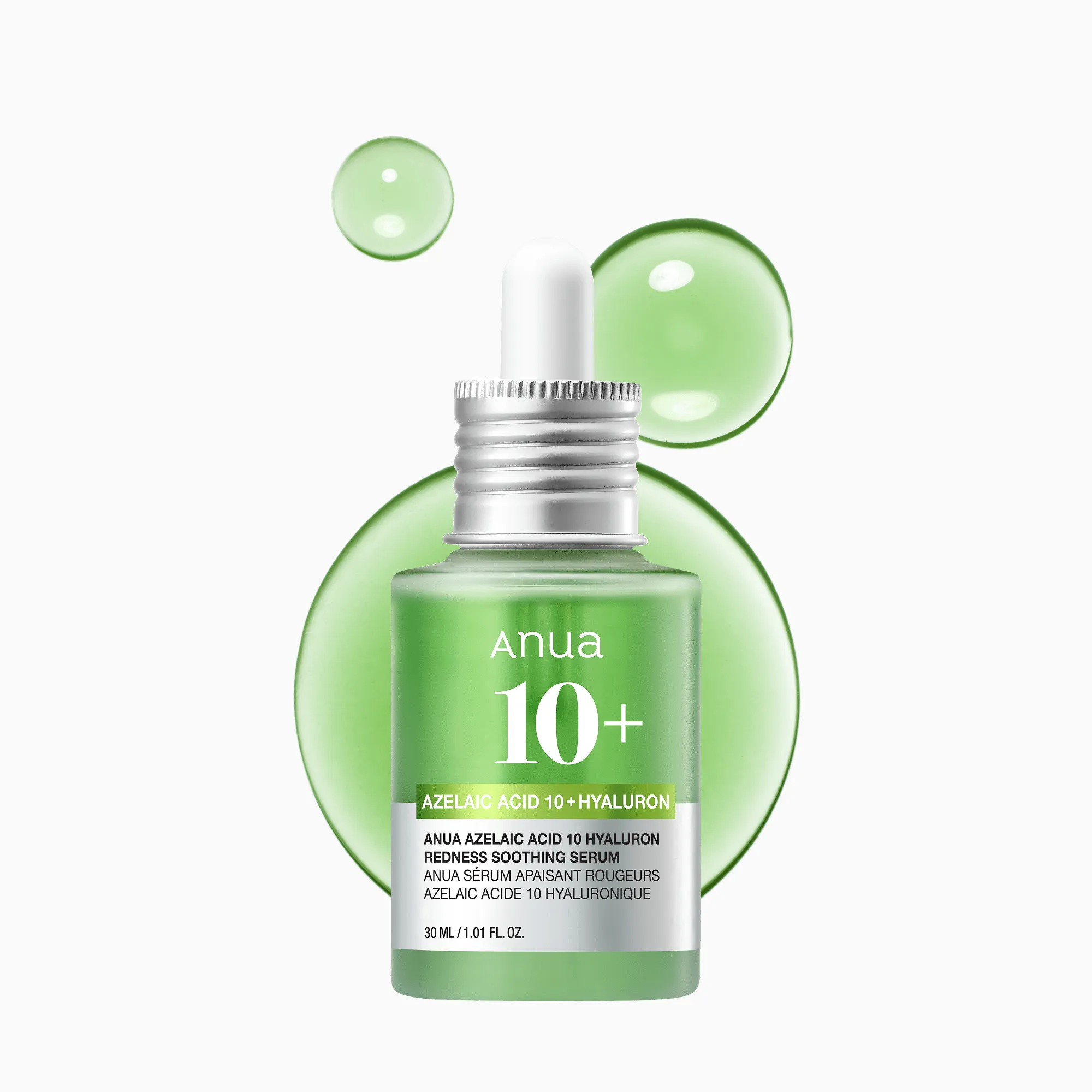
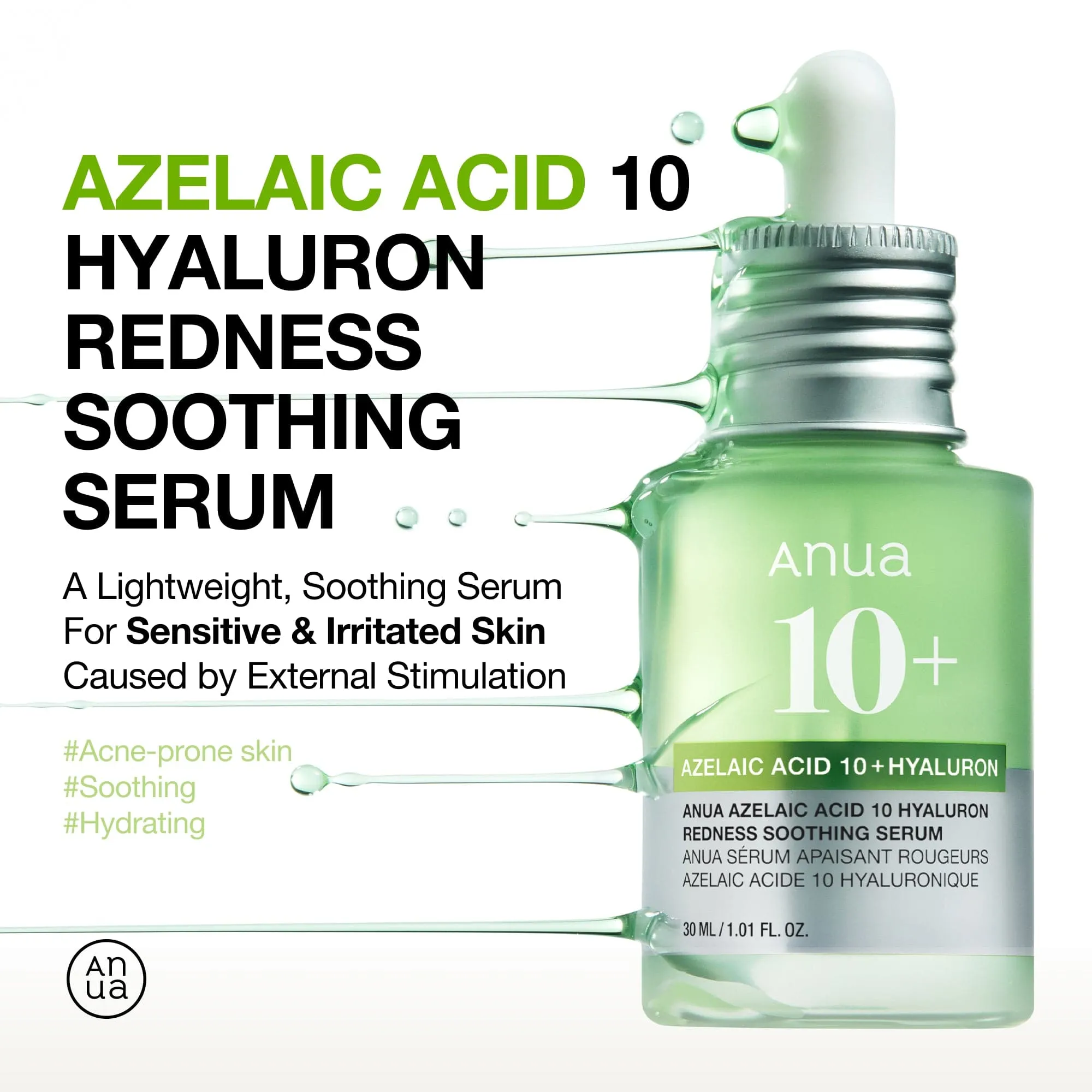
Azelaic Acid 10 Hyaluron Redness Soothing Serum
A lightweight serum formulated with soothing & hydrating ingredients, suitable for sensitive skin, helps improves redness and troubled areas.
When introducing a new active serum, users typically start with a limited schedule to monitor skin tolerance. If skin stings beyond a mild short-lived tingle, it is often recommended to reduce frequency or pause.
How does azelaic acid help clear rosacea-prone skin?
Clinical studies on 15% azelaic acid show improved rosacea severity scores and fewer inflammatory lesions within controlled trials.
Azelaic acid is studied for papulopustular rosacea, particularly for its impact on inflammatory lesion counts. Clinical research indicates that 15% azelaic acid can reduce median Investigator Global Assessment scores from moderate to almost clear within 8 weeks (PMC).
Phase 3 randomized trials also found 15% azelaic acid foam significantly more effective than vehicle foam for improving Investigator Global Assessment scores and reducing inflammatory lesion counts in papulopustular rosacea (ClinicalTrials.gov, 2023). These data points are based on studies of clinical 15% formulations.
That difference is important for expectations. A 10% serum is typically chosen for cosmetic tolerability and routine fit, while 15% foams and gels are the strengths most often discussed in clinical rosacea trials. A lower-strength serum may be easier to introduce for sensitive skin, but persistent papules, pustules, flushing, or burning should be discussed with a dermatologist.
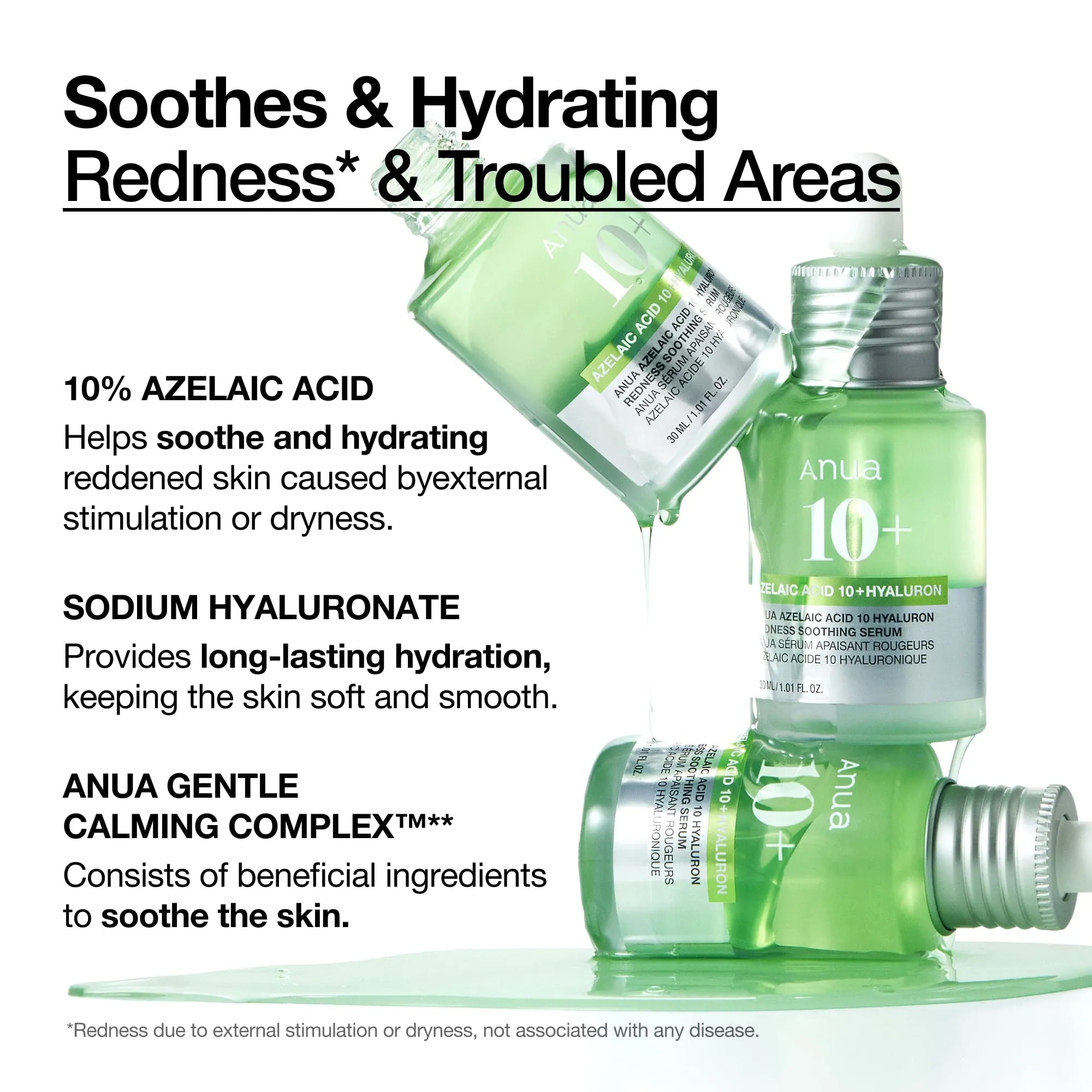
The most realistic role for Azelaic Acid 10 Hyaluron Redness Soothing Serum is steady, low-drama support for visible redness, troubled areas, and uneven texture. It should be treated as one active step, not layered on top of multiple exfoliating toners, retinoids, and acne treatments from the first week.
Is azelaic acid better than traditional rosacea topicals?
Clinical 15% azelaic acid gel has shown faster inflammatory reduction than 0.75% and 1% metronidazole regimens in trials.
Metronidazole is used in various topical regimens. Clinical research has reported a significant therapeutic advantage for 15% azelaic acid gel compared with 0.75% and 1% metronidazole regimens, including faster inflammatory reduction (PMC).
That does not mean every redness-prone user should replace a prescribed treatment with skincare. If you are currently using a topical regimen like metronidazole, any new additions to the routine should be introduced in a way that does not conflict with your existing care plan.
| Option | Best fit | Main caution |
|---|---|---|
| Azelaic acid | Supporting inflammatory reduction | Start slowly and avoid stacking with other strong actives |
| Metronidazole | Prescribed care | Do not replace a prescription without clinician guidance |
| Barrier creams | Dryness, tightness, support | They support comfort but do not resurface skin |
A practical way to compare these options is to ask what problem you are trying to solve. If the concern is roughness plus visible redness, azelaic acid may be a better fit than a scrub. If the concern is a medical flare with papules and pustules, prescription care may be needed. If the concern is burning, tightness, or rebound redness after stopping topical steroids, the first move is usually a bland barrier routine, not more actives.
Should you choose 10% or prescription-strength azelaic acid?
Concentrations of azelaic acid vary across different formulations. Anua’s Azelaic Acid 10 Hyaluron Redness Soothing Serum contains 10% azelaic acid and is priced at USD 24, positioning it as an accessible option for those building a skincare routine (Anua US, 2026).
Choose a 10% cosmetic serum if:
- Your skin is easily irritated by scrubs, strong AHAs, or frequent acne treatments.
- You want a simple resurfacing step that can be used a few nights weekly.
- Your main concerns are visible redness, uneven texture, and troubled areas.
- You prefer to patch test before committing to higher-strength actives.
Ask a dermatologist about prescription-strength options if:
- You have persistent papules, pustules, swelling, or burning.
- Redness is worsening despite a minimal routine.
- You suspect rosacea but have not been diagnosed.
- You are already using prescription rosacea medication.
Users often check for compatibility before widespread use. For facial use, many choose to introduce the serum slowly while keeping the rest of the routine plain.
How does centella support redness-prone skin?
Centella asiatica is frequently used in skincare for calming support in redness-prone routines. This ingredient is usually chosen for its soothing properties.
| Category | Best use case | Better for calming, barrier support, or resurfacing? |
|---|---|---|
| Centella asiatica | Flushing support and soothing | Calming support |
A 2024 randomized trial of 64 subjects found that a Centella asiatica face mask used 3 times weekly significantly improved Investigator Global Assessment scores and reduced facial flushing compared with antibiotics alone, with facial flushing reaching p = 0.037 (Farmaimpresa, 2024). Safety assessments also reported that Centella-derived ingredients up to 0.2% showed no evidence of clinically meaningful skin irritation or allergic contact dermatitis in human trials (Sage Journals, 2023).
Sensitive-skin users should watch for itching, warmth, new bumps, swelling, or delayed redness. If a product combines centella with fragrance, essential oils, strong acids, or many plant extracts, the full formula matters more than the headline ingredient.
Mugwort needs the same caution. It may feel calming in some Korean skincare routines, but people with known hay fever or Artemisia sensitivity should patch test carefully. If skin is already hot, flushed, or recovering from a reaction, a mugwort product is not the first thing to add. Simplify first, then test later.
How should you build a rosacea-prone routine with azelaic acid?
A rosacea-prone routine should hydrate first, treat with one active, seal with moisturizer, and protect with sunscreen daily.
The safest routine is usually the shortest routine your skin can tolerate. Start with a gentle cleanser at night, then use one calming toner or hydrating layer if needed. Apply Azelaic Acid 10 Hyaluron Redness Soothing Serum 2 to 3 nights weekly, then seal with a moisturizer that keeps the skin barrier comfortable.
- Cleanse with a gentle, non-scrubbing cleanser and rinse with lukewarm water.
- Hydrate with a simple toner or lightweight layer if your skin feels tight after cleansing.
- Apply a thin layer of Azelaic Acid 10 Hyaluron Redness Soothing Serum on 2 to 3 nights weekly.
- Seal with a fragrance-free moisturizer, especially if your skin is dry or sting-prone.
- Use sunscreen every morning, since UV exposure can worsen visible redness.
Do not add every soothing ingredient at once. A routine that includes azelaic acid, centella, mugwort, PHA, vitamin C, retinoid, and acne spot treatment can become impossible to troubleshoot. Add one product at a time, then give skin enough days to show whether it tolerates the change.
If you are looking for a Korean toner for broken capillaries, keep expectations realistic. A hydrating toner can reduce tightness and make skin look less irritated, but it cannot remove persistent telangiectasia. The American Academy of Dermatology states that laser therapy is the most effective fast treatment for persistent broken capillaries and visible blood vessels (American Academy of Dermatology, 2026).
Use this decision tree when skin becomes reactive:
- Pause if skin burns, swells, feels hot, or develops a rash-like reaction.
- Patch test if the reaction is mild but you are unsure which product caused it.
- Simplify if you are using more than one active in the same week.
- Seek medical advice if redness is painful, persistent, spreading, or linked with eye irritation.
Steroid rebound or suspected topical steroid withdrawal deserves extra caution. If redness appears after stopping prescription steroids, avoid adding azelaic acid or other actives immediately. Focus on bland moisturizers and clinician guidance before returning to resurfacing ingredients.
What side effects should sensitive skin watch for?
Sensitive skin should watch for stinging, heat, itching, swelling, delayed redness, and new bumps after azelaic acid or calming extracts.
Mild tingling from azelaic acid can happen during the first 1 to 2 weeks, especially when the skin barrier is dry. That sensation should be brief and manageable. Burning, persistent heat, sharp stinging, or swelling is a reason to rinse, pause, and simplify the routine.
Centella side effects in sensitive skincare are uncommon in the clinical safety data cited here, but uncommon does not mean impossible. Human safety assessments found no clinically meaningful irritation or allergic contact dermatitis for Centella-derived ingredients up to 0.2% (Sage Journals, 2023). A finished product may still irritate if it includes other triggers.
Mugwort allergy in skincare is more personal. People who react to Artemisia plants or seasonal pollens should be careful with mugwort-based products. Patch testing is especially important if you already know your skin flushes easily or if you have a history of plant-extract reactions.
A redness-prone routine should feel boring in the best way. No scrubbing sensation, no heat rush, no tight shine after cleansing, and no need to push through pain. If your skin looks calmer on the mornings after skipping actives, that is useful information. Reduce frequency before abandoning the ingredient completely.
Keep your redness routine simple
Choose one gentle active, introduce it slowly, and give your skin room to show what it can tolerate. Shop Anua skincare for a calmer routine built around hydration and visible redness support.
FAQS