Oil Cleanser for Sunscreen Removal and Double Cleansing
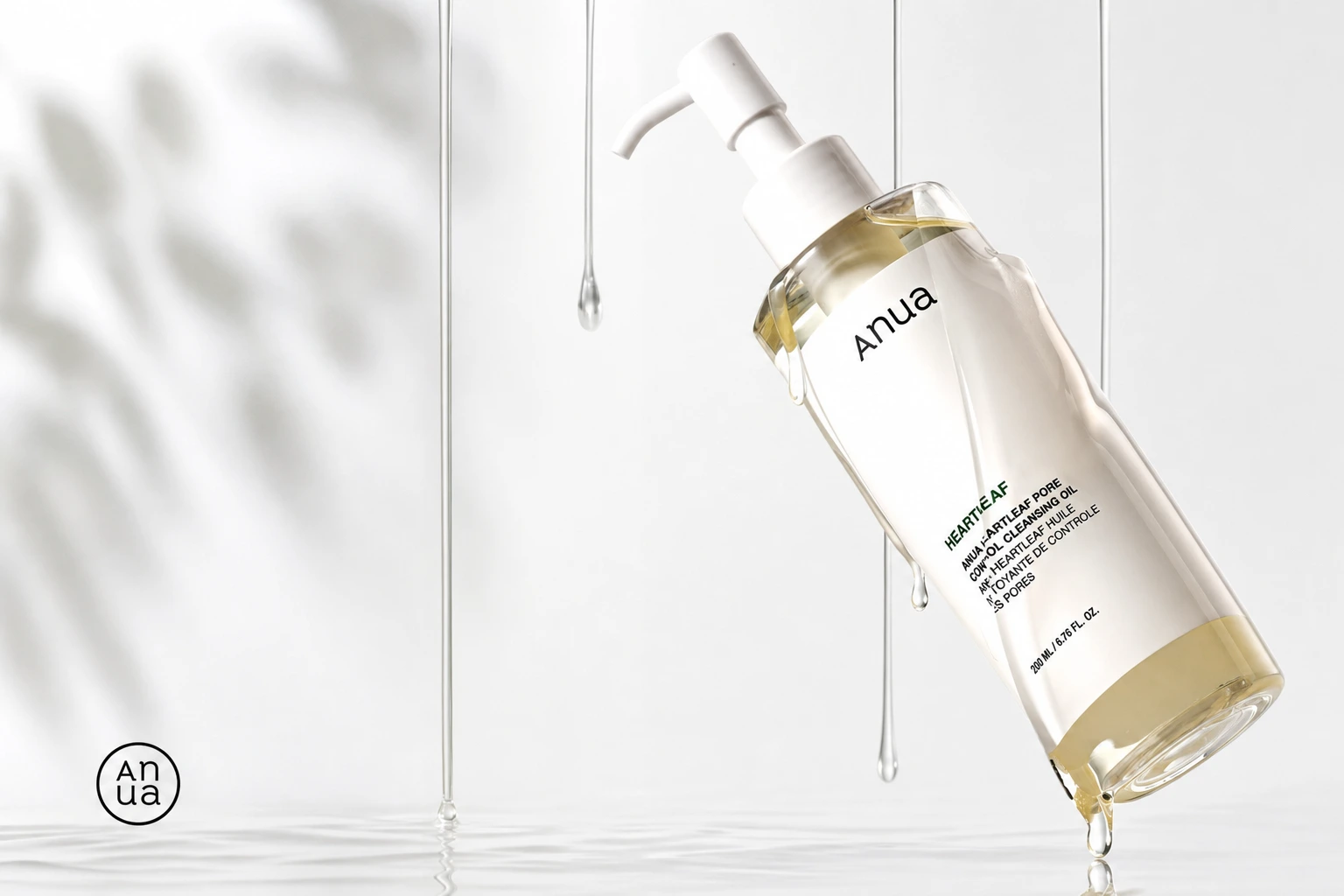
An oil cleanser should dissolve SPF on dry skin, emulsify with lukewarm water, and pair with a gentle second cleanse to reduce residue.
Key takeaways
- Daily SPF removal works best when the first cleanser dissolves sunscreen on dry skin, then emulsifies before rinsing.
- The timing benchmark is 20 to 40 seconds dry massage plus 15 to 20 seconds with lukewarm water.
- Pore-clogging risk depends more on vehicle effects and formula concentration than on old fixed ingredient ratings.
Why does sunscreen demand a double cleansing routine?
Sunscreen accumulates in layers throughout the day, requiring a targeted removal process to clear sebum and environmental build up.
Sunscreen accumulation makes evening removal more demanding than a quick foam wash. A double cleansing routine helps address sunscreen and sebum.
Anua positions evening double cleansing as the priority window because the skin has accumulated sunscreen, sebum, and environmental particles throughout the day. The goal is not to make the routine more complicated.
Consistent nighttime double cleansing can also prepare skin for leave-on steps such as vitamin C or retinoids by reducing residue before those formulas go on (Anua US Official, 2026). If your skin often feels congested after sunscreen days, the issue may be removal technique rather than the SPF itself.
How do you oil cleanse for complete SPF removal?
Effective oil cleansing starts with 20 to 40 seconds of dry massage, followed by 15 to 20 seconds of emulsifying with water.
The dry phase matters because many impurities are oil-soluble and interact more effectively with a cleanser before water is added. Conscious Chemist describes effective oil cleansing as a 20 to 40 second massage on dry skin before water is added (Conscious Chemist, 2026).
After that, add lukewarm water and massage for another 15 to 20 seconds so the cleanser turns milky. This emulsification step results in a milky residue (Conscious Chemist, 2026).
- Apply the cleanser during the dry phase to begin breaking down oil-soluble impurities.
- Massage for 20 to 40 seconds to ensure the oil interacts effectively with surface buildup.
- Wet fingertips with lukewarm water and massage for 15 to 20 seconds until the oil looks milky.
- Rinse thoroughly to remove the emulsified mixture.
- Follow with a gentle water-based cleanser to complete the routine.
A common mistake is rinsing before the oil has had enough contact time. Another is skipping the milky phase. If the cleanser stays glossy and heavy after water is added, it may not have emulsified enough, or you may need a smaller amount of product.
Eye-area cleansing needs more caution. Cleansing balms and oils are often used to address waterproof makeup and sunscreen, That does not mean every oil cleanser is safe for lash extensions. If you have lash extensions, avoid rubbing the lash line and follow your lash technician’s adhesive-care instructions.
Will oil cleansers clog your pores?
An ingredient's potential to clog pores is dictated more by vehicle effects and concentration than fixed ratings.
Many shoppers still use old comedogenicity lists to judge cleansing oils. That can be misleading. ClearSkin notes that the traditional 1972 rabbit-ear comedogenicity scale has limited application to modern skincare, and newer thinking looks more closely at vehicle effects and concentration (ClearSkin, 2026).
In plain terms, an ingredient is not the whole story. The amount used, the vehicle of the formula, and the use of a second cleanse all influence the potential for clogged pores.
| Concern | What to check instead | Why it matters |
|---|---|---|
| A single ingredient appears on an old pore-clogging list | Look at the whole formula and vehicle effects | Modern comedogenicity concerns are more context-dependent than fixed lists suggest |
| Skin feels slick after rinsing | Use less product or adjust the water ratio | Formula concentration and vehicle effects influence the potential for pore clogging |
| Breakouts appear after starting an oil cleanser | Consider the full routine and concentration of the product before blaming one ingredient | Vehicle effects and formula concentration impact the skin more than a single ingredient listing |
| Acne-prone or textured skin | Choose a formula made for pore care and pair it with a gentle second cleanse | Consistent cleansing helps remove sebum and sunscreen buildup to minimize pore-clogging potential |
For clog-prone skin, the best test is practical: after rinsing, your face should not feel waxy, and your second cleanser should not need aggressive rubbing to remove the first cleanser. If you regularly feel residue near the nose or chin, extend the water-massage phase before switching products.
Which cleansing oils and balms are worth comparing?
The right first cleanser dissolves sunscreen quickly, emulsifies cleanly, and feels comfortable enough for nightly repeat use.
The category is growing because more people now wear daily sunscreen and long-wear makeup. The facial cleansing balm and oil market is projected to grow at a 10.9% CAGR and reach $997.6 million by 2032 (Yahoo Finance, 2026). That growth has made product selection harder, not easier.
A useful first-cleanse comparison looks at four criteria:
- Contact time: Does it break down sunscreen within a realistic massage window?
- Emulsification: Does it turn milky with water instead of staying oily?
- Rinse feel: Does skin feel clean before the second cleanse, not coated?
- Repeat comfort: Can you use it nightly without tightness or heavy residue?
The Double Cleansing Duo Set is especially relevant for those who care about textured skin, blackheads, or acne-prone routines.
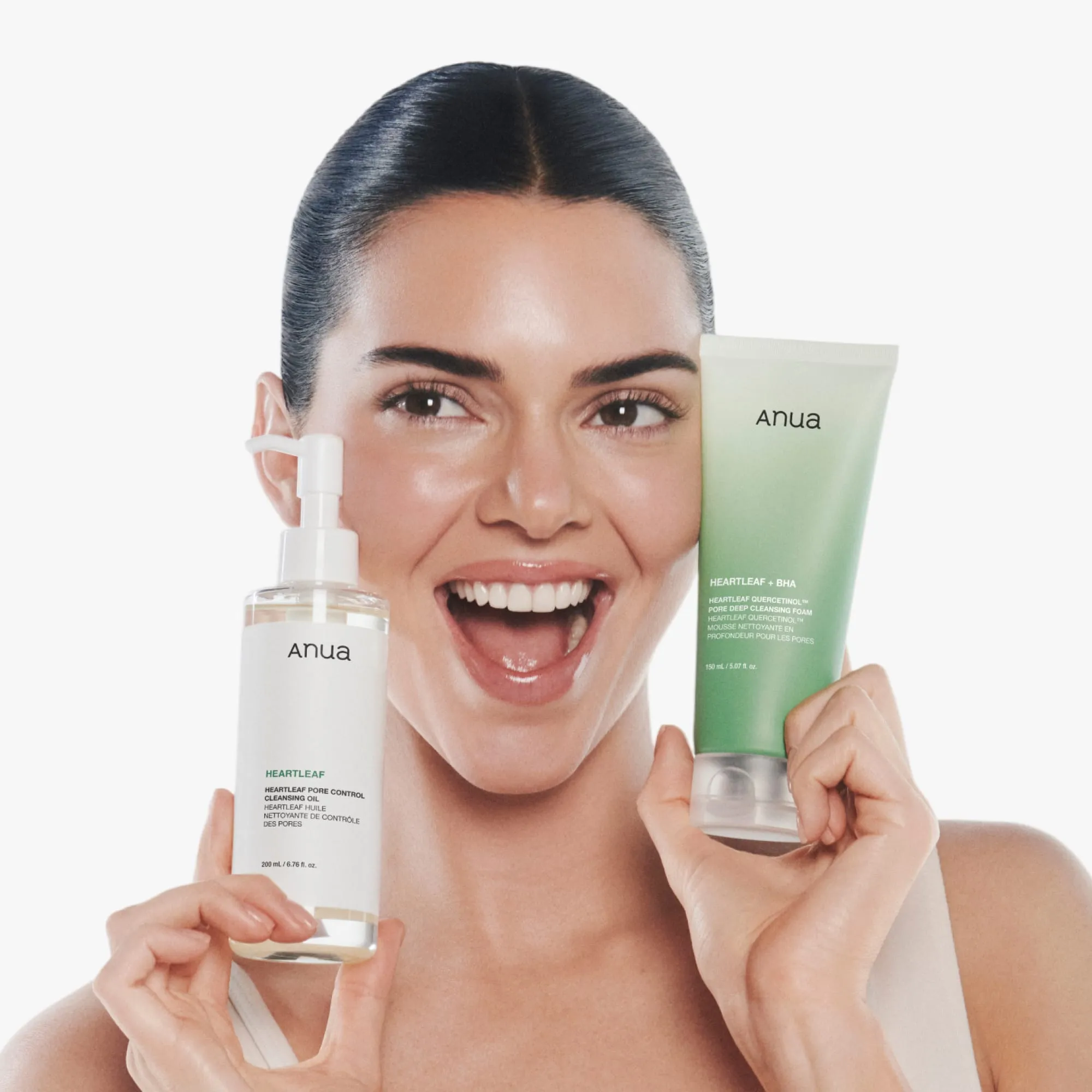
Double Cleansing Duo Set
A two-step Anua cleansing kit for oil-based SPF removal followed by a gentle water-based cleanse.
Packaging and hygiene are also becoming part of the comparison. The Murad Lipid-Enriched Double Cleansing Balm features specialized packaging designed for improved hygiene and application efficiency (Really Ree). That trend matters most for balm users who scoop from jars, while pump oils may appeal to users who want faster dosing at the sink.
How should you complete the cleanse with a water-based formula?
A water-based second cleanse removes residue and impurities without leaving skin tight when the formula suits your barrier.
The second cleanse should not feel like damage control. If the oil cleanser emulsified properly, the water-based cleanser only needs to clear the last traces of residue and leave the skin ready for the next step. Over-cleansing at this stage can make the skin feel tight, which may lead people to blame the oil cleanser when the second step is the issue.
For comparison, a review by Artistry by T reported that a centella-based cleansing foam contains 33% Centella Asiatica Extract, a feature often noted by users looking for a mild follow-up cleanser (Artistry by T).
The Double Cleansing Duo Set is priced between USD 38 and USD 84. Its water-based step uses Heartleaf-derived Quercetinol to soothe while removing deeper impurities, according to Anua’s product specifications (Anua US Official, 2026).
| Day type | First cleanse goal | Second cleanse goal | What to watch |
|---|---|---|---|
| Sensitive-skin day | Use light pressure and a shorter massage within the recommended range | Choose a gentle water-based finish | Tightness means the routine may be too aggressive |
| High-sebum day | Spend extra time on the T-zone before adding water | Cleanse residue and impurities | Do not extend massage until skin feels hot or irritated |
Morning double cleansing is optional. Many dry or balanced skin types do better with a simple water-based cleanse in the morning and a two-step routine at night.
FAQS
Frequently asked questions
What is the best oil cleanser for double cleansing sunscreen?
How do I know if my oil cleanser is rinsing clean?
Is one cleanse enough on light sunscreen days?
Should I double cleanse in the morning and at night?
Is oil cleansing suitable for the eye area?
Do I need a separate travel routine for sunscreen removal?
Build a nightly SPF-removal routine
Choose a cleanser that dissolves sunscreen first, then finish with a gentle second cleanse so skin feels clean without extra scrubbing.