Redness-Prone Sensitive Skin Routine by Anua
A redness-prone routine works best with 4 gentle steps: hydrating cleanse, calming serum, targeted azelaic support, barrier cream, and SPF.
Redness-prone sensitive skin does best with a short routine that cleanses without stripping, hydrates, targets visible redness, and seals the barrier. This routine is skincare support, not a medical treatment plan for rosacea, eczema, dermatitis, or infection.
As of 2026, sensitivity is common enough that many shoppers are trying to separate ordinary reactivity from symptoms that may need professional care. Approximately 71% of adults self-identify as having sensitive skin globally, according to Intel Market Research, 2026. Redness can overlap with that sensitivity, but persistent flushing, painful stinging, visible broken capillaries, or recurring bumps are reasons to ask a dermatologist rather than keep changing products.
Understanding Sensitive and Redness-Prone Skin
Many shoppers seek routines to address sensitive skin and visible redness.
When dealing with these concerns, the routine goal is not to chase every red mark with stronger actives. The safer starting point is barrier repair, moisture retention, and a lower irritation load. Intel Market Research reports that 60% to 70% of women and 50% to 60% of men report skin sensitivity globally, which helps explain why redness-relief and barrier products are now common across age groups and skin types (Intel Market Research, 2026).
If sunscreen, moisturizer, or even water stings, pause new actives and simplify. If the redness is persistent or worsening, professional evaluation is the better next step.
The Growing Focus on Redness-Relief Skincare
Redness-relief skincare is growing because shoppers want calming creams, barrier support, and actives that fit sensitive routines.
The category is no longer limited to heavy creams for dry skin. Future Market Insights values the global redness-relief skincare market at $3,402.1 million in 2025 and projects 8.7% compound annual growth through 2035 (Future Market Insights, 2025). That growth reflects a clear consumer preference: fewer harsh steps, more soothing formats, and ingredients with multiple roles.
Soothing creams and balms are expected to hold a 45.2% market share in redness-relief by 2025, while niacinamide represents a 39.6% share of the redness-relief skincare segment as a leading active ingredient (Future Market Insights, 2025). This supports a routine architecture built around moisturizers, humectants, ceramides, niacinamide, and carefully introduced azelaic acid.
Growth is especially strong in large beauty markets. India’s redness-relief market is projected to grow at a 15.2% CAGR through 2035, while China is projected at 13.6% over the same period (Future Market Insights, 2025). The broader trend is simple: people want calming routines that are easy to repeat when skin is reactive.
| Ingredient or format | Role in a redness-prone routine | Best fit | Caution for sensitive skin |
|---|---|---|---|
| Niacinamide | Leading active ingredient in redness-relief | Redness-relief routines | Very high percentages may not suit everyone |
| Soothing creams and balms | Seal hydration and reduce friction from over-layering | Dryness, winter sensitivity, barrier stress | Use thinner layers if acne-prone |
For ingredient-level comparison, Anua also covers active selection in Azelaic Acid vs Salicylic Acid for Acne-Prone Skin. If redness flares after sunscreen removal, review Oil Cleanser for Sunscreen Removal and Double Cleansing before adding more actives.
Step 1: Start With a Gentle, Hydrating Cleanse
A hydrating gel cleanser helps redness-prone skin by removing residue while reducing the chance of a stripped, tight finish.
Cleansing is where many sensitive routines fail. A cleanser that leaves skin squeaky, tight, or hot can make the rest of the routine feel irritating, even when the serum and cream are well chosen. A low-foam, hydrating gel is usually the better first step for skin that reacts after washing.
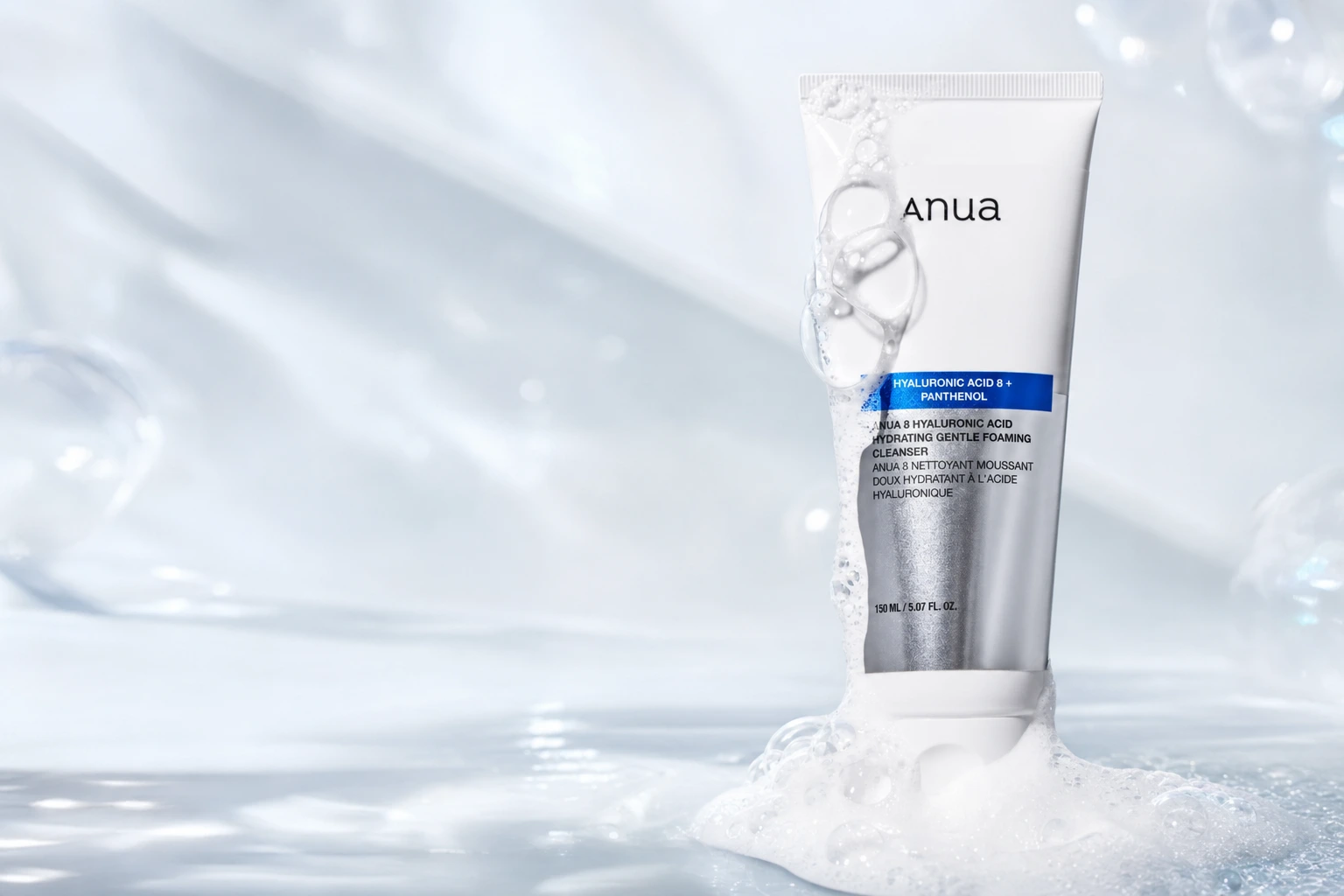
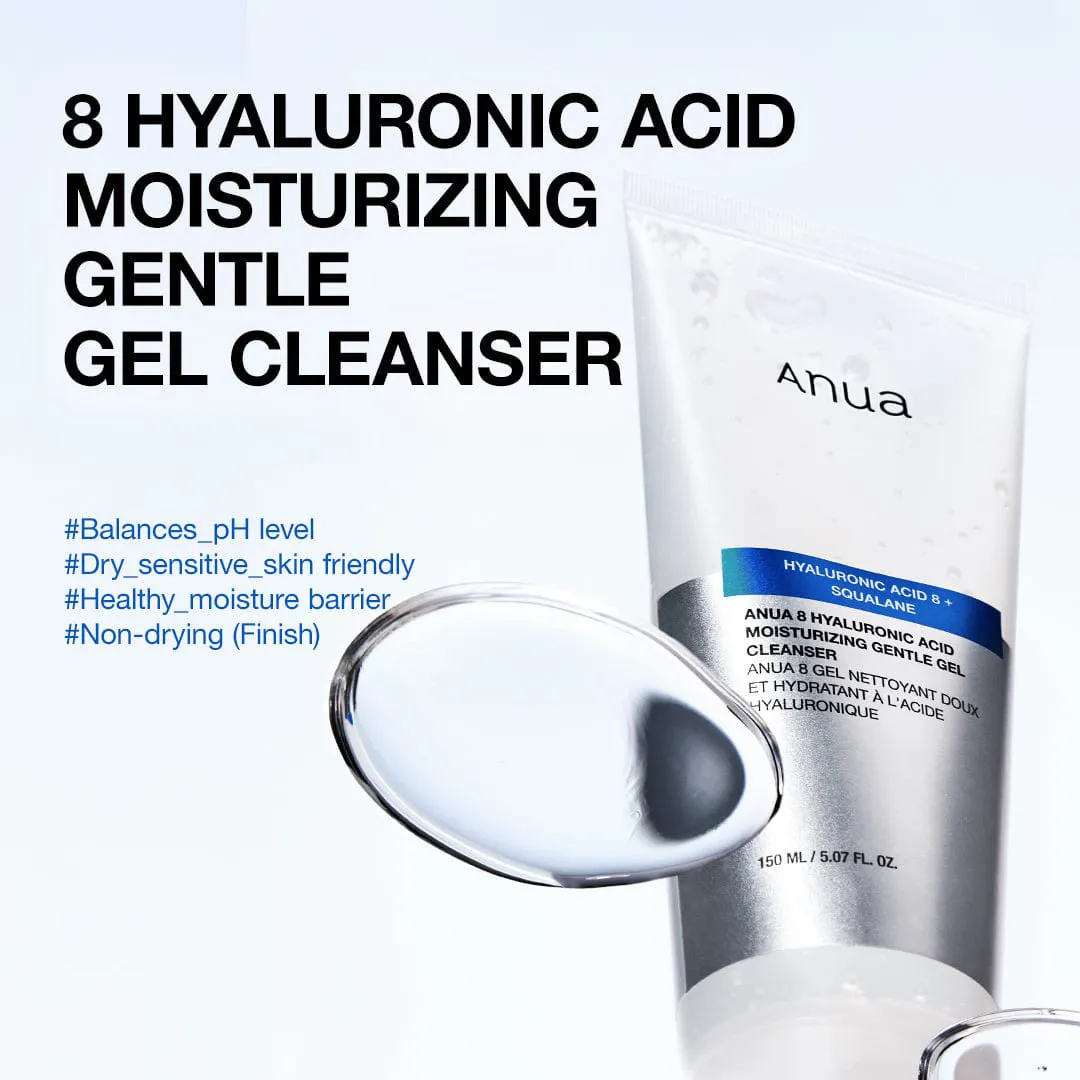
For this step, use 8 Hyaluronic Acid Moisturizing Gentle Gel Cleanser. It is formulated with 8 types of hyaluronic acid, glycerin, and ceramides.
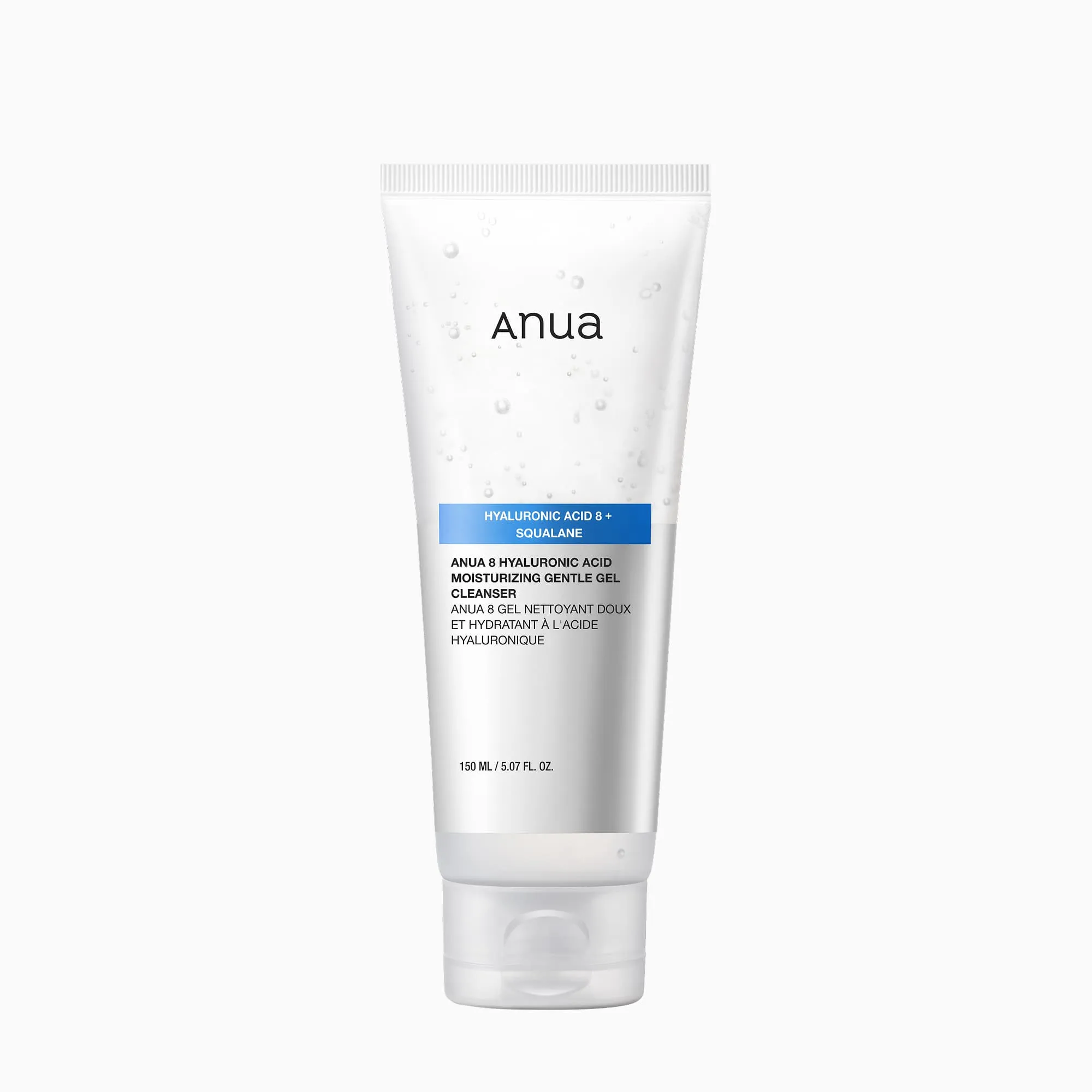
8 Hyaluronic Acid Moisturizing Gentle Gel Cleanser
A hydrating gel cleanser designed for sensitive skin, with 8 types of hyaluronic acid, glycerin, ceramides, ectoin, and squalane.
Use it in the morning if your skin wakes up oily or after an oil cleanser at night if you wear sunscreen or makeup. If your skin is actively stinging, wash with lukewarm water, massage briefly, and avoid cleansing brushes or washcloth friction.
Step 2: Apply Targeted Serums for Soothing and Barrier Repair
Barrier serum and azelaic serum serve different roles: one supports resilience, while the other targets visible redness.
For redness-prone skin, serum choice should depend on what your skin is doing that week. If the skin feels dry, thin, tight, or easily irritated, start with barrier support. If the barrier feels stable but red areas or troubled spots are the main concern, introduce azelaic support slowly.
Rice Ceramide 7 Hydrating Barrier Serum is the barrier-support step. It is clinically proven to improve skin barrier function by 45.4% after 2 weeks and 63.9% after 4 weeks (Anua US, 2026). In a 4-week study, 100% agreed skin felt hydrated after use (Anua US, 2026).
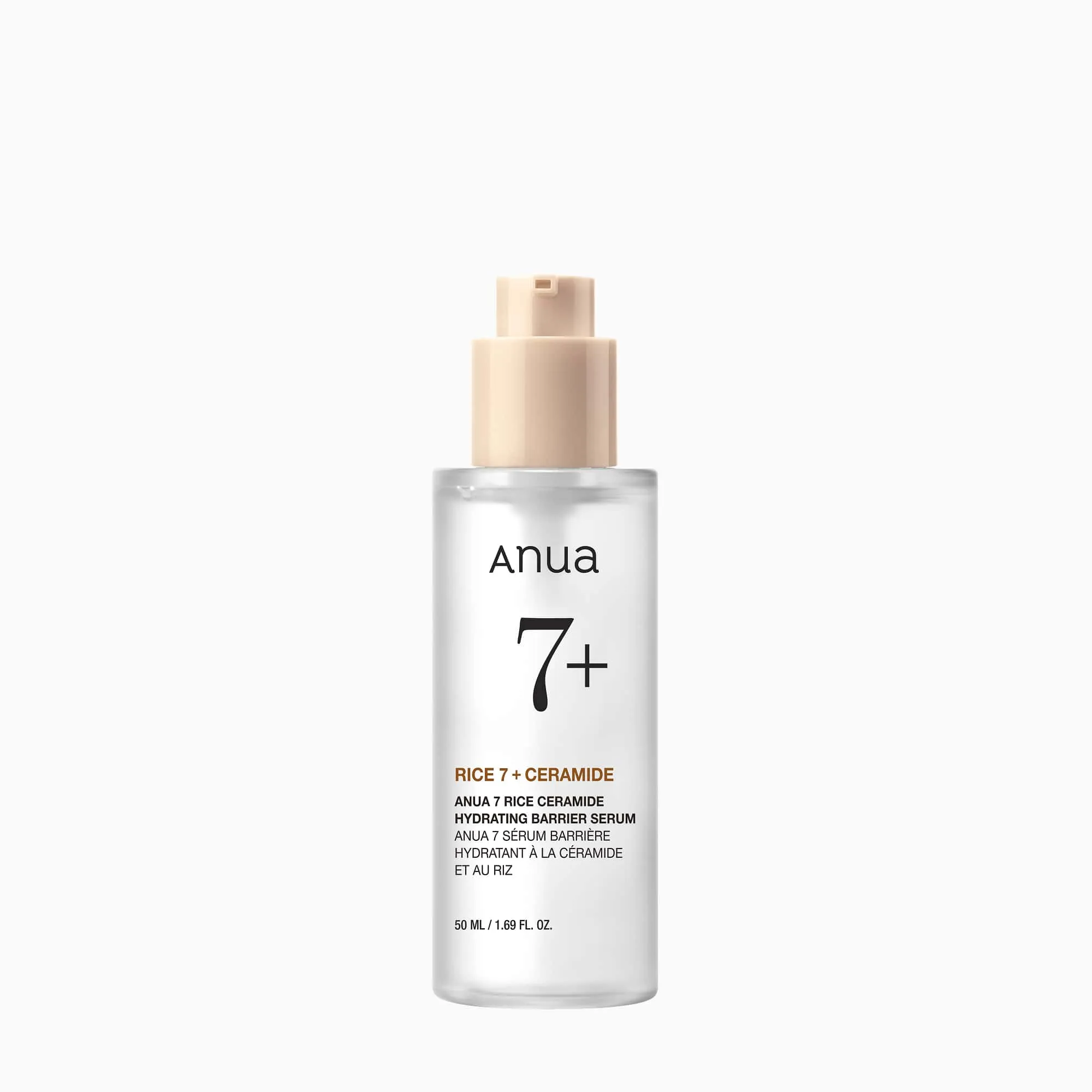
Rice Ceramide 7 Hydrating Barrier Serum
A hydrating barrier serum with rice, ceramide, 3% niacinamide, arbutin, zinc, panthenol, hyaluronic acid, honey extract, and glycerin.
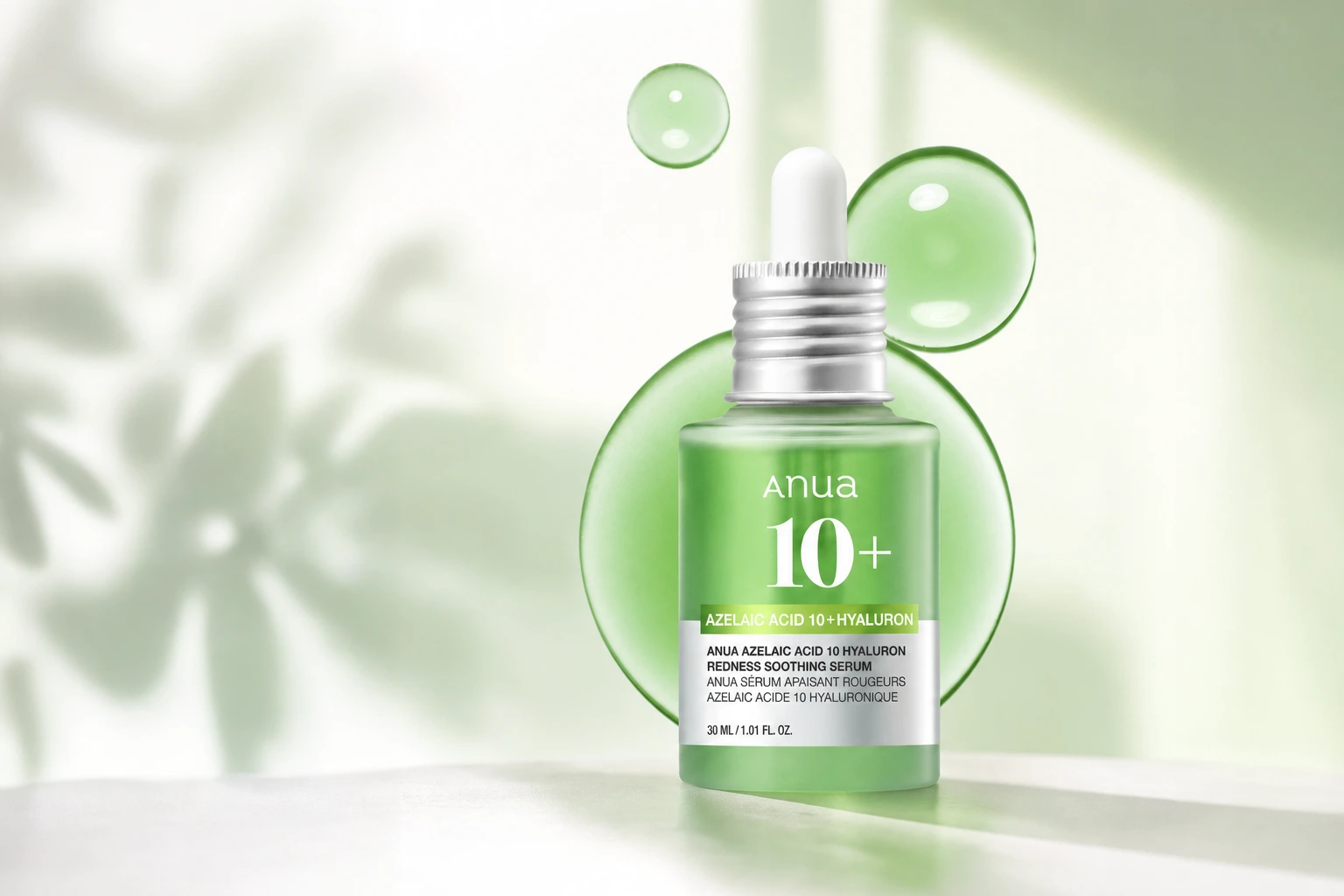
Azelaic Acid 10 Hyaluron Redness Soothing Serum is the targeted redness step. It contains 10% azelaic acid and sodium hyaluronate. In a clinical study, 90% of participants agreed the appearance of red troubled spots improved (Anua US, 2026).
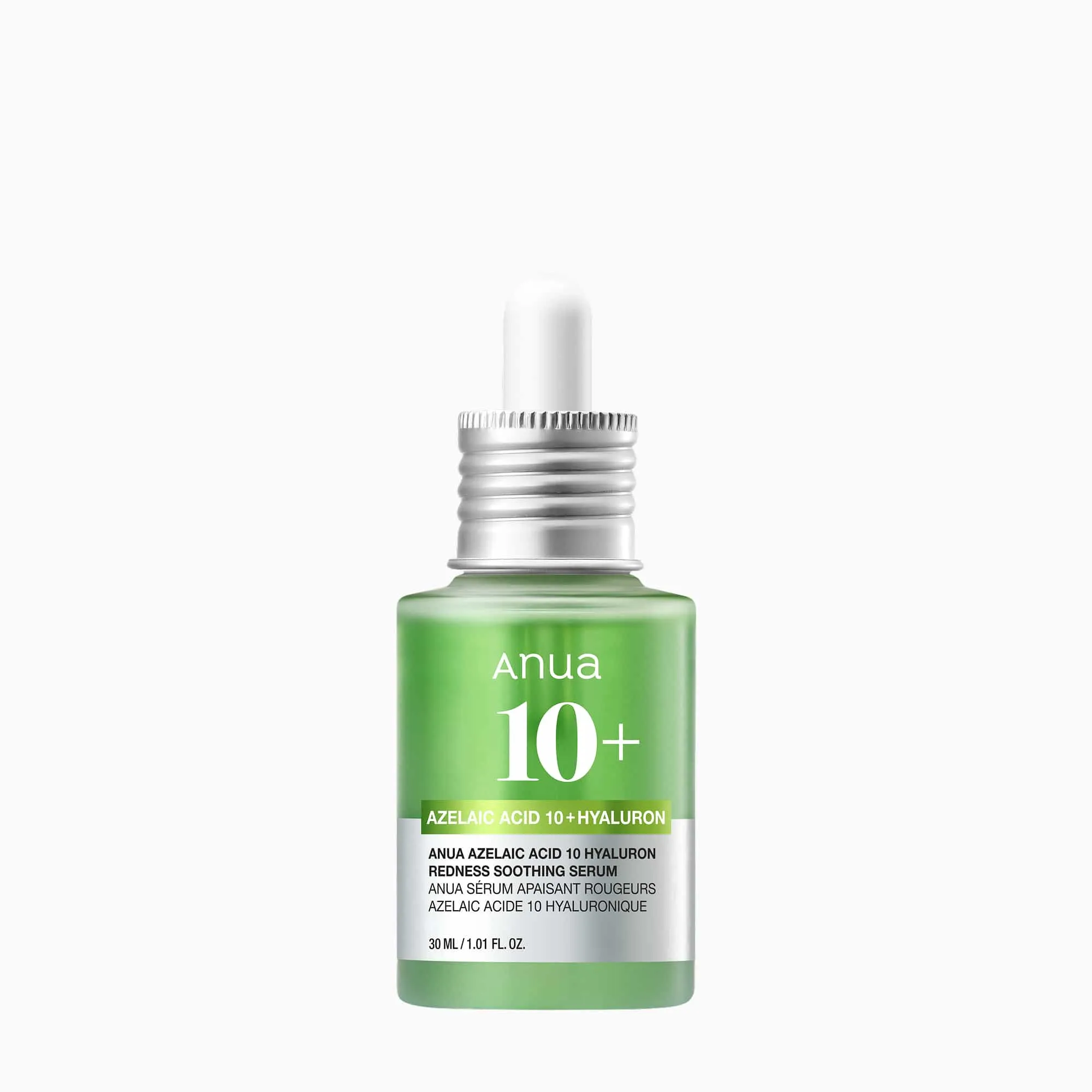
Azelaic Acid 10 Hyaluron Redness Soothing Serum
A lightweight serum with 10% azelaic acid and sodium hyaluronate for redness-prone and troubled areas.
A simple schedule works best:
- Use Rice Ceramide 7 Hydrating Barrier Serum after cleansing, especially when skin feels dry or tight.
- Add Azelaic Acid 10 Hyaluron Redness Soothing Serum 1 to 2 times per week at first, using 1 to 2 drops.
- Increase frequency only if skin does not sting, burn, peel, or stay flushed after application.
- Finish daytime routines with sunscreen.
Step 3: Calm Troubled Spots Directly
A targeted spot cream is useful when small red areas need extra moisture-barrier support without covering the whole face heavily.
Some redness is diffuse, such as cheeks that flush after cleansing. Some redness is localized, such as a small red troubled area around the chin, nose, or jaw. When the concern is localized, a targeted cream can reduce the need to layer richer products everywhere.
Use Heartleaf Centella Red Spot Cream on concerned areas or as a lightweight daily moisturizer when skin is both redness-prone and blemish-prone. It contains 7.2% Heartleaf, 1.2% Cica, and panthenol 2.8%. It helps balance excess sebum by 32.27% (Anua US, 2026).
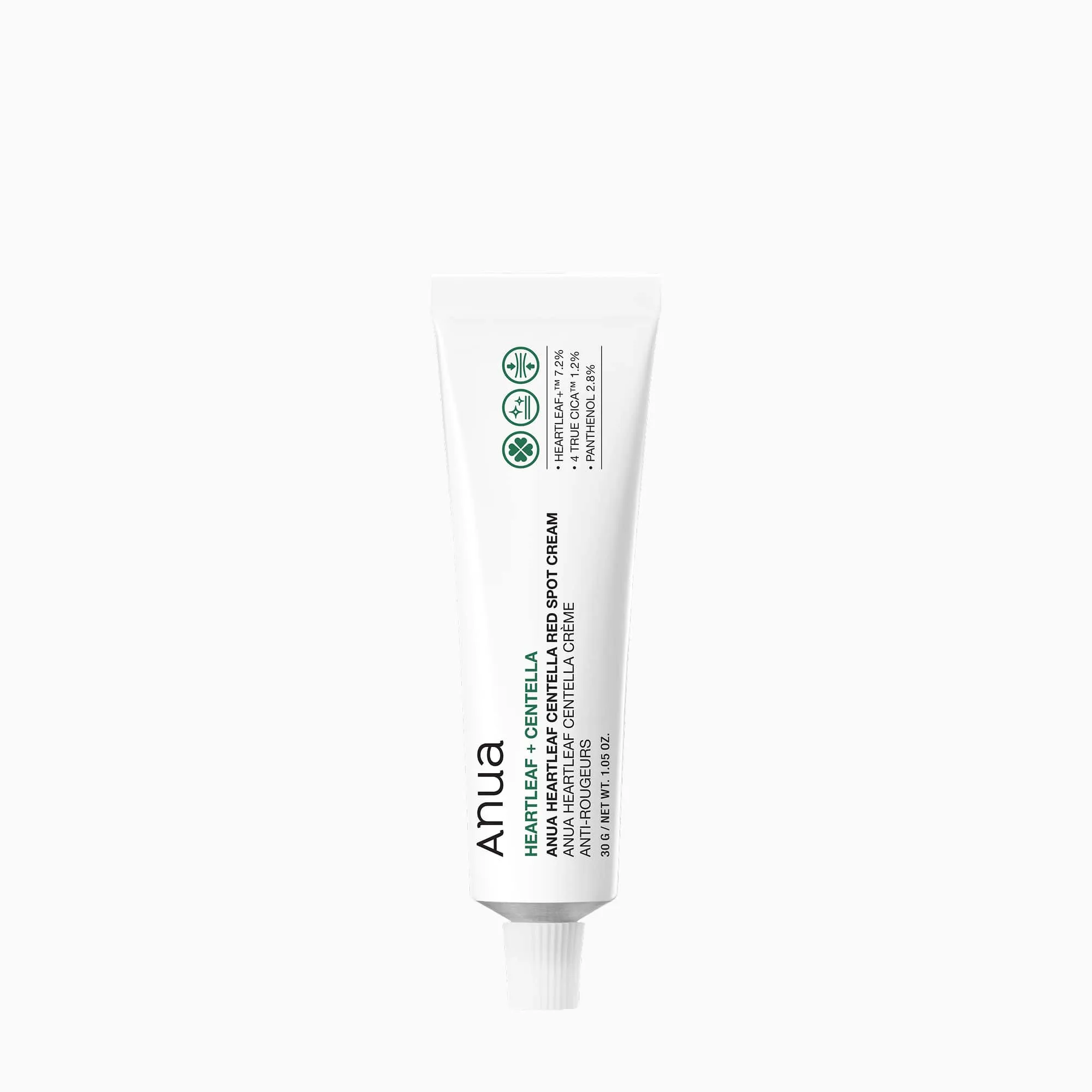
Heartleaf Centella Red Spot Cream
A lightweight hydrating centella cream with Heartleaf+™ 7.2%, 4 True Cica™ 1.2%, and panthenol 2.8% for targeted red areas.
Use a thin layer for daily care or a thicker layer on concerned areas as the final step. If you are using azelaic acid the same night, keep the rest of the routine plain: cleanser, azelaic serum, spot cream or moisturizer. Avoid stacking exfoliating acids, scrubs, retinoids, and multiple new products on the same day.
Step 4: Seal With an Intense Calming Moisturizer
A calming moisturizer finishes a redness-prone routine by sealing hydration and reducing barrier stress from dryness.
The final cream step matters because humectants need a comfortable seal, especially when the air is dry or the skin barrier feels compromised. A good redness-prone moisturizer should cushion the skin, reduce tightness, and avoid a greasy finish that makes blemish-prone skin uncomfortable.
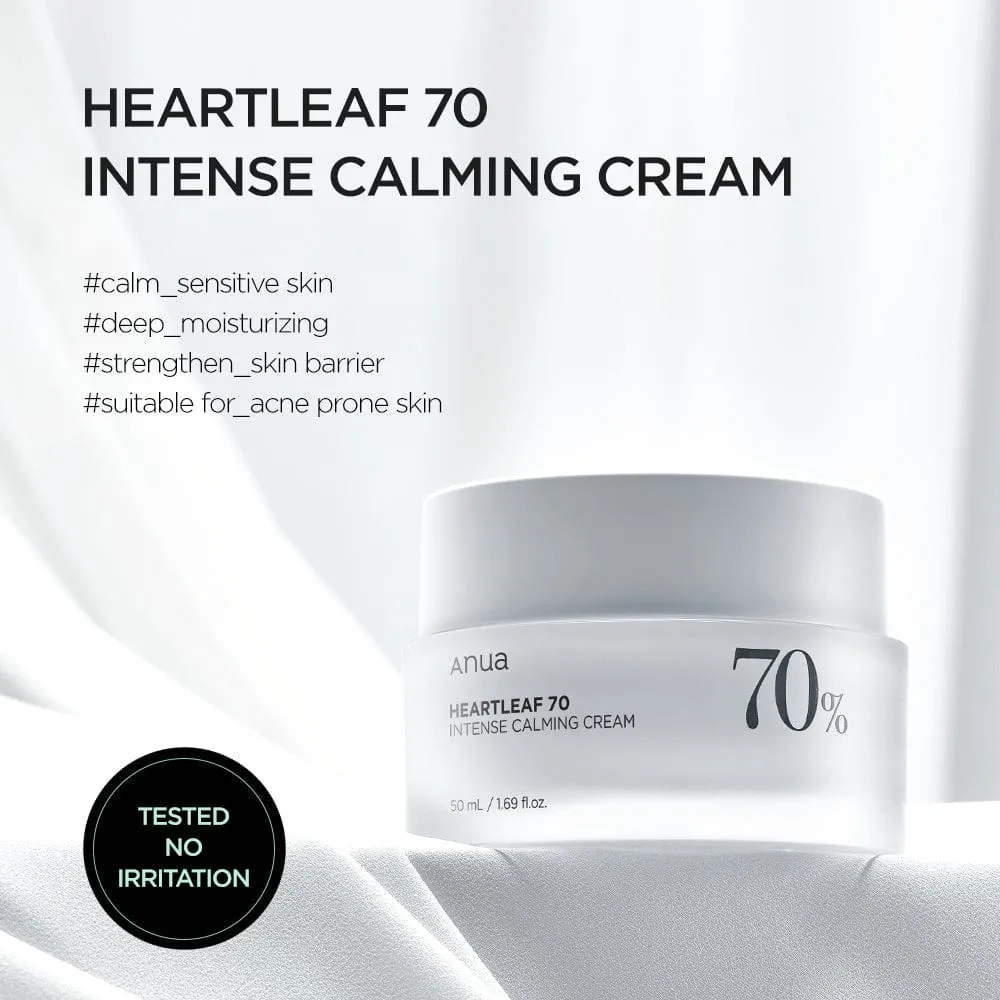
Heartleaf 70% Intense Calming Cream uses heartleaf extract, ceramide, and panthenol to help reinforce a weakened barrier.
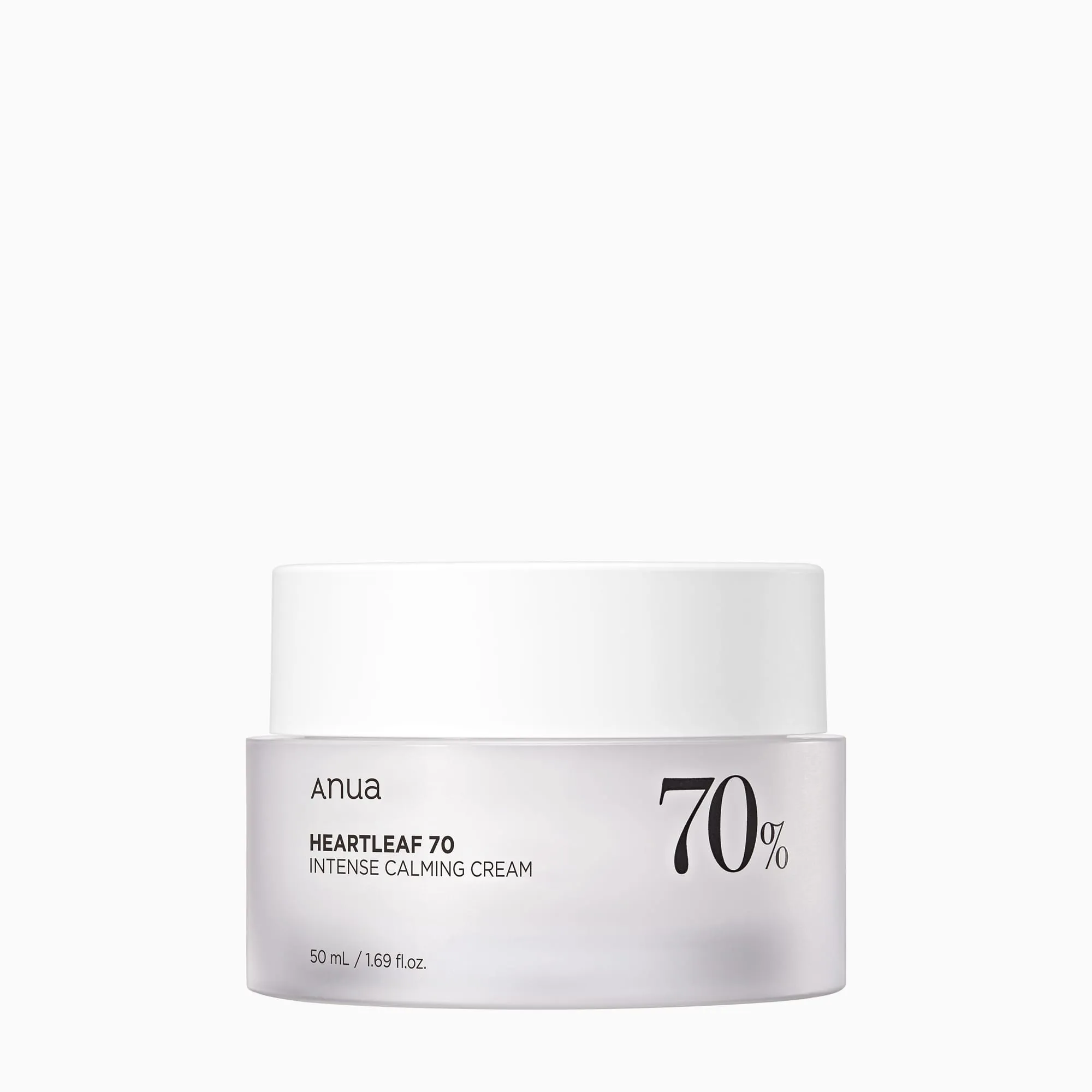
Heartleaf 70% Intense Calming Cream
A calming cream with 70% heartleaf extract, ceramide, and panthenol, designed to strengthen and help maintain the skin’s moisture barrier.
In the morning, apply it after serum and before sunscreen. At night, use it as the final face and neck step. During dry winter periods, apply multiple thin layers rather than one thick layer, especially on cheeks or around the nose where redness often appears.
How should you choose between Anua products for reactive, dry, or blemish-prone redness?
Choose based on the skin problem you feel most: tightness needs barrier serum, red spots need azelaic support, and dryness needs cream.
A routine for redness-prone skin should not use every active every day. Pick the product that matches the most obvious signal from your skin.
| If your skin feels or looks like this | Best Anua fit | Why it fits |
|---|---|---|
| Tight after cleansing, shiny but dehydrated, easily irritated | Rice Ceramide 7 Hydrating Barrier Serum | Barrier support with rice, ceramide, niacinamide, panthenol, hyaluronic acid, honey extract, and glycerin |
| Visible redness or red troubled areas are the main concern | Azelaic Acid 10 Hyaluron Redness Soothing Serum | 10% azelaic acid plus sodium hyaluronate for targeted support |
| Small red areas need extra care without heavy full-face layers | Heartleaf Centella Red Spot Cream | Heartleaf, cica, and panthenol in a targeted cream format |
| Cheeks feel dry, rough, or compromised | Heartleaf 70% Intense Calming Cream | Heartleaf extract, ceramide, and panthenol in a cushioning cream |
| Cleansing leaves skin uncomfortable | 8 Hyaluronic Acid Moisturizing Gentle Gel Cleanser | Hydrating gel cleanser with hyaluronic acid, glycerin, and ceramides |
Patch testing is especially important for reactive skin. Apply a small amount near the jaw or behind the ear once daily for several days before using it across the face. For leave-on actives such as Azelaic Acid 10 Hyaluron Redness Soothing Serum, start with 1 to 2 drops 1 to 2 times weekly, then increase only if your skin stays comfortable.
If you need a sunscreen strategy for redness-prone mornings, read Sunscreen for Rosacea-Prone Sensitive Skin. Sunscreen is important because UV exposure can worsen the look of redness and make reactive skin harder to calm.
A low-friction checklist for flare-prone periods
During a flare-prone period, keep the routine plain: cleanse gently, moisturize well, pause extras, and use sunscreen daily.
When skin is already red or stinging, the best routine is often the least exciting one. Give the barrier a chance to settle before adding new products or increasing active frequency.
Use this checklist for 1 to 2 weeks when your skin feels reactive:
- Cleanse once nightly with 8 Hyaluronic Acid Moisturizing Gentle Gel Cleanser, or rinse with water in the morning if skin feels dry.
- Use Rice Ceramide 7 Hydrating Barrier Serum for hydration and barrier support.
- Pause scrubs, peels, strong exfoliating acids, and newly introduced retinoids.
- Use Heartleaf 70% Intense Calming Cream as the final step at night.
- Use sunscreen every morning, especially if you use azelaic acid.
- Reintroduce Azelaic Acid 10 Hyaluron Redness Soothing Serum slowly once stinging has settled.
- Seek professional advice if redness is painful, spreading, swollen, crusted, or paired with eye discomfort.
Build a calmer Anua routine
Choose the cleanser, serum, and cream steps that match how your skin feels this week. Keep the routine short, patch test carefully, and add sunscreen in the morning.
FAQS