What Non-Comedogenic Means in Korean Sunscreen
Non-comedogenic Korean sunscreen lowers pore-clogging risk, but final formula, finish, and skin behavior matter more than one ingredient.
Non-comedogenic Korean sunscreen formulas are best understood as lower-risk formulas, not breakout-proof formulas. As of late 2025, brands can use the non-comedogenic claim without standardized government testing or oversight, so the most useful question is how the whole sunscreen behaves on your skin.
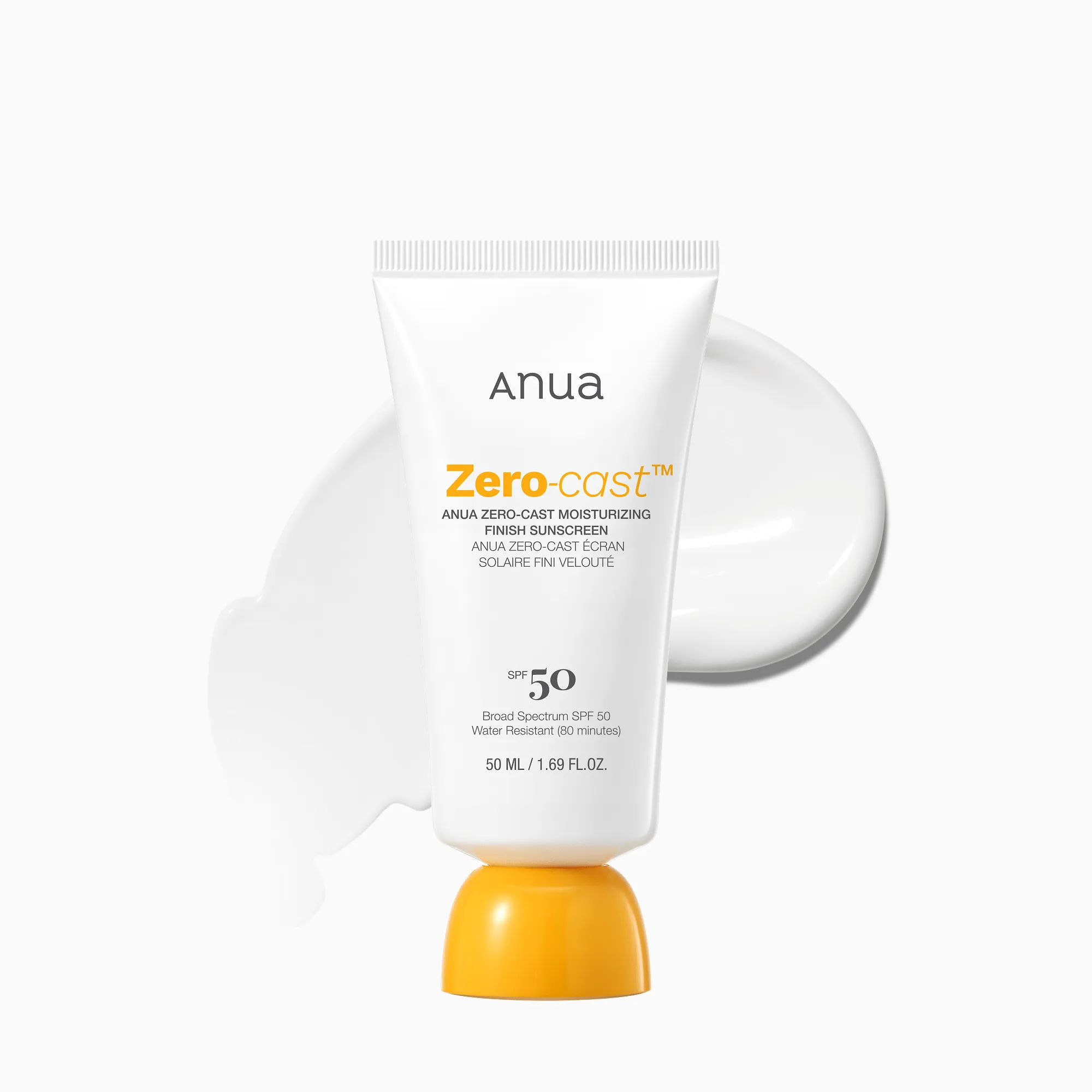
For Anua, that distinction matters. The brand’s sunscreen positioning centers on high-concentration active ingredient care and a finish that avoids white cast and greasy residue. Zero-cast Moisturizing Finish Sunscreen is a broad spectrum SPF 50 sunscreen priced at USD 19 and formulated for a lightweight everyday finish.
The Truth About Non-Comedogenic Labels
Non-comedogenic is a voluntary skincare claim, not a universal certification. As of late 2025, the term remains largely unregulated globally, with no standardized governmental oversight for how brands apply the claim (ScienceDirect, 2025).
For shoppers comparing Korean sunscreens, the practical definition is primarily a reflection of brand positioning:
- The lack of standardized testing means the claim does not serve as a universal certification.
- Users should still prioritize patch testing, especially for adult cystic acne or sensitive skin.
A better way to read the label is to treat it as one piece of information. The rest of the decision should come from finish, residue, filter system, moisturizing base, fragrance status, and how your skin responds across repeated use.
This is especially important because a sunscreen can be cosmetically elegant and still be unsuitable for some users depending on how the texture behaves on their specific skin areas.
Why Does Final Formulation Matter More Than Single Ingredients?
A finished sunscreen can behave differently from its ingredient list. The emulsification process and resulting chemical interactions affect the pore-clogging risk of a finished sunscreen.
Clinical research highlights that individual ingredient testing is an insufficient predictor of acne because the final product can behave differently from its raw materials (PMC, 2025). The emulsification process can also create interactions that change comedogenic potential even when separate ingredients are considered acceptable (PMC, 2025).
That is why ingredient-list logic often fails when people search for non-comedogenic Korean sunscreen ingredients. A single ingredient may look concerning in a forum thread, but its real-world behavior depends on the total formula.
| Ingredient-list question | Implications | What it cannot prove | Better signal to check |
|---|---|---|---|
| Does the sunscreen contain texture helpers? | Suggests specific formulation intent. | It does not prove the product will clog pores. | Finish after 20 minutes and after reapplication. |
| Is one ingredient rated comedogenic online? | May flag a reason to patch test. | It does not account for the final emulsified formula. | Breakout pattern after 2 to 4 weeks of consistent use. |
| Does it claim no white cast? | Indicates a focus on aesthetic finish. | It does not prove low clogging risk by itself. | Greasy residue and how it removes. |
This also explains why two products with similar texture ingredients can feel different on acne-prone skin. A useful test is to observe how your skin reacts to the formula over time.
Which K-Beauty Sunscreen Ingredients Are Commonly Misread?
Isohexadecane is recognized as a non-comedogenic hydrocarbon in cosmetic ingredient data, and its large molecular size helps prevent penetration into skin or scalp pores (SpecialChem, 2026).
The presence of this ingredient in various formulas is a common point of discussion for acne-prone users. However, the useful answer is not simply that a single ingredient is safe or should be avoided. The better answer is that isohexadecane alone does not determine whether a sunscreen will work for acne-prone skin.
| Ingredient or formula signal | Observed properties | Acne-prone interpretation |
|---|---|---|
| Isohexadecane | Non-comedogenic hydrocarbon. | Not automatically pore-clogging based on current ingredient data. |
For a fragrance-free non-comedogenic sunscreen search, the same principle applies. Fragrance status can help sensitive skin users narrow options, though product compatibility remains individual.
Hydration and Congestion in Korean Sunscreen
Hydrating formulas are often evaluated by users concerned about breakouts. For those asking if specific hydrating ingredients trigger congestion, the answer often lies in the finished formula rather than one component.
A formula can provide hydration without a heavy occlusive feel. Zero-cast Moisturizing Finish Sunscreen incorporates sodium hyaluronate and is designed to provide hydration while avoiding a greasy residue. This is a significant distinction for users who find that film-heavy products contribute to skin concerns.
For acne-prone users, the best test is practical:
- Apply the sunscreen to a specific area of the face to observe how your skin responds.
- Maintain your existing skincare routine during the observation period.
- Watch for any changes in your skin's appearance or comfort level.
- If discomfort occurs, assess if the formula is suitable for your skin type.
- If you notice an increase in breakouts over time, consider comparing it with a different formula.
This approach is more useful than deleting every humectant from a routine. Dehydrated skin often benefits from hydration-focused ingredients to balance moisture levels.
Evaluating Hydration and Residue
A sunscreen can feel moisturizing without feeling greasy when the formula is balanced to avoid excessive residue.
The right way to evaluate a hydrating sunscreen is not only by the first swipe. A product can feel excellent at application and still fail later if it becomes shiny, feels congested, or interacts poorly with other steps in a routine.
Find your everyday Anua sunscreen
Choose a sunscreen by finish, residue, and how it behaves across real daily wear. Anua’s shop includes SPF and skincare options built for lightweight layering.
Why Do Forehead and Chin Breakouts Matter for Sunscreen Testing?
Forehead and chin zones can show closed comedones more clearly. Test sunscreen where your skin usually congests.
Research on comedones, sebum, and porphyrin patterns suggests that forehead and chin sebum levels correlate more significantly with closed comedones than other body areas (ResearchGate, 2025). For sunscreen users, that means a cheek-only patch test may miss the zones where congestion usually appears.
This is relevant for maskne, chin congestion, forehead bumps, and adult cystic acne routines. A sunscreen may look fine on the cheek but feel too occlusive on the chin after mask wear, sweat, makeup, or repeated reapplication.
A better sunscreen test for acne-prone skin uses site-specific observation:
- Forehead: Watch for small uniform bumps near the hairline or center forehead.
- Chin: Watch for closed comedones, mask-related congestion, or cystic flare patterns.
- Jawline: Consider hormonal acne overlap before blaming sunscreen alone.
- Cheeks: Use this zone to test stinging, redness, and visible white cast.
- Nose: Check oil breakthrough and whether the formula separates.
This does not mean sunscreen should be skipped on breakout-prone areas. It means the chosen formula should be comfortable enough to wear in the required amount and reapply without creating a heavy film.
How Should You Build a Non-Comedogenic Korean Skincare Routine Around Sunscreen?
A lower-clogging routine starts with sunscreen, cleanser, and moisturizer compatibility. One non-comedogenic label cannot fix a heavy routine.
Sunscreen is only one part of a congestion pattern. A routine can become pore-clogging through a rich moisturizer, a powder-heavy makeup layer, incomplete cleansing, or stacking too many film-forming products in humid weather.
For adult cystic acne or sensitive acne-prone skin, use this order of evaluation:
- Keep the sunscreen consistent for 2 to 4 weeks.
- Use a cleanser that removes the sunscreen without leaving residue.
- Avoid adding new toner, ampoule, moisturizer, or makeup during the test.
- Track where bumps appear, not just whether one blemish appears.
- Separate irritation from clogged pores.
A fragrance-free non-comedogenic Korean toner for adult cystic acne should be judged by the same rules. Look for low-residue hydration, minimal sting, and compatibility with acne treatments. A toner that dries quickly may layer better under sunscreen, but fast absorption does not automatically prove non-comedogenic performance.
The same caution applies to ampoules and masks. APLB Tranexamic Acid Niacinamide Ampoule, Medicube Collagen Night Wrapping Mask, and similar products may be discussed as non-comedogenic or acne-compatible in reviews, but the deciding factor is still the full formula and how it layers with sunscreen.