Beginner Korean Double Cleansing Routine in 3 Steps
A beginner Korean routine needs oil cleanser, water cleanser, and SPF 50, with toner or masks added only after skin stays calm.
Key takeaways
- Beginners need three core products: an oil cleanser at night, a gentle water-based cleanser at night, and SPF 50 in the morning.
- K-Beauty in the United States reached $2 billion in annual sales for the period ending August 2025, while 2026 routines are moving toward minimalist, barrier-safe skincare.
- The simplest upgrade path is to stay with cleanser, moisturizer, and sunscreen first, then add toner, serum, or masks only when skin stays calm.
Why is minimalist K-Beauty easier for beginners?
Minimalist K-Beauty is easier for beginners because it starts with cleansing and sun protection instead of a 10-step shelf.
Korean skincare can look complicated from the outside, especially when social feeds mix toners, ampoules, masks, essences, serums, and creams into one routine. The practical beginner version is much smaller: cleanse well at night, protect well in the morning, and add extras only when your skin is stable.
That shift matches where the market is moving. K-Beauty in the United States reached $2 billion in annual sales for the period ending August 2025, and US imports of Korean beauty products increased by 54% in 2024 (Beauty Independent, 2026). Growth has not made the beginner routine bigger. By 2026, the trend has moved toward minimalist frameworks and barrier-safe potency rather than the older 10-step idea (Beauty Independent, 2026).
For a first routine, that means the question is not “How many steps can I add?” The better question is “Which steps remove sunscreen, oil, and residue without irritating my skin?”
A simple beginner routine generally separates morning prep from night cleansing to prioritize removing residue without irritation.
What are the essential products for double cleansing?
Double cleansing is designed to help reduce sebum buildup and blackheads.
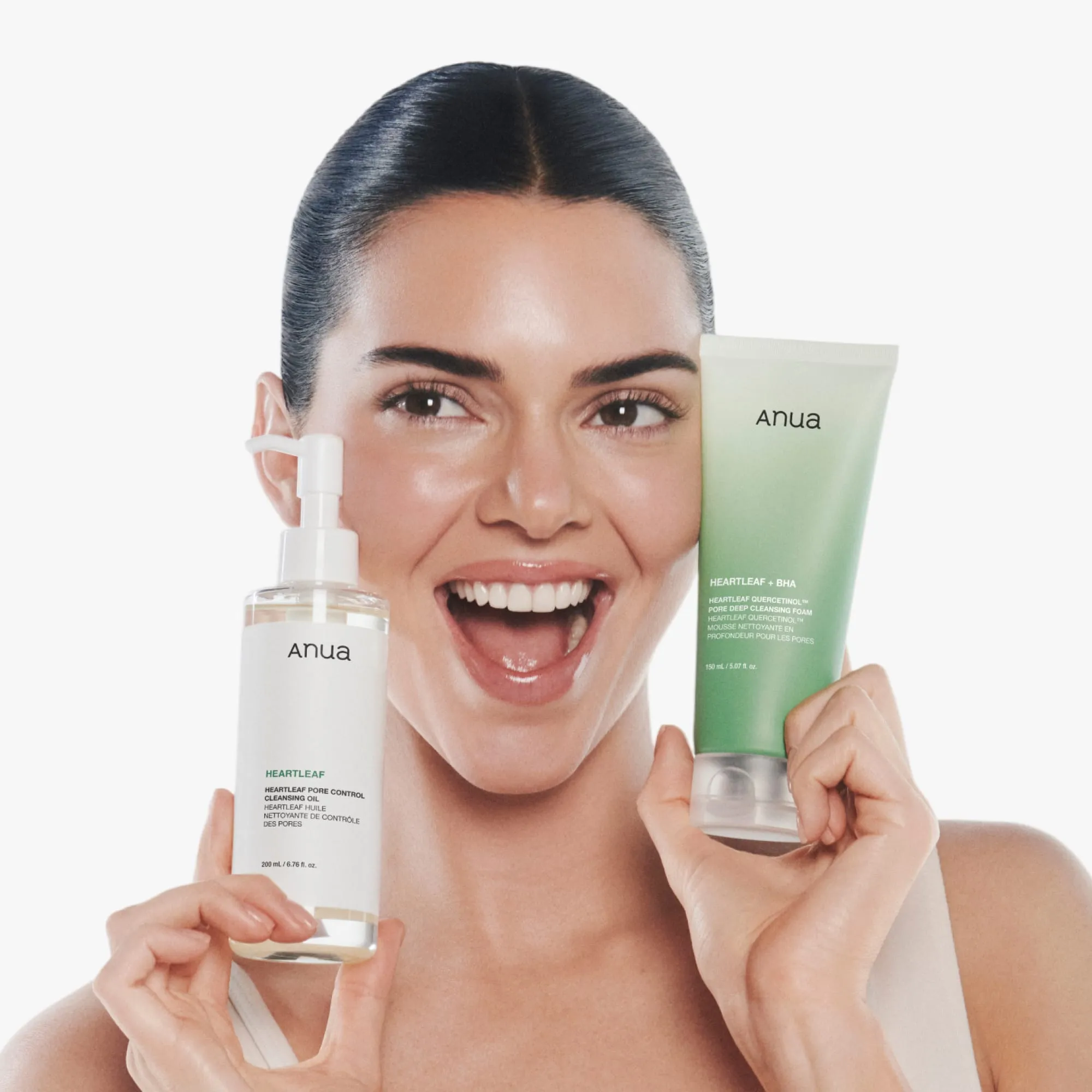
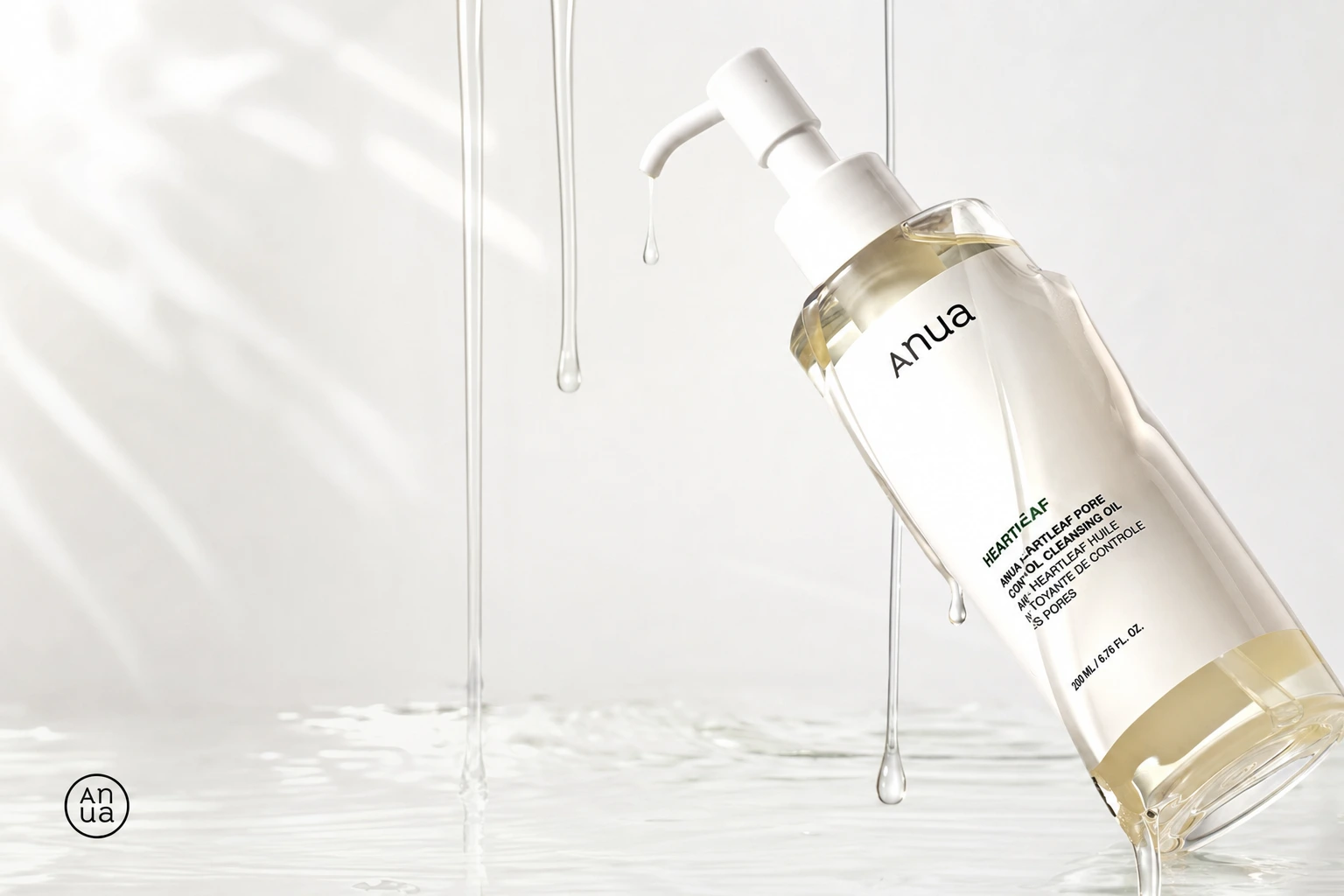
Double Cleansing Duo Set
A two-step Anua cleansing set with Heartleaf Pore Control Cleansing Oil and Heartleaf Quercetinol Pore Deep Cleansing Foam for a simple night routine.
What can wait:
- Toner can wait until your skin feels calm for 2 to 4 weeks.
- Additional steps like serums, sheet masks, and exfoliating acids can wait while you establish your core cleansing habit.
This approach is especially useful for teens, college students, and anyone building a routine on a budget. You are not trying to copy a full influencer routine. You are building a repeatable cleanse-to-SPF habit.
How do you use the oil cleanser at night?
Start with dry hands and a dry face.
Anua's Heartleaf Pore Control Cleansing Oil is designed to break down SPF and sebum in the first step of a double cleanse (Anua, 2026).
For beginners, the most common mistake is rubbing harder because pores look congested. Double cleansing works better as a consistent habit than as a harsh scrub. Keep the pressure light, especially around the nose and cheeks, and stop if your skin feels hot, tight, or stingy.
A useful rule: oil cleansing belongs mostly at night. If you did not wear sunscreen, makeup, or heavy moisturizer, you may not need an oil cleanser that day. If you wore SPF 50, a water-resistant formula, or base makeup, the oil step makes more sense.
How do you follow with a water-based cleanser?
After rinsing the oil step, apply a small amount of water-based cleanser to damp skin. Focus on areas that feel oily or congested, then rinse well. Your skin should feel clean, not squeaky or tight.
The Heartleaf Quercetinol Pore Deep Cleansing Foam is designed to remove residue and deep clean pores as a second-step water-based cleanser (Anua, 2026).
How do you complete the routine with SPF 50?
SPF 50 completes the beginner routine because morning protection keeps a simple cleanse-first plan from becoming incomplete.
A beginner morning routine can stay very short:
- Rinse with water or use a gentle cleanser if you wake up oily.
- Apply a light moisturizer if your skin feels dry.
- Apply SPF 50 as the final morning skincare step.
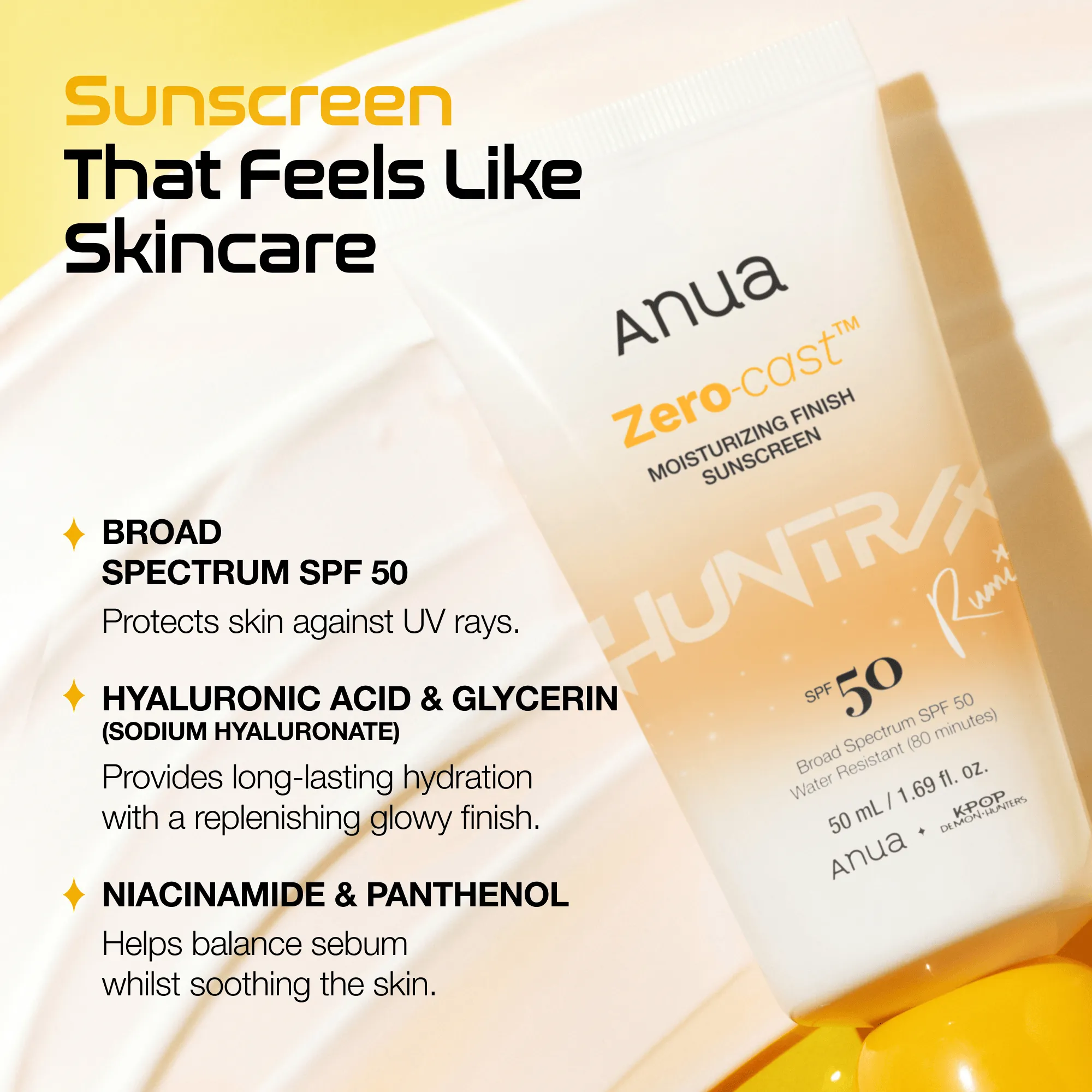
The Zero-Cast Moisturizing Sunscreen SPF 50 is formulated with a focus on barrier-safe hydration, and its active ingredients include Avobenzone 2.5% and Homosalate 7.0% (Anua, 2026).
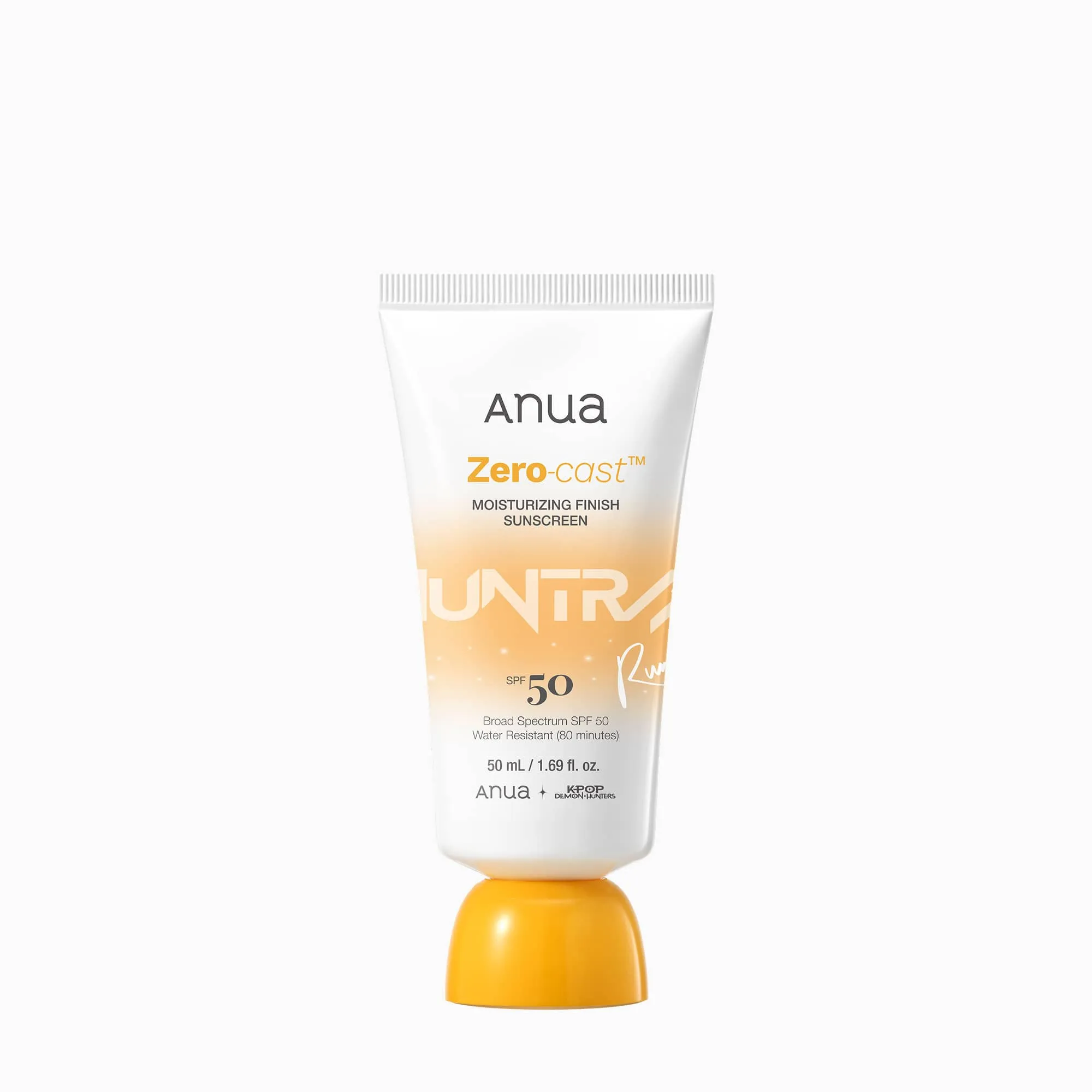
Zero-Cast Moisturizing Sunscreen SPF 50
A moisturizing SPF 50 sunscreen for the morning step of a simple Korean skincare routine.
If you already own a moisturizer that does not sting or pill, you can keep using it. Beginners do not need to replace every product at once. Start by making the cleanser and sunscreen steps consistent, then evaluate whether your current moisturizer still fits.
If you later add brightening care for uneven tone or post-blemish marks, use a separate treatment routine rather than adding multiple actives randomly.
What should beginners expect over 3 months?
A realistic glass-skin beginner routine takes about 8 to 12 weeks of consistency, not one night of extra layers.
The “glass skin” look usually comes from three visible changes: less residue, better hydration, and a smoother light-reflecting surface. A beginner routine supports those changes by removing sunscreen and sebum properly at night, then reducing UV exposure during the day with SPF 50.
| Timeline | What to expect | What to watch |
|---|---|---|
| Weeks 1 to 2 | Skin may feel cleaner, but texture may look similar | Tightness, stinging, or new irritation means slow down |
| Weeks 4 to 6 | Sebum buildup may look reduced, and blackheads may appear less prominent | Avoid adding too many new steps if skin is improving |
| Months 2 to 3 | Skin may look smoother and more reflective when hydration is steady | Add one optional step only if your base routine feels calm |
The goal is not a perfectly poreless face. Skin has texture, pores, and oil cycles. A strong beginner result is skin that feels clean at night, stays comfortable after cleansing, and looks more even under morning sunscreen.
By 2026, 56% of US consumers prioritized ingredient performance and formula efficacy over luxury brand storytelling (Beauty Independent, 2026). That is a useful mindset for beginners: judge the routine by repeatable results, not by how many bottles are on the shelf.
Should beginners try the 7 skin method or daily sheet masks?
Most beginners should skip the 7 skin method and daily sheet masks until their basic cleanser, moisturizer, and SPF routine is stable.
The 7 skin method means applying a hydrating toner in multiple layers. It can make sense for some dry or dehydrated skin types, but it is not the best starting point for most beginners. Too many layers can make it harder to tell which product is helping and which one is causing irritation.
A beginner-friendly version is 1 to 2 toner layers after cleansing, only if your skin feels dry and your moisturizer alone is not enough. The research report identifies Anua Heartleaf 77% Soothing Toner as a high-performance toner in the USD 17 to USD 20 range, but it should still be treated as an optional hydration step rather than a requirement.
Daily sheet masking is also optional. For acne-prone or combo skin, frequent masking may feel soothing at first but can become too much if it leaves the skin over-hydrated, sticky, or congested. A beginner rhythm of 1 to 3 times per week is easier to evaluate than daily masking.
Use this filter before adding hydration layers:
- If your skin feels tight after cleansing, adjust cleanser amount, water temperature, or moisturizer first.
- If your skin feels calm but dry by midday, add one toner layer or a richer moisturizer.
- If your skin breaks out after masks, stop the masks before changing the cleanser.
- If your skin is already irritated, simplify rather than adding more soothing products.
Which routine fits teens, combo skin, and dry beginners?
The best beginner routine changes the optional step, not the foundation: cleanse at night, moisturize as needed, and use SPF 50.
| Skin type or concern | Night cleanse | Morning protection | Optional add-on | Why this stays simple |
|---|---|---|---|---|
| Teen skin | Double Cleansing Duo Set on sunscreen days | Zero-Cast Moisturizing Sunscreen SPF 50 | Lightweight moisturizer | Keeps the routine repeatable around school, sports, and late nights |
| Combo skin | Oil cleanse T-zone longer, foam cleanse whole face | Zero-Cast Moisturizing Sunscreen SPF 50 | One toner layer on dry areas | Balances oily zones without making cheeks feel stripped |
| Acne-prone beginner | Double Cleansing Duo Set, gentle pressure only | Non-comedogenic SPF habit | Spot treatment only if already tolerated | Avoids stacking too many new actives at once |
| Dry beginner | Oil cleanse only when needed, gentle second cleanse | Zero-Cast Moisturizing Sunscreen SPF 50 | Barrier cream or one hydrating toner layer | Focuses on comfort before adding exfoliation or brightening serums |
| College student on a budget | Starter cleansing set plus SPF 50 | Reapply sunscreen when outdoors | Add toner in month 2 if needed | Puts money into the steps used every day |
For teens and college students, the most useful routine is the one that survives real life. If you skip steps because the routine is too long, the routine is too long. Keep the base small enough that you can repeat it on tired nights.
One buying note: K-Beauty popularity also increases the risk of counterfeit or diverted products. If price or packaging looks suspicious, check the How to Spot Fake Anua Products Before You Buy guide before ordering from an unfamiliar seller.
When should you add toner, serum, or masks?
Add new products only after 2 to 4 calm weeks, because a stable base routine makes reactions easier to identify.
The safest upgrade path is staged. Add one product at a time, then give your skin enough days to show whether it likes the change. If you add toner, serum, exfoliant, and masks in the same week, you lose the ability to identify the problem step.
| Routine level | When to use it | What to add | Stay here if |
|---|---|---|---|
| Level 1 | Weeks 0 to 4 | Double Cleansing Duo Set, moisturizer, Zero-Cast Moisturizing Sunscreen SPF 50 | Skin still feels tight, reactive, or unpredictable |
| Level 2 | Month 2 | One hydrating or soothing toner | Skin feels calm but needs more hydration |
| Level 3 | Month 3 and later | One targeted serum for texture, dark spots, or brightness | You can name one concern clearly |
| Optional | After the base is stable | Sheet mask 1 to 3 times weekly | Masks do not trigger congestion or stinging |
The base routine is not a temporary phase you graduate from. It remains the foundation even when you add other products. If your skin becomes irritated later, return to the base routine for several days before introducing extras again.
Build the routine without the 10-step guesswork
Start with the cleansing set and SPF-focused basics, then add toner or treatments only when your skin stays calm.
FAQS