Invisible Pimple Patch for Daytime and Makeup
Ultra-thin hydrocolloid patches sit flatter, look less shiny, and help cover daytime breakouts under makeup or at work.

Key takeaways
- An ultra-thin hydrocolloid patch is the most practical daytime choice when you want a spot to look flatter and less shiny under makeup.
- Hydrocolloid technology held 81.1% of the anti-acne dermal patch market in 2025, according to GMInsights.
- For cheeks and jawline spots, matte finish, tapered edges, dry skin prep, and tapping makeup application matter more than patch size alone.
Why are daytime pimple patches becoming more common?
Daytime pimple patches are popular because adults want spot care that works during commutes, meetings, and makeup wear.
Hydrocolloid patches have moved from overnight bathroom-cabinet products into daytime routines. In 2025, hydrocolloid technology accounted for 81.1% of the anti-acne dermal patch market, making it the main material category for acne patches (GMInsights, 2025).
The shift is also demographic. Adults aged 18 to 44 represented 49.4% of acne patch market share in 2025, which helps explain why work-safe, under-makeup designs matter (GMInsights, 2025). A patch that looks fine at a desk, in a video call, or at dinner has a different job than a thick overnight patch.
Clinical and market data also support the material choice. Research summarized by Dataintelo reports that hydrocolloid patches can reduce blemish size and redness up to 60% faster than untreated controls (Dataintelo, 2025). That does not mean every spot will clear on the same schedule, but it explains why hydrocolloid remains the starting point for daytime spot coverage.
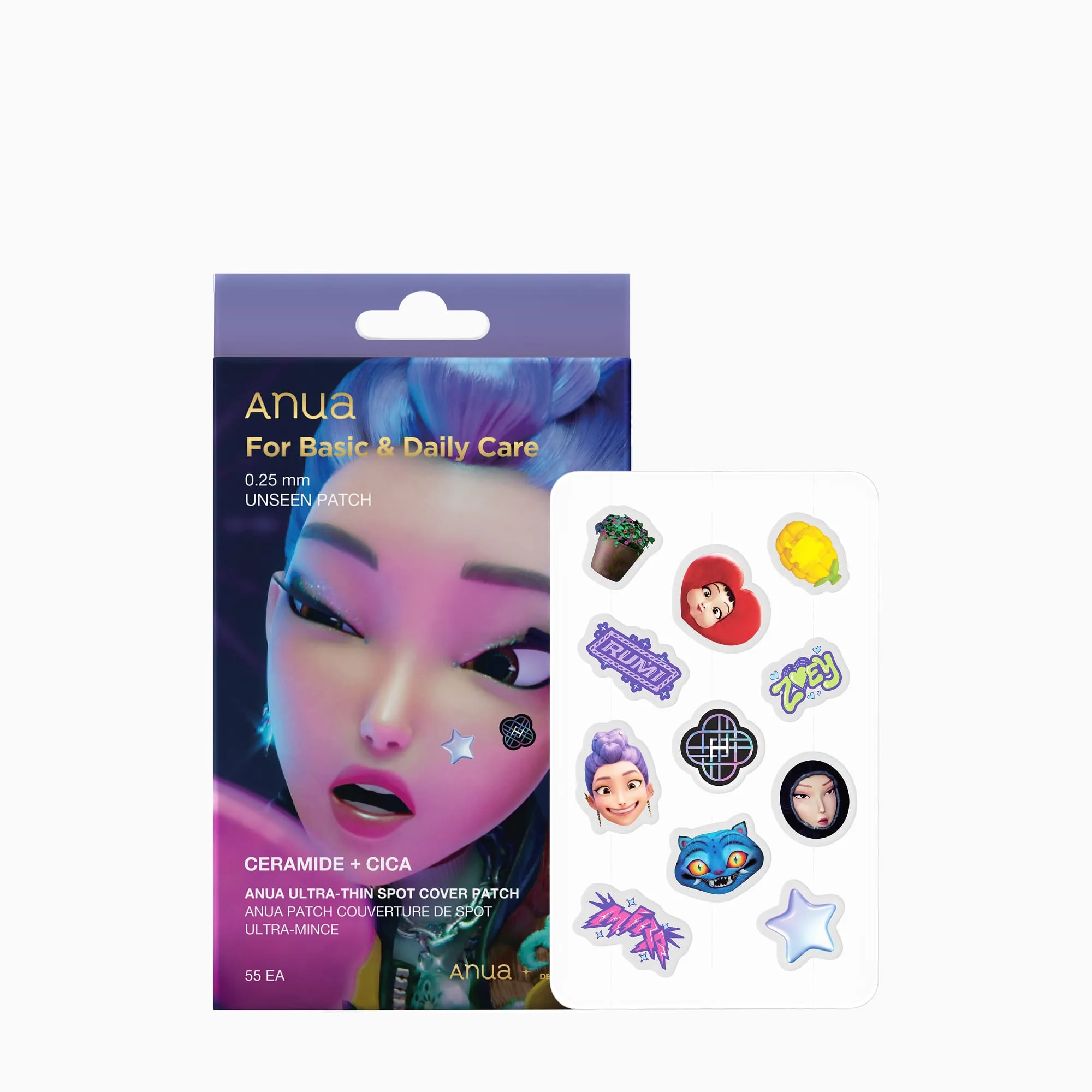
Rumi Ultra-thin Spot Cover Patch (55ea)
Ultra-thin spot covers for daytime breakouts, workday wear, and under-makeup placement.
What makes a pimple patch truly invisible?
A pimple patch looks most invisible when it is thin, matte, tapered at the edge, and sized only to cover the blemish.
The goal is not to make skin look blank at close range. The goal is to reduce the three cues that make a patch noticeable: raised edges, shine, and makeup collecting around the border. Hydrocolloid helps by physically flattening the spot and reducing light reflection, while a matte or non-reflective finish reduces the glossy look that can show under office lighting or camera flash (NuaWoman, 2025).
A tapered edge helps prevent makeup from pooling at the patch boundary. The flatter the transition, the easier it is to tap makeup across the patch without creating a visible ring.
| Invisibility factor | What to look for | Why it matters in daytime wear |
|---|---|---|
| Patch edge | Tapered or bevelled edge | Helps prevent makeup from pooling at the patch boundary |
| Finish | Matte, non-reflective surface | Reduces shine under office lights and in photos |
| Thickness | Ultra-thin hydrocolloid | Helps flatten spots generally |
How can a patch stay on through a workday?
A patch is designed to stay secure through a typical workday.
Adhesion is the part of invisibility people often notice too late. A patch can start the morning looking flat, then reveal itself after talking, eating, touching the face, or applying layers of makeup. High-adhesion hydrocolloid is designed to stay secure for an average 8-hour workday, while tapered edges help resist lifting on high-motion areas such as the jawline.
The jawline is especially demanding because skin shifts when you speak, chew, or smile. Apply the patch while your face is relaxed, not stretched. If the patch crosses a crease or sits too close to a moving corner of the mouth, use a smaller patch or shift placement slightly so the edge does not bend repeatedly.
Avoid applying face oil, rich cream, balm, or heavy moisturizer directly on the blemish before patching. Those textures can sit between the skin and the patch. If your routine includes active serums, keep them off the exact patch site during daytime wear.
How do you apply makeup over a pimple patch?
Makeup sits better over a pimple patch when you tap thin layers over the patch instead of dragging a brush across it.
Let the patch settle for a moment, then apply sunscreen or base products around it with a light hand.
- Place the patch over the blemish.
- Apply base products around the patch.
- Tap foundation or concealer over the patch with a sponge instead of dragging a brush.
- Set lightly only if needed, using a small amount of powder to reduce shine.
NuaWoman recommends tapping with a beauty sponge rather than dragging a brush over the patch edges when applying makeup (NuaWoman, 2025). Use less product than you think you need.
Which patch should you choose for daytime wear?
Choose a non-medicated, ultra-thin hydrocolloid patch when you want discreet coverage without adding strong active ingredients.
Daytime spot covers work best when they do one job well: sit flat over the blemish and stay visually quiet. Non-medicated patches accounted for 47.2% of the anti-acne dermal patch market in 2025, showing strong demand for simple physical barriers rather than formulas built around stronger actives (GMInsights, 2025).
Rumi Ultra-thin Spot Cover Patch (55ea) comes in a 55-patch pack, which makes sense for people who patch small spots during the day rather than saving patches only for large overnight blemishes. The daily-use value is practical: you can use one on a cheek spot before makeup, another on a chin spot before a video call, or one on the jawline where you want less visible texture.
A good daytime patch should meet five checks before you buy:
- It is ultra-thin enough to avoid a raised sticker look.
- It has a matte or low-shine finish for indoor lighting.
- It uses hydrocolloid for a flat, protective cover over the blemish.
- It has edge design that works with makeup rather than collecting it.
- It comes in enough patches for repeat daytime use.
The Rumi Ultra-thin Spot Cover Patch (55ea) fits the under-makeup role because it focuses on cover, flatness, and daily wear rather than turning the patch into a visible accessory.
Cover daytime spots without changing your whole routine
Pick an ultra-thin spot cover for workdays, makeup days, and moments when a blemish needs a flatter finish.
FAQS