Centella vs Azelaic Acid for Rosacea Redness
Azelaic acid targets persistent rosacea bumps and redness, while centella mainly soothes heat and supports barrier comfort.
Azelaic acid and centella are often grouped together in redness routines, but they solve different problems. For rosacea-prone skin, the practical choice depends on whether the main issue is immediate sensitivity, persistent inflammatory bumps, visible flushing, or fixed broken capillaries.
Centella, often called cica, is a botanical calming ingredient used in K-beauty for heat, visible irritation, and barrier comfort. Azelaic acid is a dicarboxylic acid used to target inflammatory pathways associated with papulopustular rosacea. That difference matters when redness comes with small bumps, clogged-looking texture, or lingering post-flare marks.
What can topicals realistically do for rosacea redness?
Topical skincare can calm irritation, but it cannot erase fixed broken capillaries or spider veins.
Rosacea redness is a complex skin concern that can include persistent visible blood vessels. A gentle toner, serum, or moisturizer may help the surface feel calmer, but a topical product cannot physically remove telangiectasia, which are visible broken capillaries.
K-beauty rosacea guidance specifically notes that persistent telangiectasia cannot be removed by topical ingredients (K-KARE). For visible capillaries, clinical options such as Pulsed Dye Laser are typically discussed as procedural treatments rather than skincare steps (K-KARE).
That does not make skincare irrelevant. It means the goal must be precise:
- For heat and stinging, prioritize barrier support and low-irritation formulas.
- For persistent inflammatory bumps, consult a professional for targeted treatment options.
- For fixed red lines or spider veins, expect topicals to support comfort, not removal.
- For sudden worsening, eye symptoms, swelling, or painful lesions, consult a dermatologist.
How does azelaic acid help redness-prone rosacea skin?
Azelaic acid targets rosacea inflammation by reducing KLK5 activity and cathelicidin LL-37 expression in skin.
Azelaic acid is more than a general exfoliating acid. In rosacea research, it is valued because it interferes with inflammatory signaling linked to papulopustular rosacea. Azelaic acid works by inhibiting kallikrein 5 and reducing cathelicidin LL-37, both associated with inflammatory responses in rosacea-prone skin.
Clinical data also supports azelaic acid for inflammatory lesions. That does not mean every person should start with a high-concentration prescription-strength product, but it explains why azelaic acid is often recommended when redness comes with bumps.
For sensitive routines, concentration and frequency matter. A 10% formula may be a more approachable starting point than stronger clinical gels for people building tolerance.
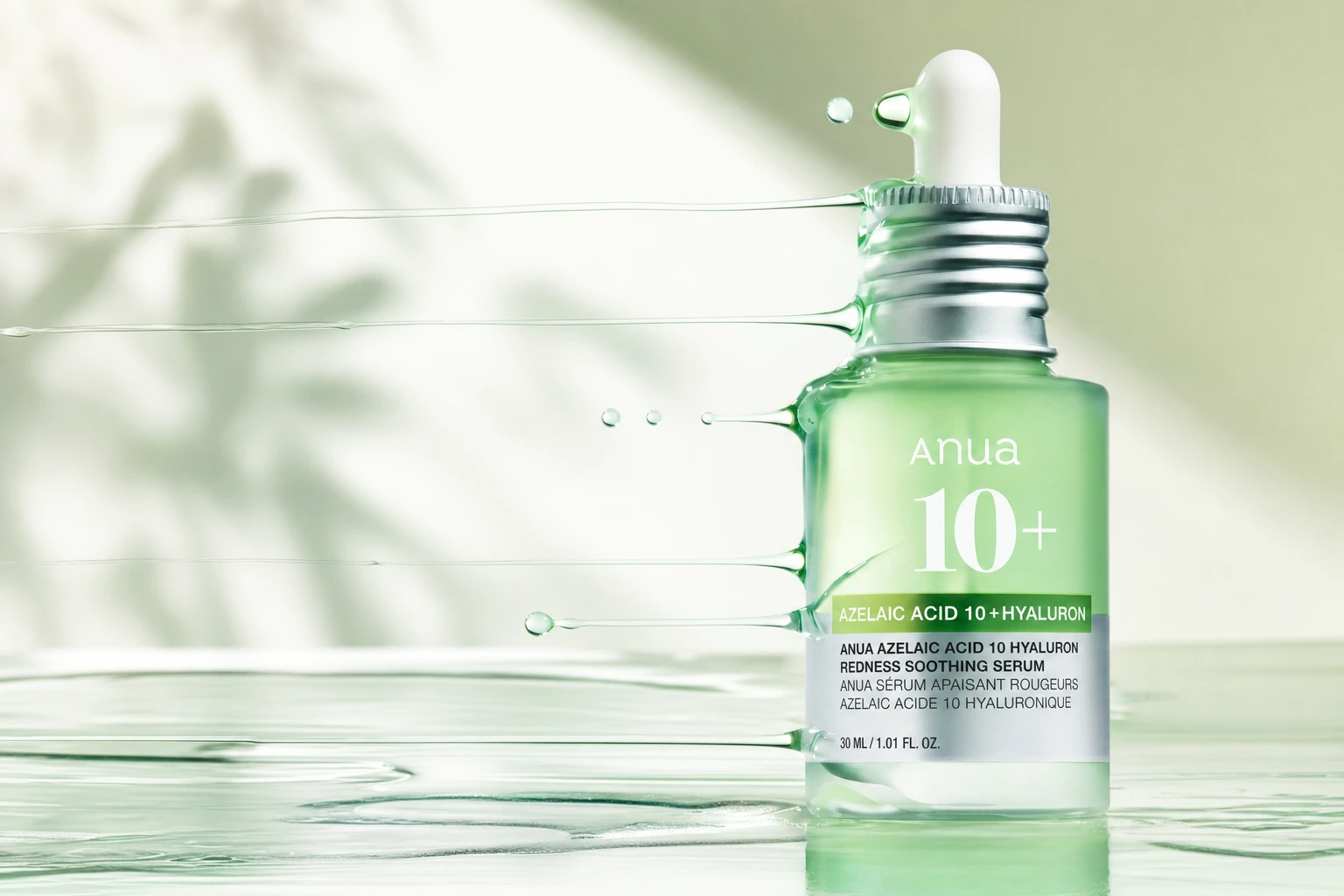
The Azelaic Acid 10 Hyaluron Redness Soothing Serum is one option for those looking to use the ingredient. According to product descriptions, it is formulated with hydrating components to support the skin.
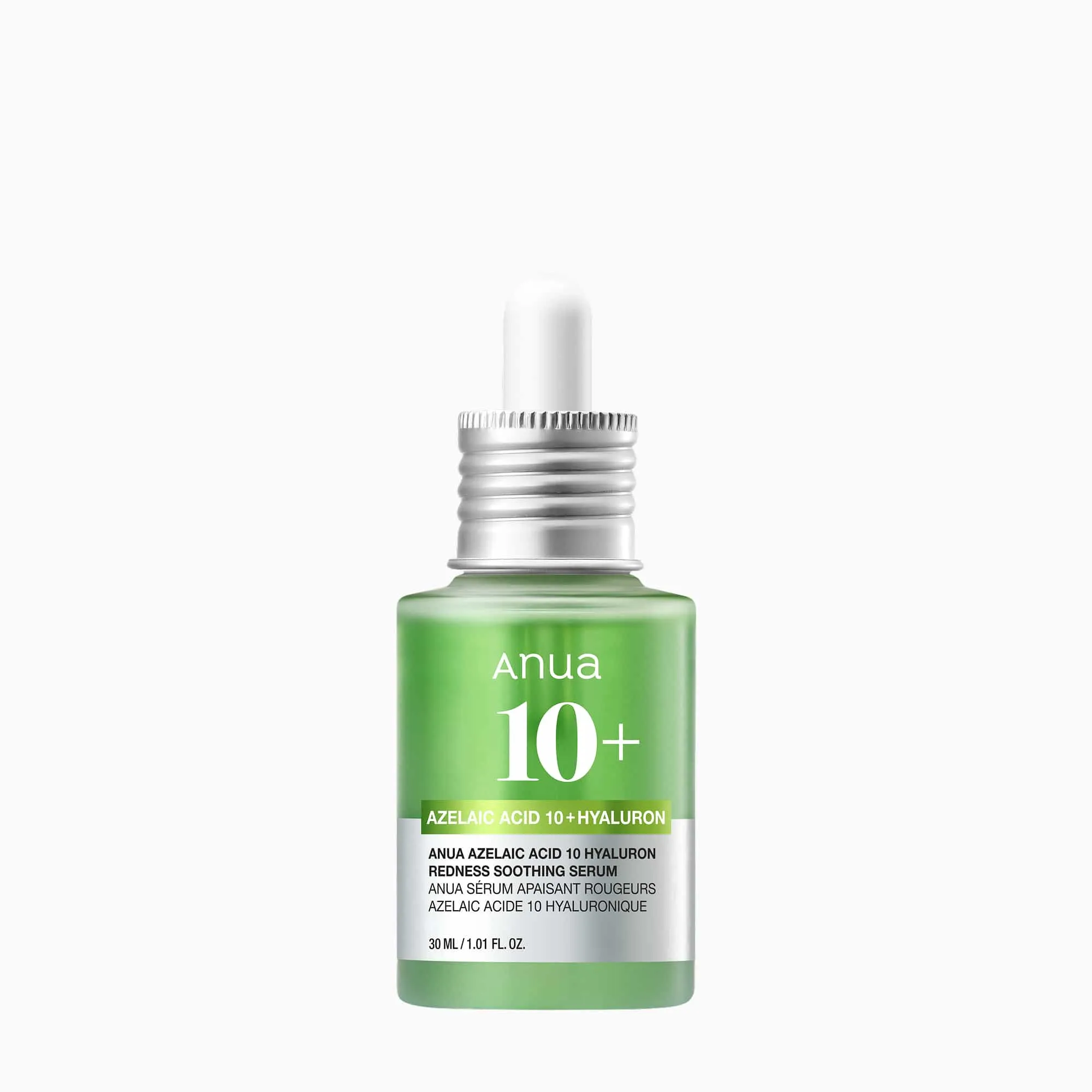
Azelaic Acid 10 Hyaluron Redness Soothing Serum
A lightweight serum formulated with soothing and hydrating ingredients, suitable for sensitive skin, helps improve redness and troubled areas.
How does centella asiatica soothe flare-ups?
Centella asiatica helps calm visible redness for rosacea-prone skin.
Centella asiatica is used in Korean skincare for calming redness. K-beauty guidance identifies centella and its derivative madecassoside as primary soothing agents for redness-prone skin (K-KARE).
For people with redness and sensitivity, centella can fit well in a low-irritation routine. It may help the skin feel less reactive after cleansing or weather exposure. It is especially useful when the routine goal is calming visible redness.
Centella is less suitable as the only active when redness comes with papules, pustules, or recurring inflamed bumps. In those cases, centella remains a popular choice for managing the appearance of surface redness.
A practical way to think about centella is this: it can support a routine focused on calming visible redness. For reactive skin, that support role is valuable, but it should not create unrealistic expectations around broken capillaries or persistent flares.
Which is better, azelaic acid or centella for rosacea-prone redness?
The choice of ingredient depends on individual skin goals. While various soothing ingredients are widely used in topical skincare, azelaic acid is recognized for its role in addressing inflammatory lesions associated with rosacea.
Clinical comparisons often focus on the efficacy of pharmaceutical-grade treatments. For instance, topical ivermectin 1% has been reported as more effective than azelaic acid and metronidazole for severe inflammatory lesions in clinical literature (Actas Dermo-Sifiliográficas). This highlights the importance of clinical intervention for more severe rosacea symptoms.
For cosmetic routines, many users incorporate both: azelaic acid as a targeted treatment and centella or other soothing agents to support overall comfort.
For mild to moderate redness-prone skin, many routines use both categories. Azelaic acid provides the targeted active step, while centella, ceramides, or hyaluronic acid can support comfort around it.
How to introduce new products to a rosacea-prone routine
When starting with targeted ingredients like azelaic acid, a structured approach can help manage the skin's response.
When adding an active serum, monitor the skin for any signs of increased irritation. Following a gradual schedule allows for better assessment of how the skin reacts to the treatment step.
According to industry guidance, a 10% azelaic acid serum can be introduced 2 to 3 nights weekly to reduce the risk of stinging (K-KARE).
How should you layer azelaic acid and centella safely?
Start azelaic acid 2 to 3 nights weekly, then use soothing layers to reduce dryness, stinging, and barrier stress.
A low-irritation routine should make the active easier to tolerate rather than adding more steps for their own sake. Industry guidance suggests introducing 10% azelaic acid slowly, often 2 to 3 nights per week, to help reduce stinging risk (K-KARE).
A simple night routine can look like this:
- Cleanse with a low-pH, fragrance-free cleanser.
- Apply a hydrating toner or calming mist if your skin tolerates it.
- Apply a thin layer of Azelaic Acid 10 Hyaluron Redness Soothing Serum.
- Follow with a centella, heartleaf, panthenol, or ceramide-rich moisturizer.
- Use sunscreen the next morning, since rosacea-prone skin often reacts to UV exposure.
The Azelaic Acid 10 Hyaluron Redness Soothing Serum uses 10% azelaic acid and a Gentle Calming Complex, according to Anua product specifications. That makes it a reasonable middle step for people who want an active approach but do not want to jump straight to a stronger prescription gel.
Avoid stacking it immediately with strong exfoliating acids, retinoids, benzoyl peroxide, or high-strength vitamin C if your skin is already flushing or stinging. Once the skin is comfortable for several weeks, frequency can be adjusted based on tolerance.
What should you use for broken capillaries or spider veins?
Broken capillaries need procedural treatment for removal, while skincare can only reduce irritation around the visible vessels.
No Korean toner, centella ampoule, vitamin K serum, or azelaic acid product can close a visibly broken facial capillary. Topicals may make surrounding redness look calmer by reducing irritation or inflammation, but they do not remove the vessel itself.
For this concern, the most accurate skincare goal is prevention of additional irritation. Keep the barrier steady, avoid harsh scrubs, use sunscreen, and reduce known triggers where possible. If the visible lines are the main concern, ask a dermatologist about laser or light-based options such as Pulsed Dye Laser or Intense Pulsed Light, which K-beauty rosacea guidance identifies as clinical approaches for broken capillaries (K-KARE).
Azelaic Acid 10 Hyaluron Redness Soothing Serum fits best when the redness is linked to irritation, bumps, or troubled areas, not when the only concern is a fixed red vessel. That distinction helps prevent disappointment and supports better decisions about when skincare is enough and when a clinic visit is more appropriate.
Choose a targeted redness serum
If your redness-prone skin also has bumps or troubled areas, start with a low-frequency routine and build tolerance gradually.
FAQS