Microdart vs Hydrocolloid Patches for Breakouts
Hydrocolloid patches fit surfaced or popped spots overnight, while microdart patches suit deep painful bumps that need active delivery.
Key takeaway
- Hydrocolloid patches are the better overnight match for surfaced whiteheads or popped spots because they absorb fluid.
- Microdart patches are better for deep, painful bumps that have not come to a head because they deliver actives below the surface.
- Choose by blemish stage before bed: visible fluid calls for hydrocolloid, while a firm under-skin bump calls for microdart care.
How do microdart patches target deep breakouts?
Microdart patches use tiny dissolving tips to deliver active ingredients into deep or blind pimples.
That makes microdart technology useful when a blemish feels sore, firm, or swollen under the skin but has no visible whitehead.
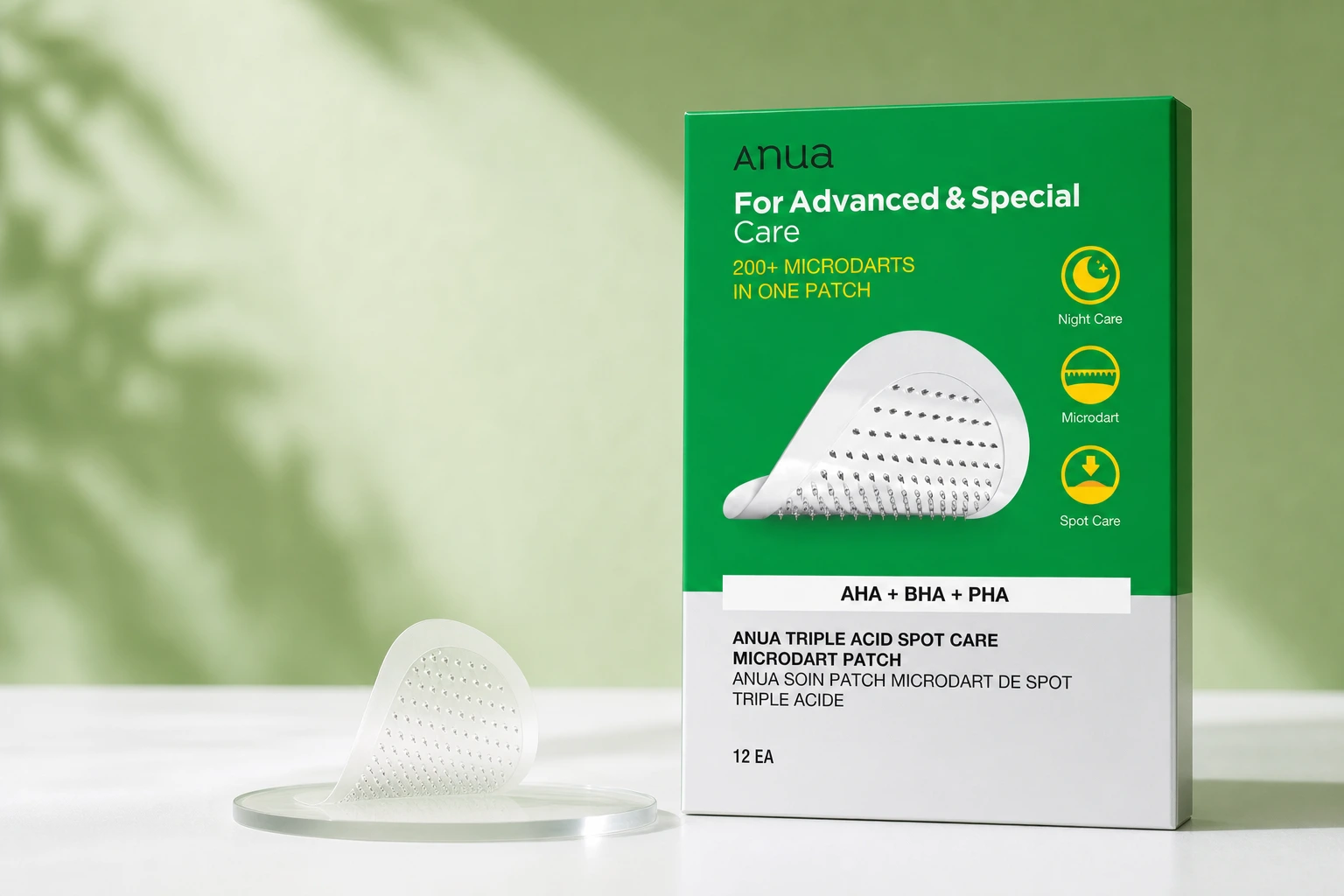
Triple Acid Spot Care Microdart Patch uses more than 200 microdarts in one patch and combines salicylic, glycolic, and lactic acids for targeted spot care, according to Anua product information.
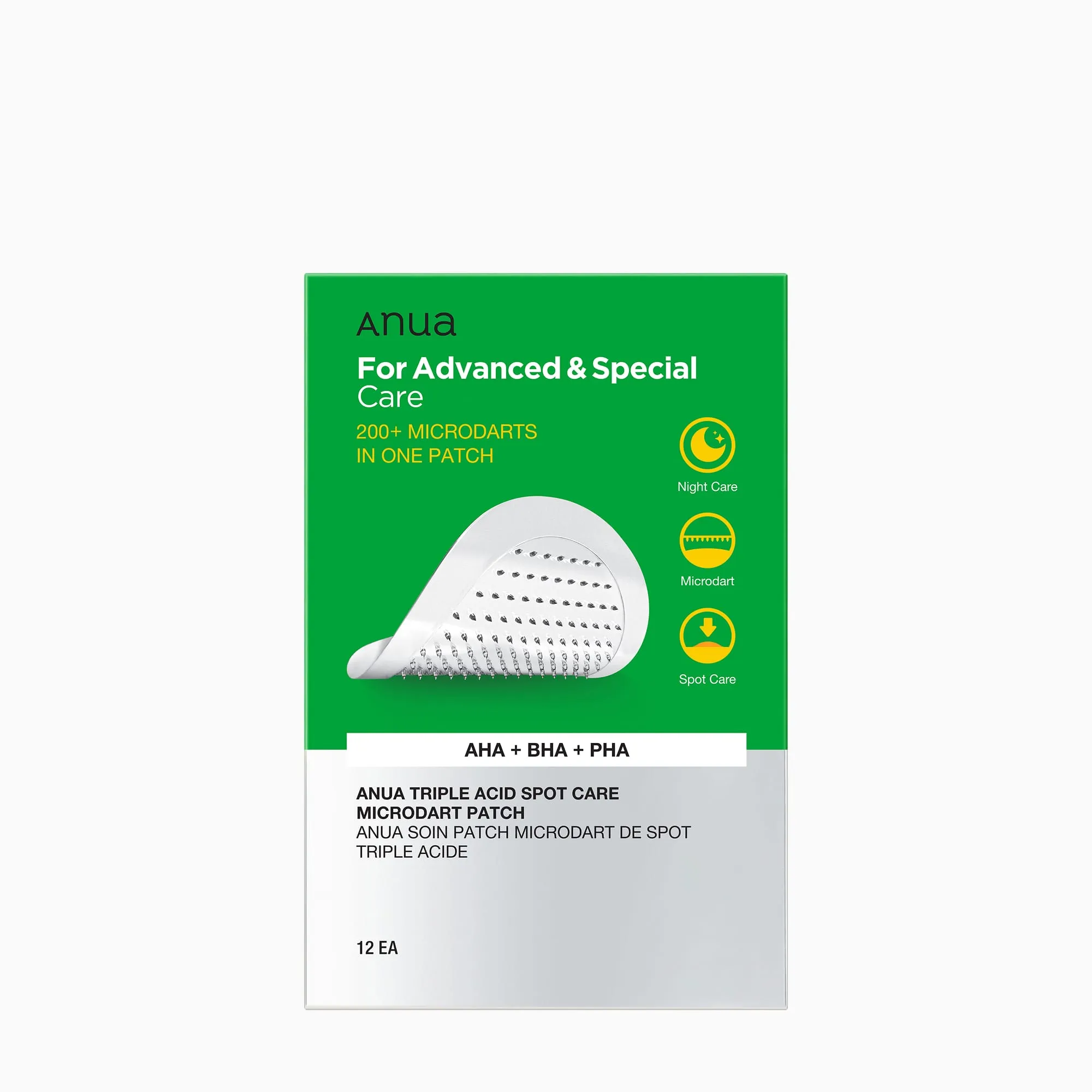
Triple Acid Spot Care Microdart Patch
A microdart spot patch for deep, early-stage bumps that need targeted active delivery.
For a deep painful bump, apply the patch to clean, dry skin before moisturizer or facial oil. Press it in place so the microdarts make contact, then leave it on according to the product directions. Avoid squeezing first. If the bump has not opened, squeezing can irritate the surrounding skin and make the patch less useful.
Microdart patches are also the better choice when the spot feels like it is forming but has not yet become a whitehead. The active-delivery format is designed for that window.
How do ultra-thin hydrocolloid patches help surfaced spots?
Hydrocolloid patches absorb fluid and support a moist healing environment for surfaced blemishes.
A hydrocolloid patch creates a sealed environment over a surfaced whitehead or popped zit to absorb fluid and draw out impurities.
Rumi Ultra-thin Spot Cover Patch is designed with an ultra-thin profile for discreet overnight wear.
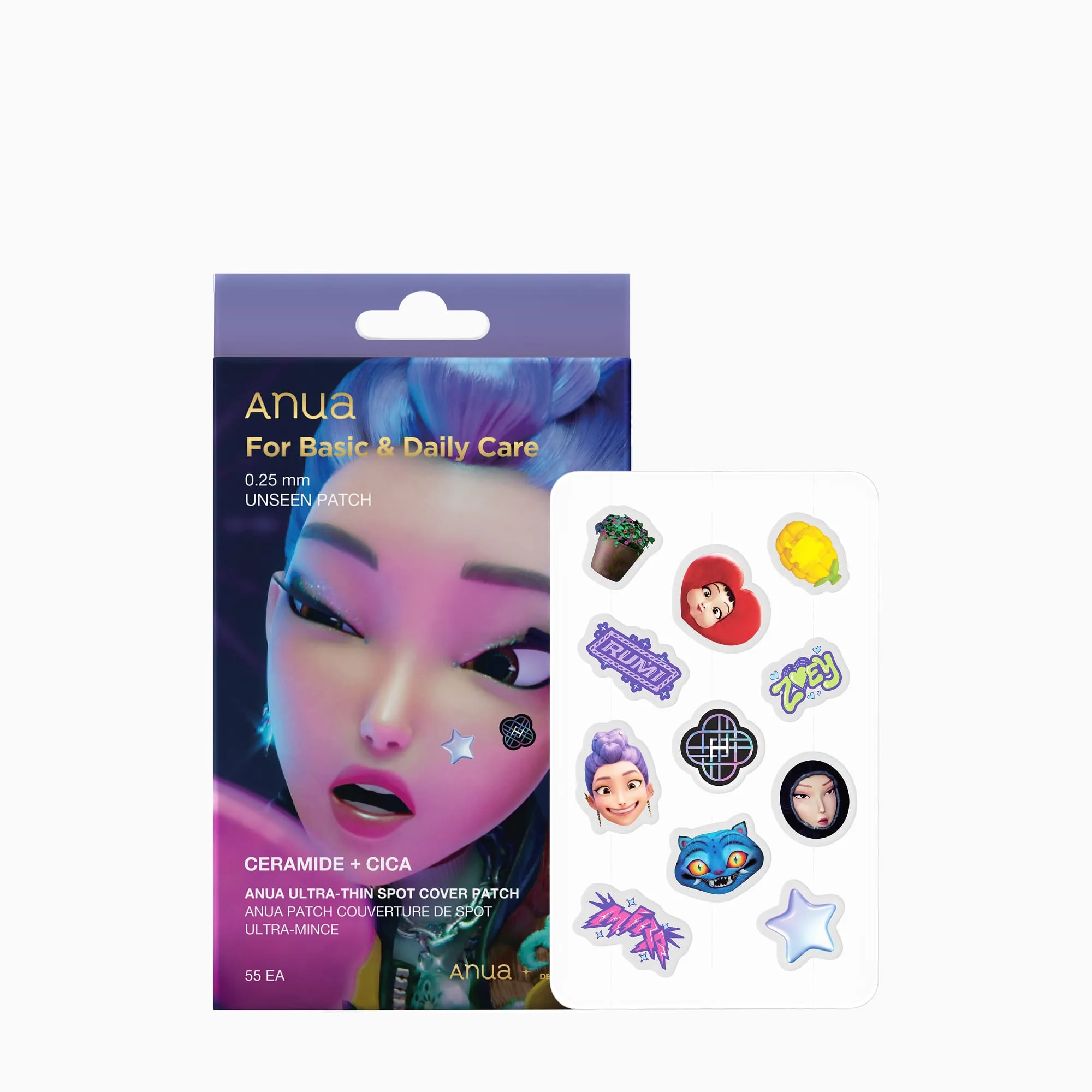
Rumi Ultra-thin Spot Cover Patch (55ea)
An ultra-thin hydrocolloid spot cover for surfaced whiteheads, popped spots, and discreet overnight wear.

Use hydrocolloid when the blemish has a visible whitehead, has opened, or is leaking fluid. For a popped zit, gently cleanse, let the skin dry, and place the patch directly over the area. Skip heavy cream underneath the patch.
If your skin barrier is already reactive, keep the rest of the routine simple. For example, pair spot patch use with gentle cleansing and barrier-aware products rather than stacking strong actives across the whole face. If sensitivity is a bigger pattern in your routine, Anua's guide to Sensitive Skin Sunscreen for Barrier-Stressed Skin covers a similar barrier-first decision process for daytime protection.
Which patch should you choose for overnight wear?
Typical hydrocolloid acne patch wear for overnight use is about 6 to 10 hours, according to Rael's acne patch comparison guidance (Rael).
For sleep adhesion, skin prep matters as much as patch format. Cleanse and dry the area fully before placing the patch. If you are also using active serums, keep them away from the patch site unless the product directions say otherwise.
A practical overnight routine looks like this:
- Cleanse and pat the breakout area dry.
- Apply the patch directly to the targeted area.
- Keep heavy creams, oils, and sleeping masks away from the patch edge.
- Remove in the morning and avoid picking if the spot is still healing.
Why are acne patches so popular now?
The anti-acne dermal patch market reached about $582.8 million in 2026 as targeted spot care became mainstream.
Acne patches fit a specific consumer need for visible care. The format is especially useful at night because a patch can protect one spot while the rest of the routine stays calm.
The global anti-acne dermal patch market was valued at approximately $582.8 million as of 2026 (GM Insights, 2026). Consumers aged 18 to 44 held 49.4% of market share in 2025, which points to strong adoption among adult skincare users as well as younger acne-prone shoppers (GM Insights, 2026).
Brand competition has pushed patch design toward thinner profiles, better adhesion, and more specialized formats. Hero Cosmetics held an 18% market share in the pimple patch industry as of July 2025, according to Wiseguy Reports (Wiseguy Reports, 2025). The same market context noted continued innovation in hydrocolloid platforms and adhesion, especially for patches worn during sleep.
How should you use patches without irritating your skin?
Use one patch on clean, dry skin and avoid stacking strong actives on the same spot under the patch.
Irritation often comes from doing too much around a breakout. A patch is already creating a focused environment over one area. Adding exfoliating toner, retinoid, benzoyl peroxide, facial oil, and a patch in the same place can make the skin more reactive, especially if the blemish is open.
For hydrocolloid, keep the patch site bare so it can adhere and absorb fluid. For microdart, keep the site bare so the dissolving tips can make direct contact. If your skin is dry or barrier-stressed, apply moisturizer around the patch rather than underneath it.
Use microdart patches with more caution on nights when your skin already feels stinging, raw, or freshly over-exfoliated. Triple Acid Spot Care Microdart Patch contains salicylic, glycolic, and lactic acids, so it belongs in a targeted spot-care role rather than as an all-over active step.
If you use advanced ingredients elsewhere in your routine, separate them from the patched area. Anua's PDRN Serum Concentration Guide and Safe Layering Rules explains how to think about ingredient concentration and layering when the skin barrier needs a gentler approach.
Match tonight's patch to the breakout stage
Shop Anua spot patches and choose the format that fits what you see before bed: ultra-thin hydrocolloid for surfaced spots or microdart care for deep bumps.
FAQS