Sensitive Skin Sunscreen Ingredients Checklist
Sensitive skin sunscreen should combine SPF 50 protection, hydrating support, low-sting texture, and a finish you can reapply daily.
Why does sensitive skin require stricter sunscreen standards?
Sensitive skin needs stricter sunscreen standards because irritation risk and protection gaps can happen at the same time.
A gentle sunscreen is not only a formula that feels comfortable on first application. For redness-prone or reactive skin, the label has to answer four practical questions:
- Does it provide broad-spectrum SPF 50 protection?
- Does it avoid a sharp sting, especially around the eyes and cheeks?
- Does it include hydrating support so the skin does not feel tight by midday?
- Does it leave a finish comfortable enough to use at the right amount and reapply?
The protection question matters because sunscreen testing has been under scrutiny. Consumer Reports found that a majority of tested sunscreens in 2026 failed to meet their labeled SPF values, and the same testing found many products averaged only 25% of their stated UVA protection (Consumer Reports, 2026). A separate 2026 EWG report covered by CNN found that only 20% of 2,784 sunscreens were recommended for safety and efficacy (CNN, 2026).
That does not mean sensitive skin shoppers need a longer routine. It means the sunscreen step should be chosen with less guesswork. The right ingredient checklist can narrow the field before you even test texture.
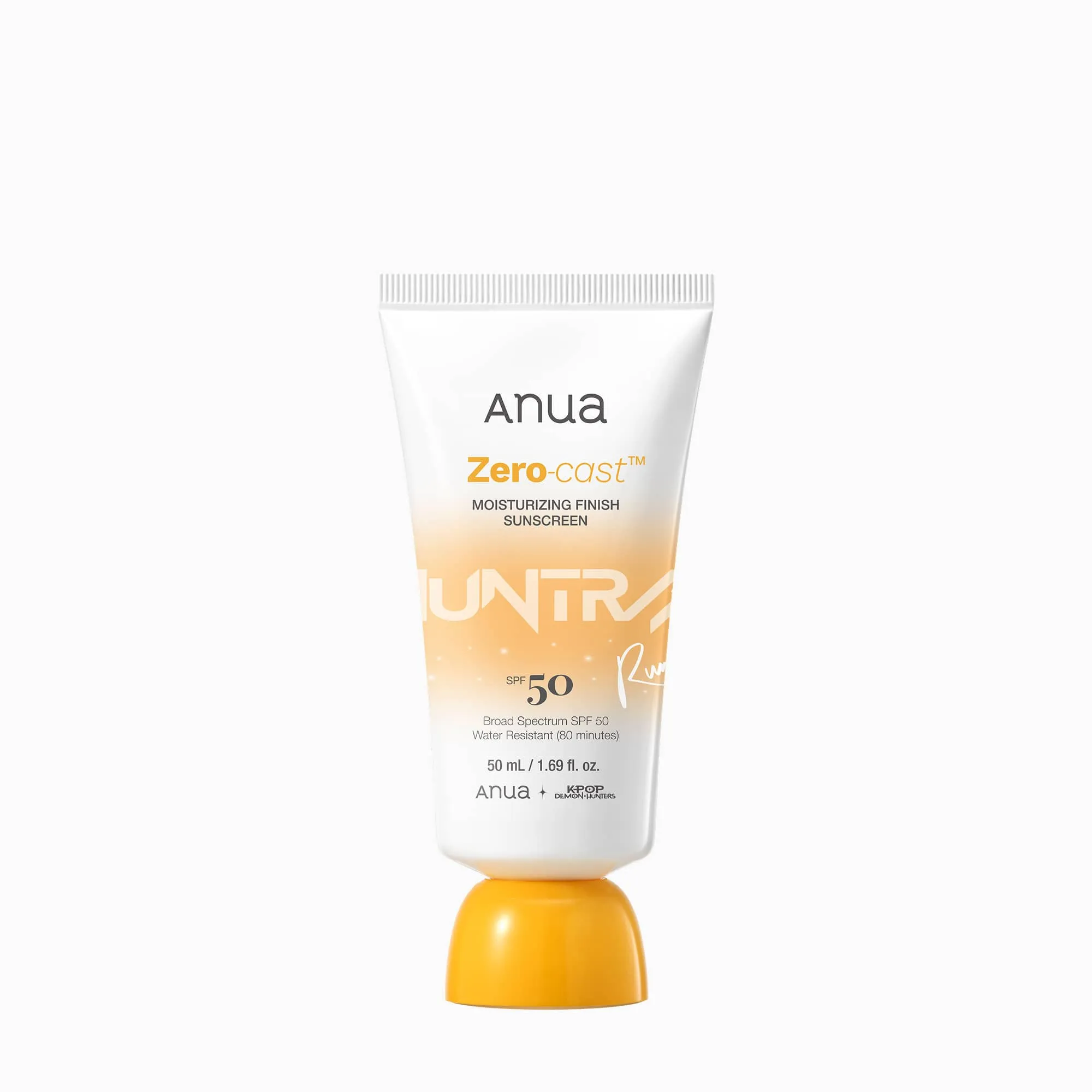
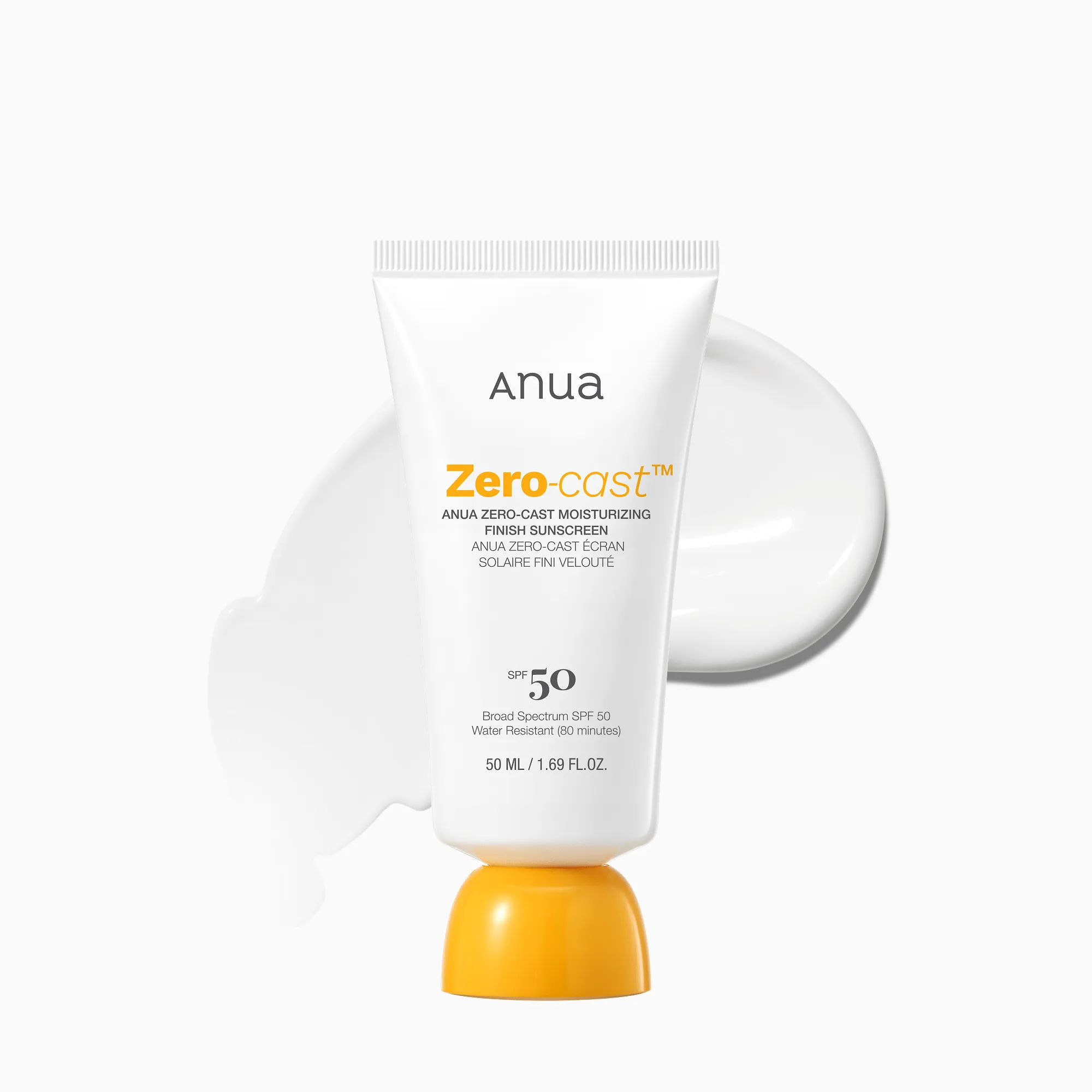
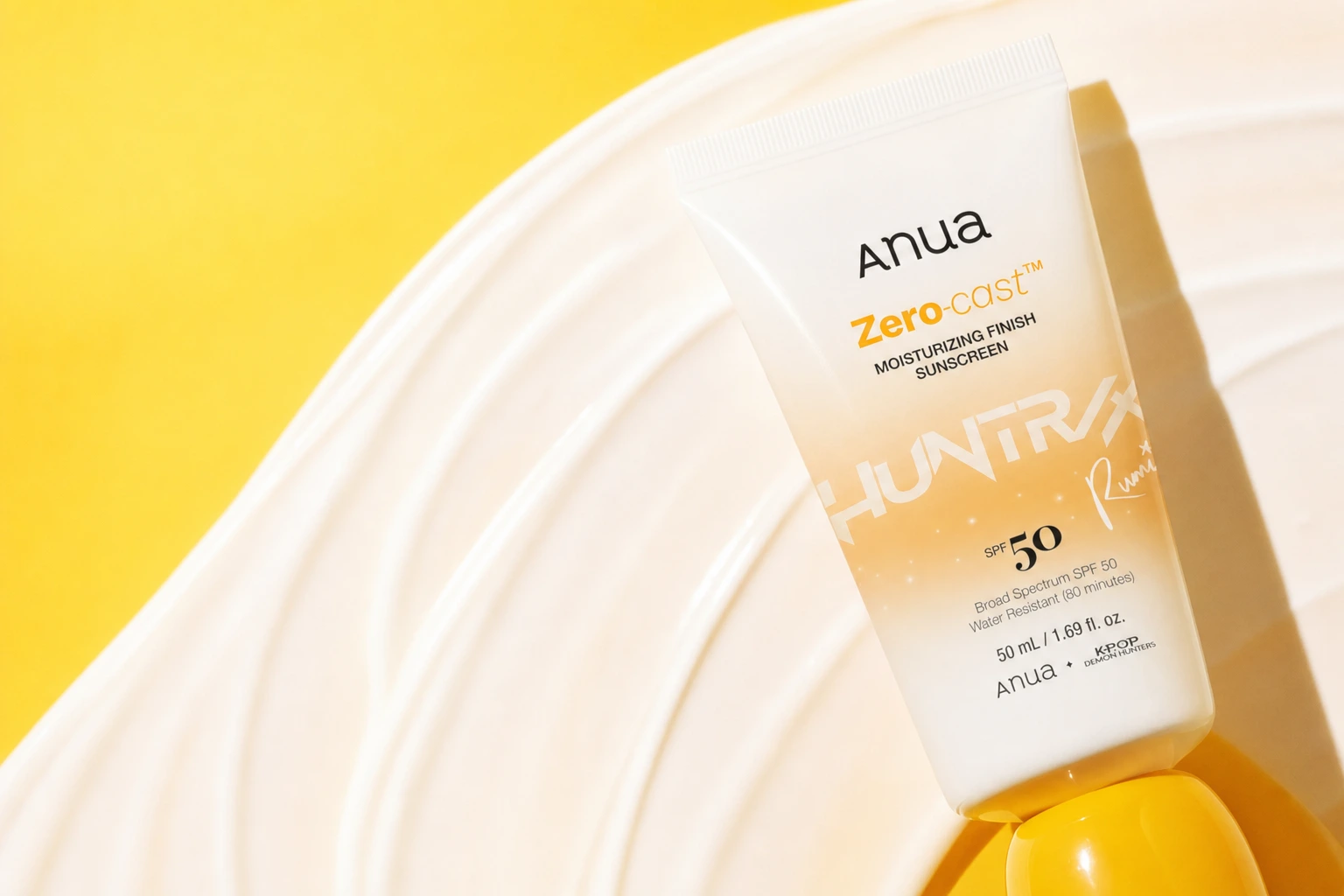
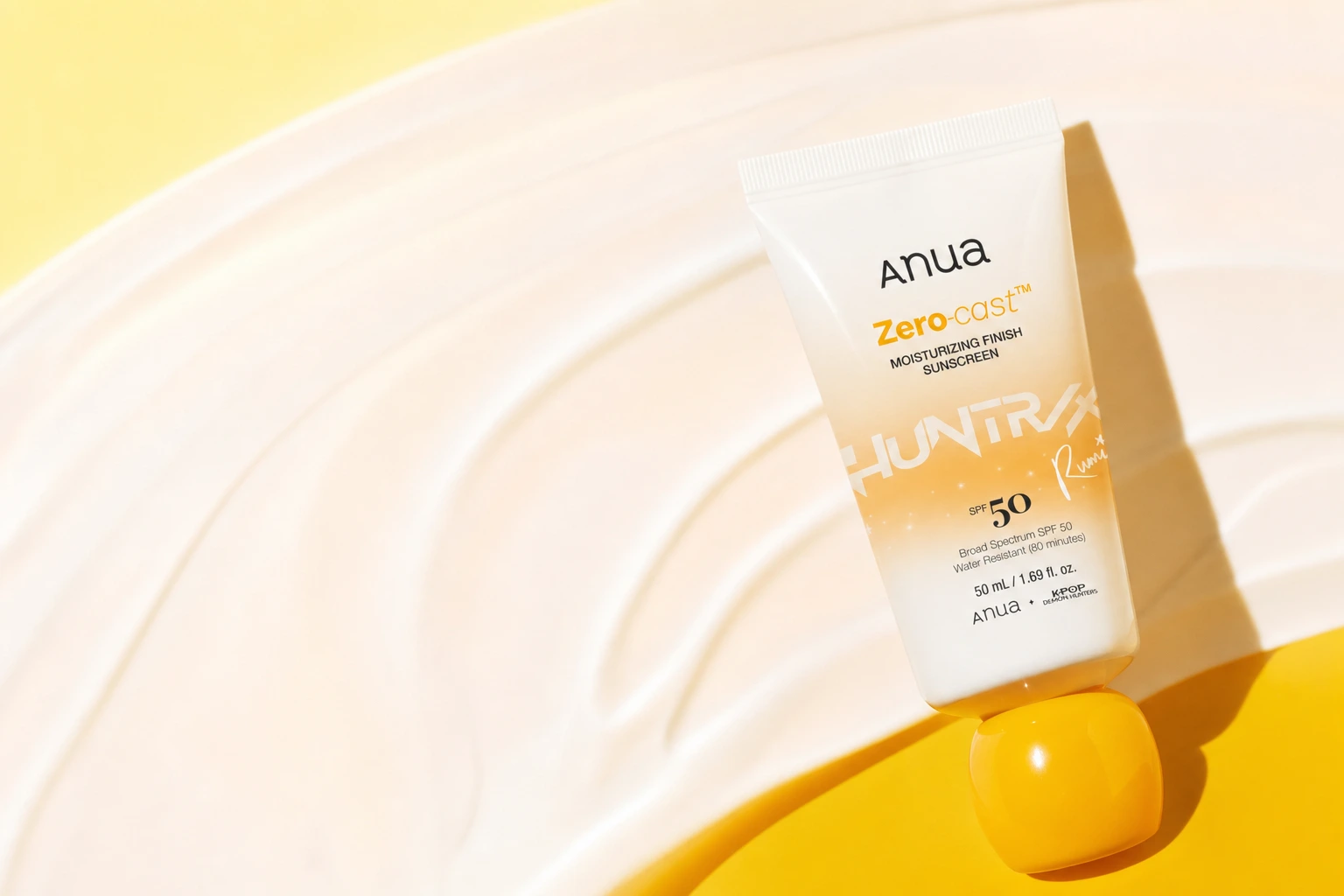
Zero-Cast Moisturizing Sunscreen SPF 50
Broad-spectrum SPF 50 daily sunscreen with Avobenzone 2.5%, Homosalate 7.0%, Octisalate 4.5%, and Octocrylene 5.0%.
If your skin feels dry, tight, or reactive before sunscreen, pair it with a support cream rather than adding more treatment steps.
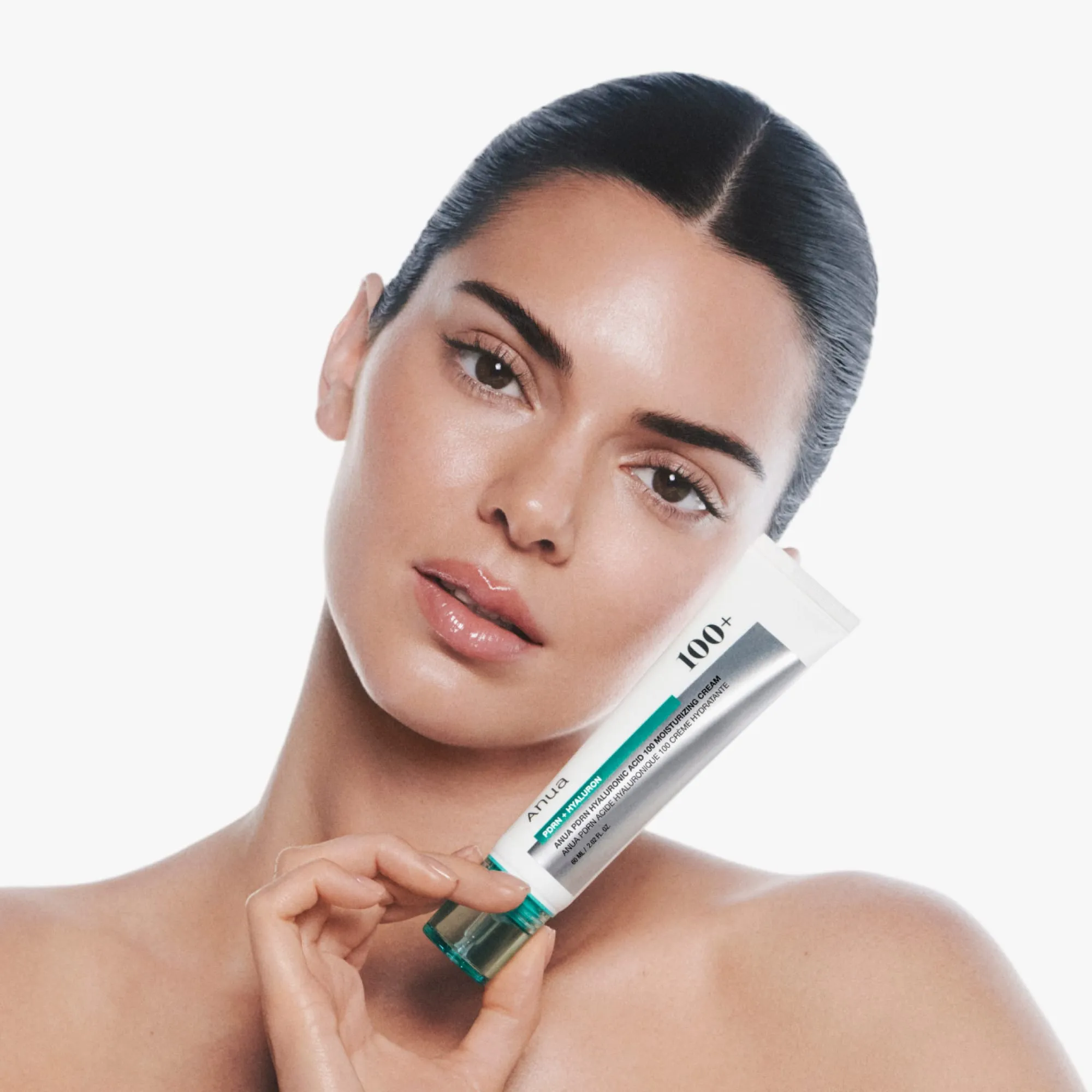
PDRN Hyaluronic Acid 100 Moisturizing Cream
Moisturizing cream formulated with low-molecular PDRN derived from salmon DNA and hyaluronic acid for barrier-supporting hydration.
| Sensitive-skin decision point | Choose a lightweight sunscreen alone | Add a barrier-support cream underneath |
|---|---|---|
| Main goal | Daily UV protection | UV protection plus moisture support |
| Skin feel before sunscreen | Comfortable, balanced, not tight | Dry, tight, flaky, or reactive |
| Finish preference | Lightweight, no white cast | Dewier, cushioned finish |
| Ingredient priority | UV filters | Moisture-locking support |
| Best fit | Daily wear, gym bag, commuting, makeup layering | Dry skin, perimenopausal dryness, barrier stress, seasonal sensitivity |
A useful label-reading rule is this: sunscreen should be your protection step, not your entire treatment routine. If your face is already stinging, burning, or flushed, the better move is usually fewer layers, not a stronger active.
Which soothing botanicals help calm redness?
Calendula and Licochalcone A have stronger published redness data than many trend-driven calming botanicals.
Botanical ingredients can help a sensitive routine, but they should not all be treated as equal. Some have published evidence connected to erythema, inflammation, or redness-prone skin. Others are mainly supported by traditional use, brand formulation logic, or user comfort.
Calendula Officinalis contains triterpenoids and flavonoids, compounds associated with soothing activity. An MDPI review notes that calendula helped reduce erythema in sensitive and radiation-damaged skin (MDPI). That makes calendula a reasonable ingredient to look for when the skin is prone to visible redness, especially when paired with a simple sunscreen and moisturizer routine.
Licochalcone A has more direct redness-focused support. In an eight-week study, Licochalcone A significantly reduced facial redness and inhibited pro-inflammatory cytokines (MDPI). The same review also cites multi-center studies involving 1,221 patients where Licochalcone A notably improved symptoms of redness-prone skin (MDPI).
Mugwort is another common Korean calming ingredient, but the provided research does not give the same level of clinical redness data as calendula or Licochalcone A. That does not make mugwort a bad ingredient. It means sensitive skin shoppers should treat it as a supportive botanical and still patch test, especially if they react to plant extracts.
A practical way to read calming claims is to separate the ingredient type from the promise:
| Ingredient | What to look for | Evidence strength from the provided research | Sensitive-skin note |
|---|---|---|---|
| Calendula | Calendula Officinalis extract | Published support for reducing erythema in sensitive and damaged skin | Patch test if you react to botanicals |
| Licochalcone A | Redness support | Eight-week redness data and multi-center redness-prone skin data | Stronger fit for redness-focused formulas |
| Mugwort | Artemisia extract | Not strongly quantified in the provided research | Treat as supportive, not proof of instant redness reduction |
| Glycerin | Glycerin high in the ingredient list | Humectant support in the report | Useful for reducing tightness from cleansing or sunscreen wear |
Patch testing changes every recommendation. Apply a small amount near the jaw or behind the ear for several days before using a new sunscreen all over the face. If your skin is in an active flare, wait until the flare settles before testing botanicals or new actives.
Which gentle actives are better for pigmentation and rosacea-prone skin?
Tranexamic acid may be gentler than azelaic acid for some sensitive users, while azelaic acid remains useful for rosacea bumps.
The best active depends on what you are trying to treat. Pigmentation, post-redness marks, rosacea bumps, and general flushing are related concerns, but they do not always respond to the same ingredient.
Azelaic acid has strong support for rosacea-related bumps. A systematic review found that 15% to 20% azelaic acid was 1.5 times more likely than a placebo to achieve treatment success in rosacea bumps (Wiley). For many people, that makes azelaic acid a useful dermatology-backed option.
The caveat is tolerability. A comparative study found that 5% tranexamic acid was equally effective as 20% azelaic acid cream for pigmentation, while showing a lower redness rate at week four: 3.3% for tranexamic acid compared with 23.3% for azelaic acid (PMC). For skin that stings easily, that difference matters.
For redness-prone routines, do not judge an active only by whether it is effective. Judge it by whether you can keep using sunscreen every morning while that active is in the routine. If a treatment step makes your skin burn under sunscreen, the routine is failing even if the active has good data.
A simple decision framework:
- Choose azelaic acid when rosacea bumps are the main concern and your skin tolerates leave-on actives.
- Consider tranexamic acid when uneven tone or post-redness discoloration is the main concern and your skin reacts easily.
- Avoid starting either during an active flare if sunscreen, moisturizer, or water already stings.
- Introduce one active at a time and keep sunscreen steady.
For this sunscreen checklist, the key point is restraint: actives should not interfere with daily UV protection.
How do you decode common chemical sunscreen filters?
Anua’s formula includes four named filters.
Ingredient lists can feel technical, but filter names are easier to read once you know what to look for. The feel is often lighter than a mineral-only formula, and the finish can be more transparent on a wider range of skin tones.
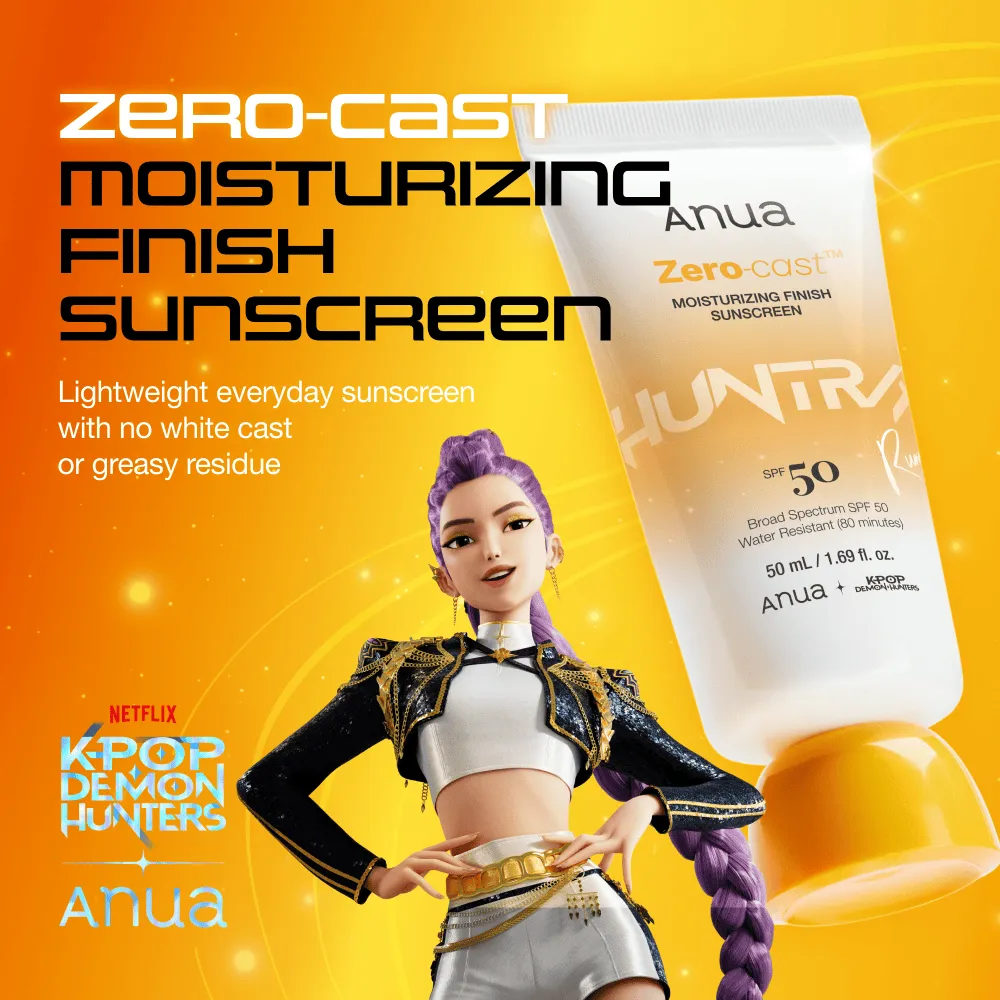
Zero-Cast Moisturizing Sunscreen SPF 50 lists these active UV filters:
- Avobenzone 2.5%
- Homosalate 7.0%
- Octisalate 4.5%
- Octocrylene 5.0%
For sensitive skin, the filter list is only one part of the decision. Texture, eye-area comfort, fragrance load, alcohol feel, and the moisturizer base all affect whether you can use enough product. Drying alcohols and volatile-feeling formulas can be a problem for some reactive users because they may create a hot, tight, or stinging sensation.
The finish also matters. A sunscreen that leaves a chalky cast, pills under foundation, or feels greasy often gets applied too thinly. A zero-cast, moisturizing finish is not just an aesthetic benefit. It supports consistent use.
A sensitive skin sunscreen checklist should include both filter and comfort signals:
| Label signal | Why it matters for sensitive skin |
|---|---|
| Broad-spectrum SPF 50 | Supports higher daily UV protection |
| Named active filters | Helps you identify what is doing the UV work |
| No white cast claim | Makes full-face use easier on more skin tones |
| Low-grease finish | Reduces rubbing, pilling, and over-cleansing later |
| Patch-testable texture | Lets reactive users test before full-face use |
If you buy Anua products outside the official site, check packaging, batch details, and seller reliability. The fake Anua product checklist explains what to verify before using a product on reactive skin.
Which hydrators support the skin barrier under sunscreen?
Low-molecular PDRN improves absorption and revitalizes skin from within.
A sunscreen can be gentle and still feel uncomfortable if the skin barrier is already depleted. This is common in winter, after over-exfoliation, during hormonal dryness, or when rosacea-prone skin is recovering from a flare.
PDRN Hyaluronic Acid 100 Moisturizing Cream is an option for a support step when skin feels dry, dull, or reactive.
This is where routine order matters:
- Cleanse gently, preferably with a low-pH cleanser if your skin feels tight after washing.
- Apply a barrier-support moisturizer when skin feels dry, reactive, or rough.
- Apply sunscreen.
For this routine, the main idea is to keep sunscreen stable and place hydration underneath only when your skin actually needs it.
Does a Korean ampoule calm redness instantly?
Instant calming usually means temporary comfort, while lasting redness improvement depends on barrier repair and inflammation control.
A Korean ampoule can make skin feel cooler, softer, or less tight quickly. That can be valuable, especially when the skin feels overheated. But instant comfort is not the same as a permanent reduction in redness.
The research report notes that lasting redness improvement is more biological than sensory. Ingredients such as Licochalcone A are relevant because they have evidence for reducing facial redness and inflammatory signaling over time, not just for feeling soothing on contact (MDPI, 2026).
If your goal is a calmer morning routine, do not start with an ampoule. Start with the three steps that decide whether the skin gets through the day without more irritation:
- Use a gentle cleanse. A foaming cleanser with glycerin and centella can be reasonable for sensitive skin when it does not leave the face tight or squeaky.
- Add barrier support only if needed. Use a PDRN, hyaluronic acid, glycerin, or panthenol-based moisturizer when the skin feels dry or reactive.
- Finish with sunscreen. Apply SPF as the final step and avoid rubbing aggressively around the eyes and nose.
During a flare, skip nonessential ampoules, exfoliating acids, retinoids, and fragrance-heavy layers. Keep the routine boring until sunscreen no longer stings. Once the skin is steady, introduce one calming product at a time and watch for delayed redness over several days.
When should you simplify a sensitive skin routine?
Simplify your routine when sunscreen stings, redness spreads, or your skin feels worse with each added layer.
The simplest useful routine is cleanser plus sunscreen. If the skin is dry, add one moisturizer between them. During an acute flare, sunscreen should often be the only active morning step because UV exposure can worsen discoloration and visible redness, while extra actives can raise irritation risk.
Simplify immediately if you notice:
- Burning after applying products that normally feel fine
- New redness that lasts beyond the first few minutes
- Eye sting that makes you rub or tear up
- Pilling that causes you to over-rub the skin
- Tightness after cleansing that does not improve with moisturizer
If redness persists beyond eight weeks despite a simple routine, get dermatologist input. Persistent flushing, burning, bumps, or eye-area irritation may need a medical diagnosis rather than another skincare product.
Build a calmer SPF routine
Choose a daily sunscreen first, then add moisturizer only when your skin needs extra barrier support. Shop Anua formulas built for gentle daily layering.
FAQS