PIE vs PIH: Red Marks vs Brown Marks After Acne
Red post-acne marks (PIE) are vascular while brown marks (PIH) are pigment, and they fade with different routines. Learn the press test, realistic timelines, and which gentle actives suit each.
The fastest way to tell red marks from brown marks after acne is to look at color and do a quick press test: pink-to-red marks that briefly fade under pressure are post-inflammatory erythema (PIE), while brown-to-tan marks that stay put are post-inflammatory hyperpigmentation (PIH), and each fades best with a different routine.
What is the difference between PIE and PIH?
PIE and PIH are two separate after-effects of acne: PIE is residual redness from blood vessels near the surface, and PIH is excess pigment left in the skin.
Post-inflammatory erythema is a relatively new dermatology term, introduced to describe the pink-to-red discoloration that lingers after an inflammatory acne lesion. Researchers note that "PIE is distinct from PIH because PIE describes residual erythema, while PIH describes subsequent pigment change," and that both tend to resolve over time, unlike a true scar that persists (PMC). In lighter skin types, post-acne marks often show up as discrete red macules rather than brown spots (PMC).
PIH, by contrast, is "temporary pigmentation that follows injury or inflammatory disorder of the skin," driven by inflammation stimulating melanocytes to make and transfer more melanin (DermNet). It "is mostly observed in darker skin types," where the color tends to be more intense and lasts longer (DermNet).
How can I tell red marks from brown marks at home?
Use color plus a press (blanch) test: pink, red, or purple marks that briefly lighten when you press them are usually PIE, while brown, tan, or grey marks that stay dark are usually PIH.
Because PIE comes from blood vessels, gentle pressure on the spot pushes blood out of the capillaries and the mark momentarily pales, then refills. PIH sits in the melanin layer, so pressing does not change its color. Dermatology references describe PIE as flat, discolored spots that "may look pink or red" on fair skin and "violet or purple" on darker skin, whereas PIH "causes brown, grey, or dark marks" (WebMD). Skin tone tendencies help too: post-inflammatory erythema "tends to happen more often in fair skin, while hyperpigmentation happens more in darker skin" (WebMD).
| Feature | PIE (red marks) | PIH (brown marks) |
|---|---|---|
| Typical color | Pink, red, purple | Brown, tan, grey |
| Underlying cause | Vascular (blood vessels) | Melanin (pigment) |
| Press / blanch test | Briefly pales, then refills | Stays the same color |
| More common in | Fair skin tones | Deeper skin tones |
| Worsened by sun | Indirectly | Yes, UV deepens it |
| Friendly actives | Azelaic acid, niacinamide | Niacinamide, tranexamic acid |
Many people have both at once, so it is normal to treat a mix of red and brown marks across the same face (PMC).
How do I help red marks (PIE) fade?
For red marks, the priority is calming inflammation and avoiding anything that re-irritates fragile, healing skin, since PIE is a vascular wound-healing response.
PIE follows the skin's wound-healing process, and the skin "is usually thinner as it heals," which can make the redness look worse (WebMD). The practical takeaway is to be gentle: skip aggressive scrubs and over-exfoliation, support the barrier, and lean on soothing, anti-redness ingredients. Azelaic acid is a useful fit here because it has anti-inflammatory action alongside its effect on pigment. In a randomized, double-blind, placebo-controlled trial of acne-related marks, a 15% azelaic acid group "showed significant reductions in PIE, PIH, hemoglobin, and melanin levels after 12 weeks," with greater quality-of-life improvement than placebo (PMC).
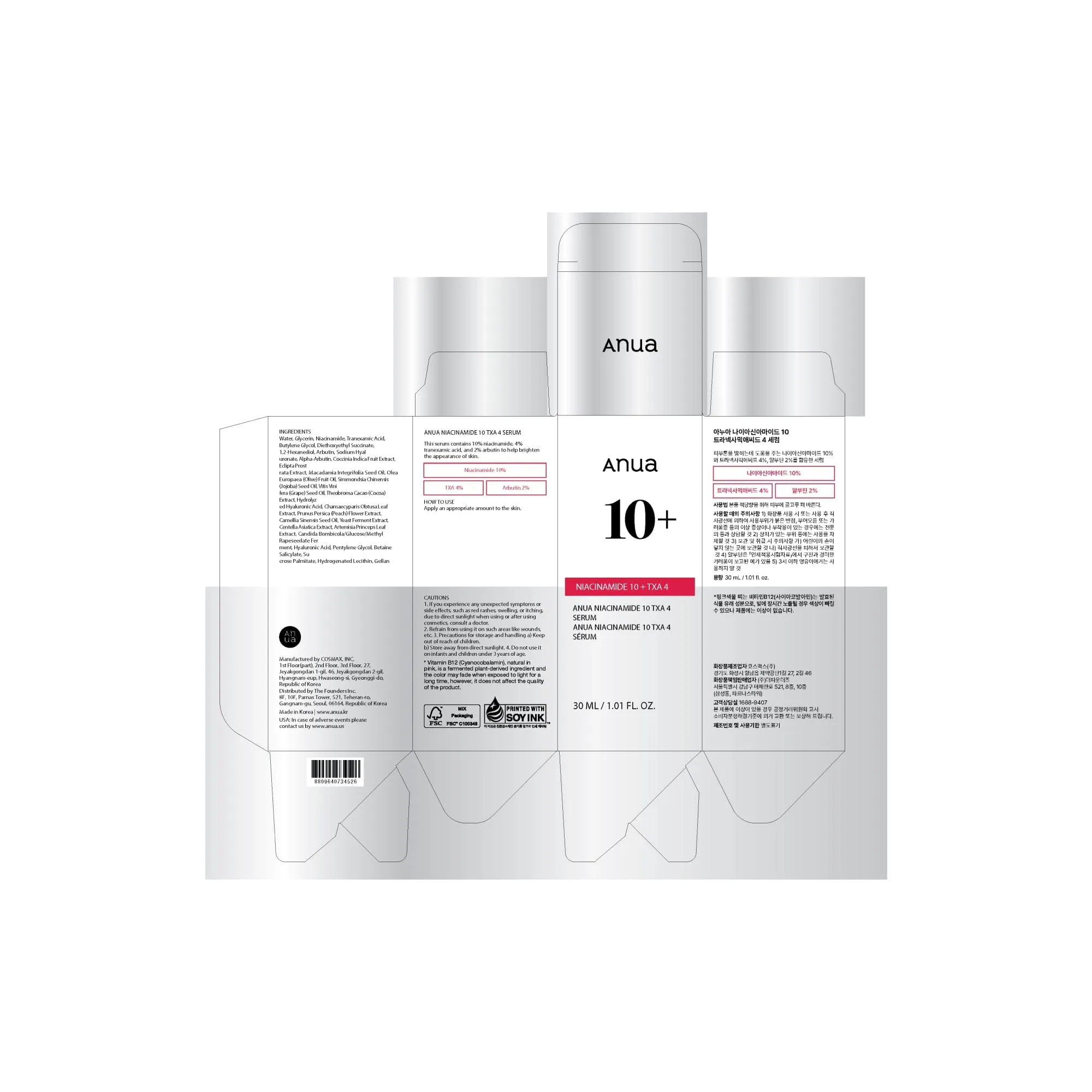
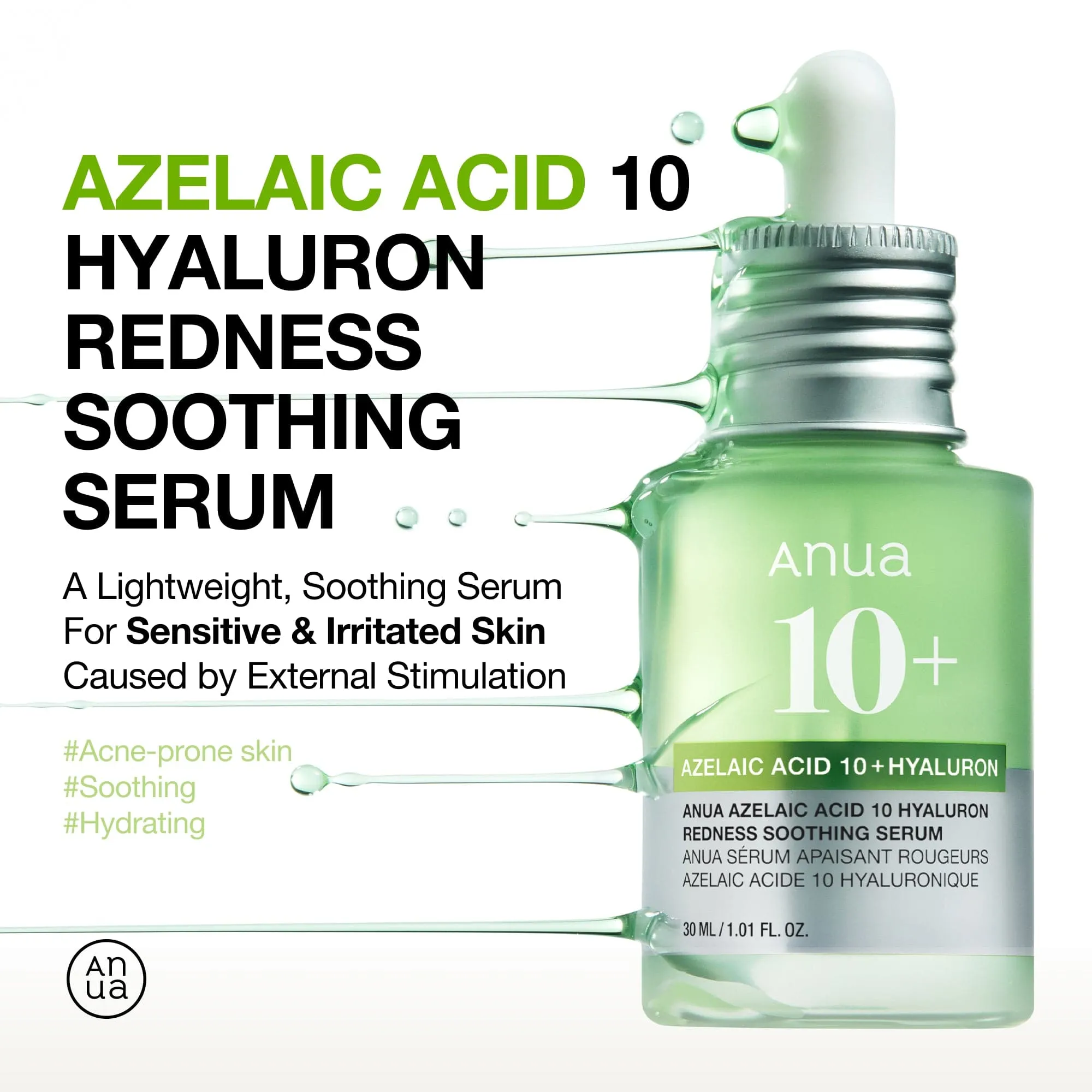
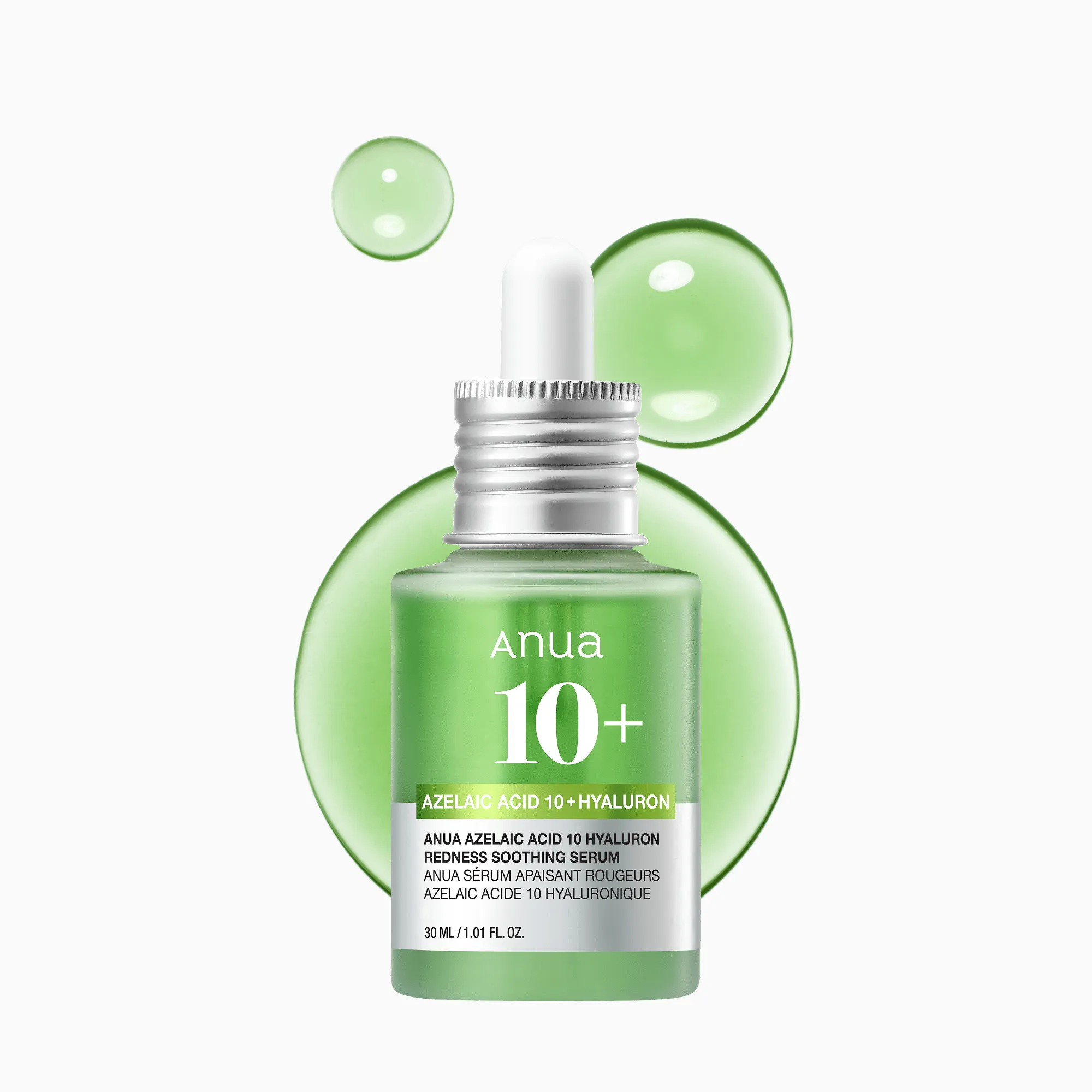
Azelaic Acid 10 Hyaluron Redness Soothing Serum
A 10% azelaic acid serum with hyaluron to soothe the look of redness and support troubled, marked areas with a gentle, barrier-friendly feel.
Introduce one active at a time, every other day at first, and pause if stinging or redness flares. If redness is widespread, persistent, or comes with visible broken capillaries, see a dermatologist, since in-office options such as vascular (pulsed dye) lasers target the blood vessels behind PIE directly (PMC).
How do I fade brown marks (PIH)?
For brown marks, the strategy is to slow melanin production, support gentle cell turnover, and protect from UV every single day, because sun exposure deepens PIH.
DermNet is explicit that hyperpigmented patches "may become darker if exposed to sunlight," and that for marks on exposed skin, daily SPF 50+ broad-spectrum sunscreen "is important to minimise darkening caused by UVR" (DermNet). Tranexamic acid is well suited to brown marks: it reduces UV-induced plasmin activation and tyrosinase signaling that drive pigment, and in one randomized controlled trial, oral TXA "produced a 49% mMASI reduction versus 18% in controls at 3 months" (PMC). Niacinamide complements it by helping limit the transfer of pigment to surface skin cells and is among the topical agents DermNet lists for PIH (DermNet).
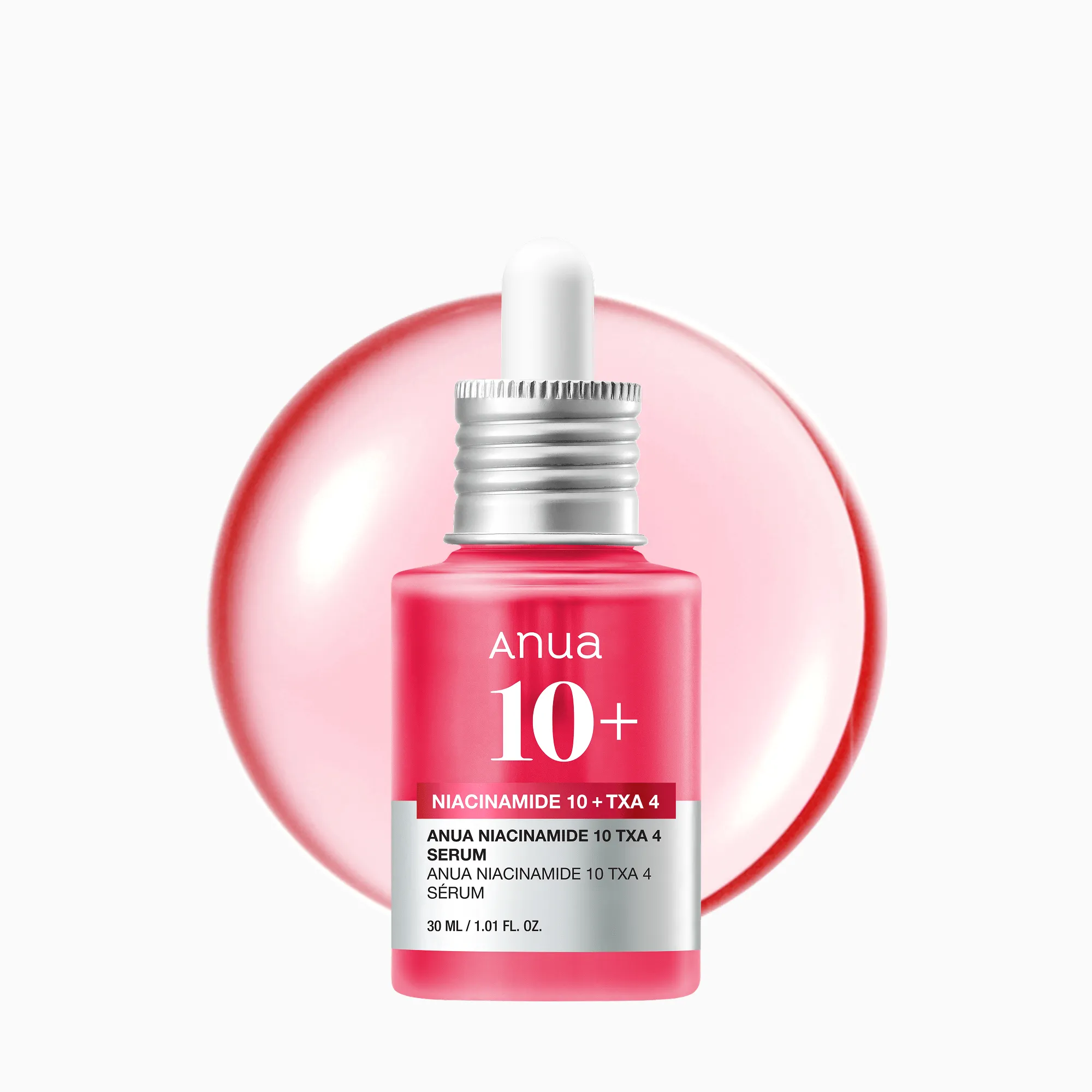
Niacinamide 10 TXA 4 Serum for Brightening and Dark Spots
A 10% niacinamide plus 4% tranexamic acid serum aimed at the look of brown post-acne marks and overall brightness, paired with daily sunscreen.
Why do my dark spots look darker after exfoliating?
Over-exfoliating can make brown marks look temporarily darker because the irritation it causes is itself a fresh inflammatory trigger for more melanin.
PIH "follows damage to the epidermis and/or dermis," and physical treatments like aggressive peels or lasers "may also aggravate it by injuring the epidermis" (DermNet). In other words, the very thing meant to speed fading can backfire if it inflames the skin. This is why the azelaic acid acne trial above paired its active with "enhanced moisturizing and sun protection" and short pauses when irritation appeared (PMC). Go slow, keep the barrier intact, and let consistency do the work.
What does a simple PIE and PIH routine look like?
A gentle, sun-smart routine that pairs a soothing morning step with a brightening evening step covers both red and brown marks without overloading the skin.
- Cleanse with a mild, non-stripping cleanser morning and night.
- In the morning, apply a soothing serum to red-mark areas, then a moisturizer.
- Finish every morning with broad-spectrum SPF 50+ and reapply through the day, since UV deepens PIH (DermNet).
- In the evening, apply a niacinamide plus tranexamic acid serum to brown marks, starting every other day.
- Layer a barrier-supporting moisturizer, and pause any active for a few days if stinging or redness appears.
- Give it 8 to 12 weeks of consistent use before judging results, and see a dermatologist for stubborn or spreading marks.
Match the serum to your mark
Reach for azelaic acid on red, troubled areas and niacinamide with tranexamic acid on brown spots, all kept gentle and sun-protected.
FAQS