Korean Skincare for Sensitive, Redness-Prone Skin
Sensitive skin needs barrier-first care: pair hydrating redness support with SPF 50 protection that avoids white cast and greasy residue.
Understanding Sensitive Skin and Redness
Sensitive skin is tied to impaired barrier function, higher water loss, lower lipid levels and a heightened nerve response.
Sensitive skin is not just a preference for gentle textures. A peer-reviewed review describes sensitive skin as having impaired epidermal barrier function, increased transepidermal water loss and lower levels of essential ceramides and lipids (PMC, 2019). That combination helps explain why redness, stinging, tightness and itching can appear even when a product seems mild to someone else.
The same review found that approximately 60 to 70 percent of women and 50 to 60 percent of men reported some degree of skin sensitivity (PMC, 2019). For skincare decisions, the practical lesson is clear: redness-prone skin usually needs fewer irritant opportunities, stronger hydration support and daily protection from environmental stress.
A barrier-first routine for redness should focus on three jobs:
- Reduce visible flushing and discomfort without stacking too many actives.
- Restore water balance with humectants that help offset moisture loss.
- Protect the skin every morning with sunscreen that does not feel heavy or greasy.
Why Facial Skin is More Prone to Redness
Facial skin becomes red more easily because it has a thinner barrier and more nerve endings than many body areas.
Research indicates the face has a thinner skin barrier and a higher density of nerve endings than other parts of the body (PMC).
That anatomy matters when choosing Korean skincare for redness. A product that feels acceptable on other parts of the body may still cause discomfort on the face. For redness-prone skin, the face should be treated as a highly reactive zone, requiring careful product selection.
Why does Korean skincare focus on sensitive skin?
Sensitive skin is widely reported across South Korea and nearby Asian markets, with high rates of self-identified sensitivity.
The 2019 review reports that 89.4 percent of the South Korean population identified as having sensitive skin in 2013 (PMC, 2019). It also reported high sensitivity self-identification in nearby markets, including 90 percent of Japanese consumers in 2011 and 23 percent of Chinese consumers in 2009 (PMC, 2019).
Those differences also show why sensitive skin is subjective. The South Korean data highlights a context where many users identify as having sensitive skin.
For those managing reactive skin, specialized selections can help address specific barrier and hydration concerns.
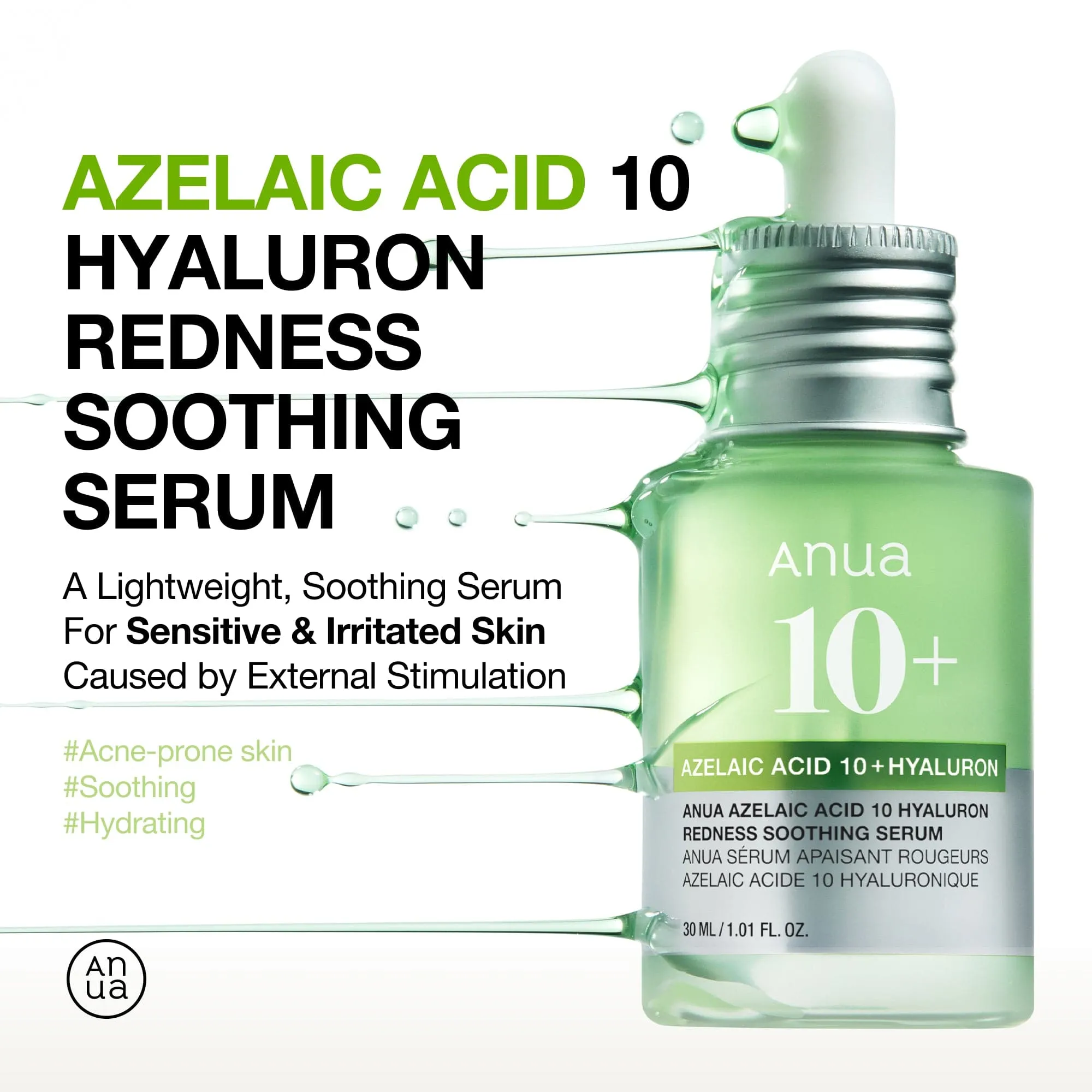
Which treatment helps calm redness without a heavy feel?
Redness-prone skin often benefits from a lightweight treatment that pairs calming support with humectant hydration.
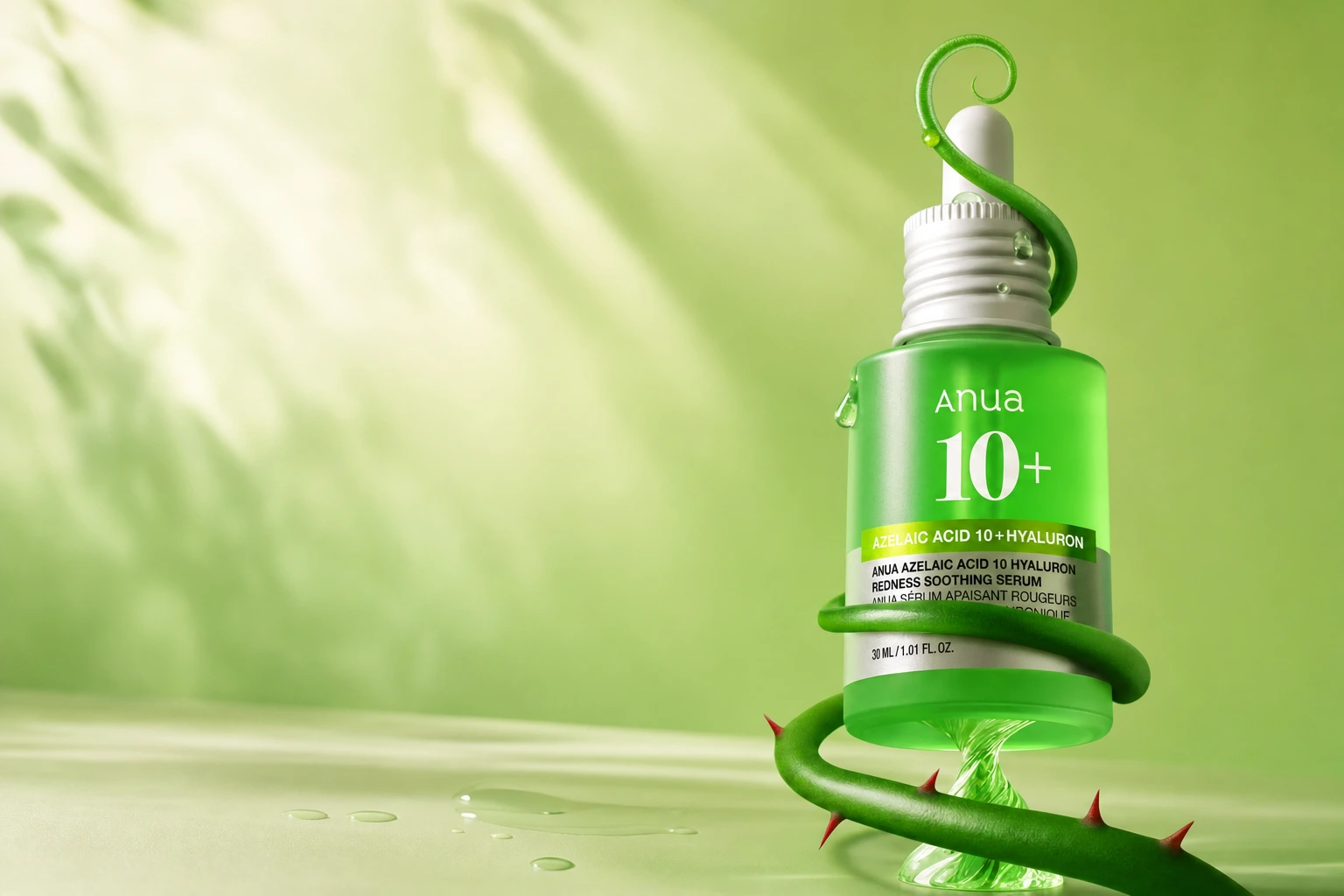
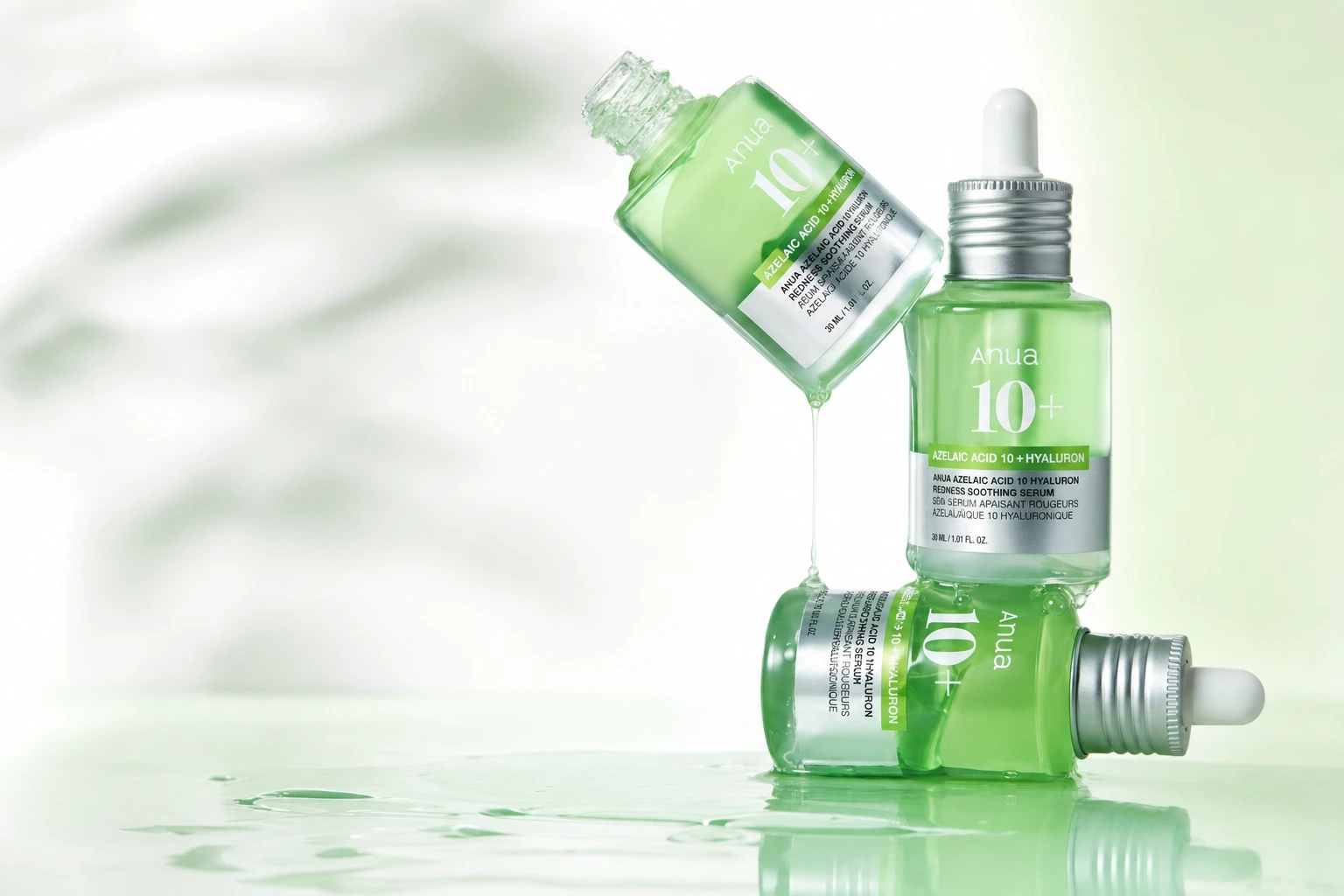
For active redness support, Azelaic Acid 10 Hyaluron Redness Soothing Serum is the targeted Anua pick. It is formulated as a lightweight serum for sensitive skin and troubled areas, and Anua lists a 10-ingredient hyaluronic acid complex as part of the formula.
Azelaic acid and a hyaluronic acid complex are included in the formula to support redness-prone skin. That pairing is useful for sensitive skin because redness care should not rely only on exfoliation or drying actives.
What sunscreen works for redness-prone sensitive skin?
Daily SPF is a standard part of a routine for sensitive skin types to provide broad-spectrum protection.
For morning protection, Zero-cast Moisturizing Finish Sunscreen is the Anua sunscreen fit for redness-prone sensitive skin. It provides broad-spectrum SPF 50 coverage, costs and is formulated to leave no white cast or greasy residue.
Consistent protection is easier when a sunscreen is comfortable to wear daily. Zero-cast Moisturizing Finish Sunscreen addresses common user concerns by focusing on a moisturizing finish without a visible cast or greasy residue.
How should you build a simple morning and evening routine?
A simple routine for redness-prone sensitive skin should treat visible redness, preserve hydration and protect with SPF every morning.
- Cleanse gently in the morning. Use a non-stripping cleanser and avoid hot water, washcloth friction and repeated cleansing.
- Apply redness support. Apply Azelaic Acid 10 Hyaluron Redness Soothing Serum to clean skin, then pause if you feel persistent stinging.
- Protect with SPF. Apply a generous layer of Zero-cast Moisturizing Finish Sunscreen as the final morning step.
- Remove sunscreen at night. If your sunscreen or makeup is hard to rinse away, use the oil cleanser for sunscreen removal and double cleansing guide to reduce rubbing.
- Repeat treatment only if comfortable. Reapply Azelaic Acid 10 Hyaluron Redness Soothing Serum in the evening if your skin tolerated morning use.
This routine is intentionally short. Sensitive skin often reacts not because one product is unsuitable, but because too many steps add more fragrance exposure, surfactant contact, friction or active ingredients than the barrier can handle at once.
How do you choose between serum, sunscreen and a richer cream?
Choose the serum for active redness support, the sunscreen for daily shielding and a richer cream when dryness feels persistent.
A serum and sunscreen can form the core of a redness-focused Korean skincare routine, but they do different jobs. The serum is the treatment step. The sunscreen is the daytime protection step. A richer cream may still be helpful if your skin feels dry, flaky or tight after those two steps, especially because sensitive skin can show lower levels of ceramides and lipids (PMC, 2019).
| Routine need | Best fit | Why it matters for redness-prone skin |
|---|---|---|
| Active redness support | Azelaic Acid 10 Hyaluron Redness Soothing Serum | Lightweight treatment format with hydrating and soothing ingredients |
| Daily UV protection | Zero-cast Moisturizing Finish Sunscreen | Broad-spectrum SPF 50 with no white cast or greasy residue |
| Persistent dryness or tightness | Barrier-supporting moisturizer | Helps when lightweight hydration is not enough for lipid-deficient skin |
The simplest decision rule is to change one variable at a time. Add Azelaic Acid 10 Hyaluron Redness Soothing Serum first if redness and troubled areas are the main concern. Prioritize Zero-cast Moisturizing Finish Sunscreen first if your routine lacks daily SPF or if previous sunscreens felt too heavy.
Build a calmer daily routine
Shop Anua formulas for sensitive-looking redness, hydration support and comfortable SPF. Start with the two steps your skin will use consistently: a lightweight serum and daily sunscreen.
FAQS