Sunscreen for Rosacea-Prone Sensitive Skin
A moisturizing zero-cast SPF 50 helps rosacea-prone sensitive skin keep daily UV protection simple, especially after redness actives.
Key takeaways
- Rosacea-prone sensitive skin needs daily broad-spectrum SPF, low-sting layering, and a finish comfortable enough for consistent wear.
- Azelaic acid is better aligned with rosacea redness, while tranexamic acid fits discoloration routines.
- A sunscreen with a clear finish can help simplify daily routines for reactive skin.
Why does daily sunscreen matter for rosacea-prone sensitive skin?
Daily sunscreen is essential for rosacea-prone sensitive skin to maintain a consistent routine.
For many sensitive-skin users, the hardest sunscreen is not the one with the highest SPF on paper. It is the one that feels chalky, pills under makeup, leaves a pale cast, or requires rubbing. That is why finish matters. Skin experts cited by Byrdie note that zero white cast is a major factor in whether people apply sunscreen consistently (Byrdie).
A good daily SPF for redness-prone skin should:
- Provide reliable UV protection
- Avoid a heavy or chalky finish that encourages skipped use
- Add enough moisture that combo-dry skin does not need too many layers
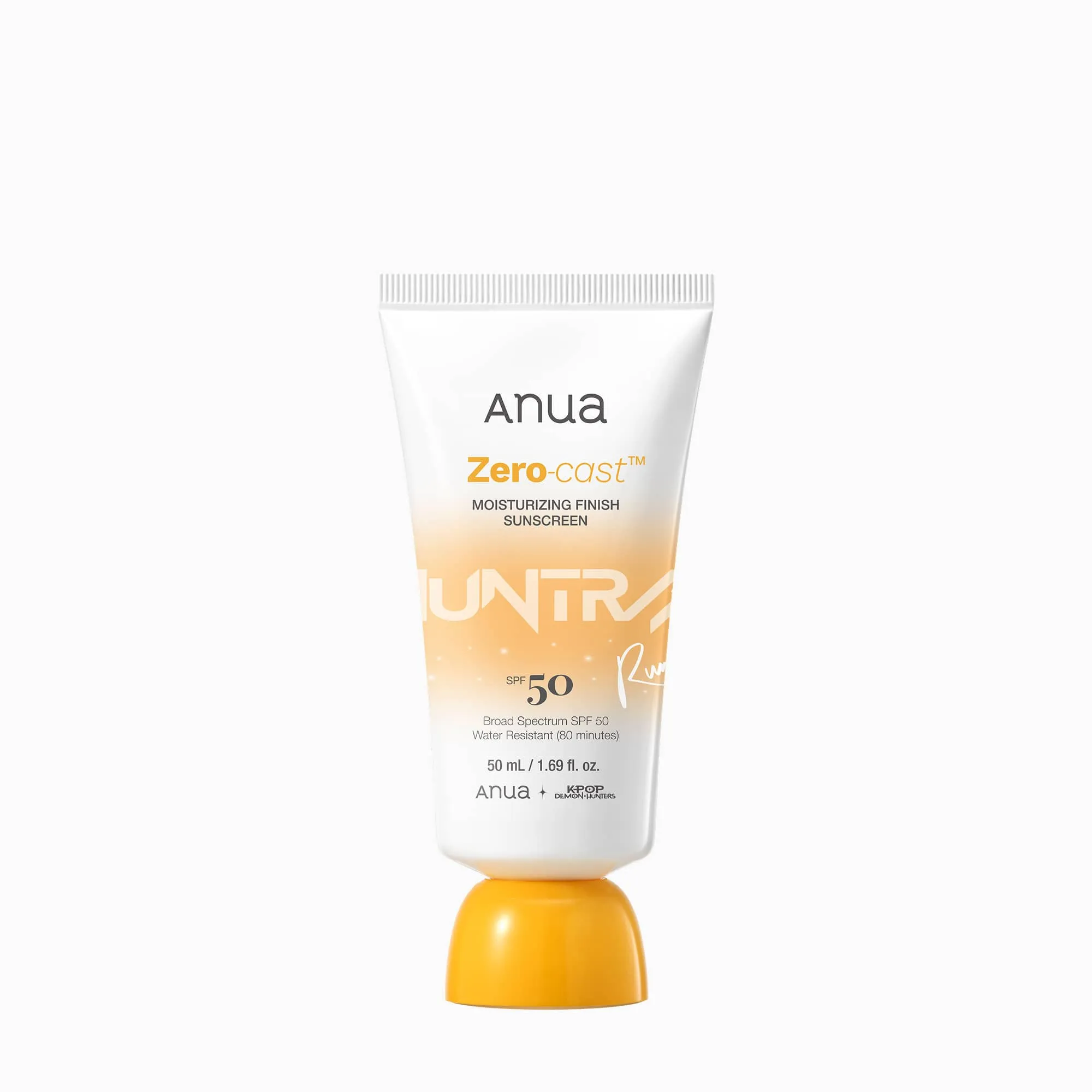
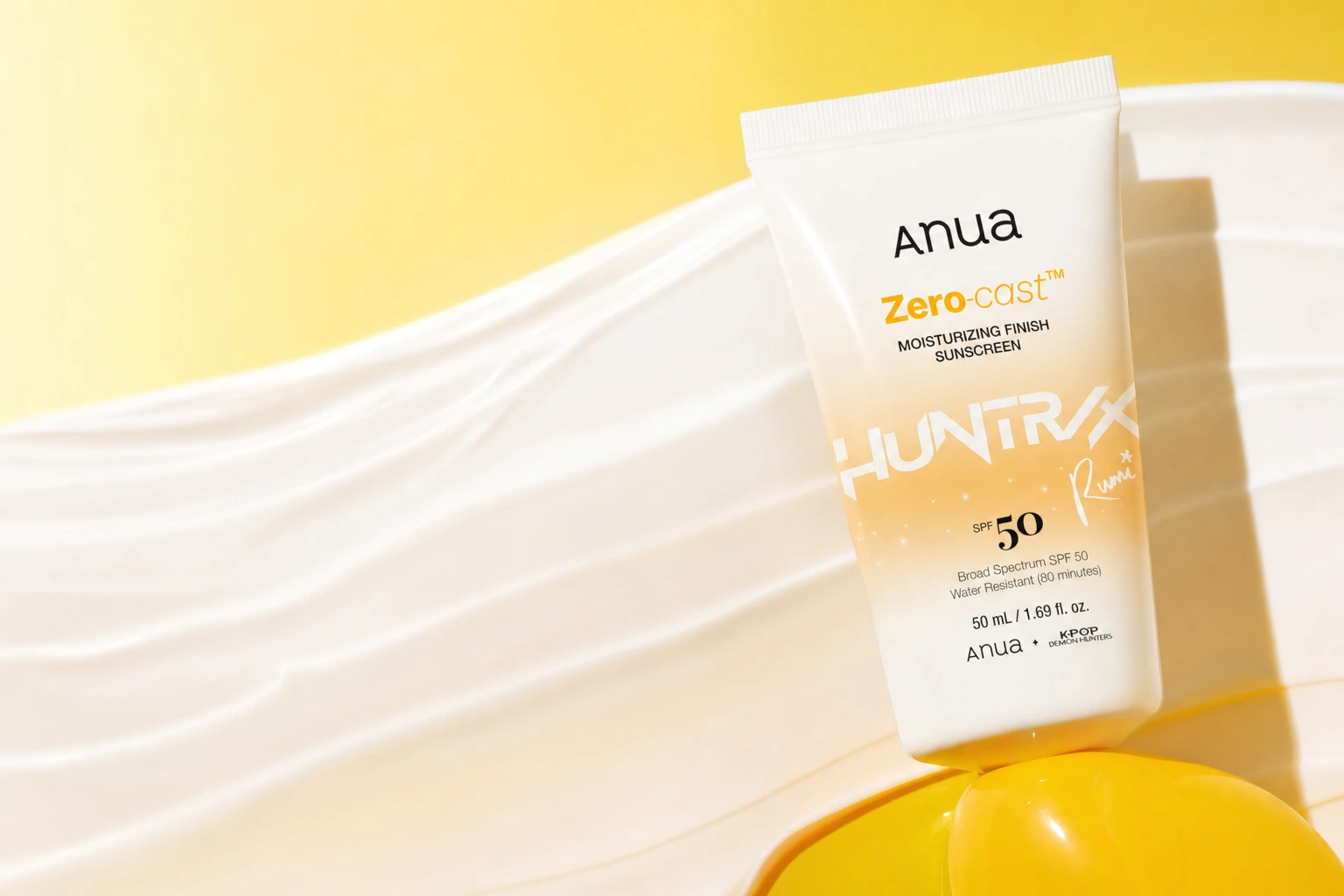
Zero-Cast Moisturizing Sunscreen SPF 50
A moisturizing broad-spectrum SPF 50 with active filters Avobenzone 2.5%, Homosalate 7.0%, Octisalate 4.5%, and Octocrylene 5.0%.
The key point for rosacea-prone skin is consistency. A sunscreen that looks invisible, feels moisturizing, and layers without extra friction is more likely to become a true daily step.
Which sunscreen ingredients are best for sensitive skin?
Sensitive skin usually does best with broad-spectrum filters plus soothing support ingredients, not SPF alone.
Mineral filters such as zinc oxide have long been recommended for rosacea-prone skin because they are often well tolerated and can feel less reactive for some users. EltaMD UV Clear Broad-Spectrum SPF 46 is frequently named for rosacea because it combines zinc oxide with 5% high-purity niacinamide (Prevention).
Chemical-filter sunscreens can still be a good fit when the formula is comfortable, moisturizing, and easy to wear. The practical tradeoff is simple: mineral sunscreens may be preferred by very reactive users, while newer clear-finish chemical sunscreens often win on daily wearability and reduced white cast.
Zero-Cast Moisturizing Sunscreen SPF 50 uses Avobenzone 2.5%, Homosalate 7.0%, Octisalate 4.5%, and Octocrylene 5.0% as active UV filters. It also includes water as a listed inactive ingredient and is positioned as a moisturizing SPF 50 with no white cast.
For sensitive skin, ingredient choice is only one part of the decision. The full formula, finish, rubbing required, fragrance tolerance, and what sits underneath the sunscreen all affect whether the skin stays calm.
What is the best sunscreen choice for rosacea-prone skin in 2026?
The best sunscreen for rosacea-prone skin is the one that protects daily without stinging, chalkiness, or extra rubbing.
Some dermatology-focused recommendations highlight formulas with zinc oxide and calming support ingredients. EltaMD UV Clear Broad-Spectrum SPF 46 remains a common rosacea recommendation because it contains 5% high-purity niacinamide and zinc oxide (Prevention).
For shoppers seeking a comfortable feel, formulas with a clear finish can help maintain a consistent routine.
| Sunscreen decision point | Why it matters for rosacea-prone skin | What to look for |
|---|---|---|
| Finish | Chalky residue can discourage daily use | Clear or zero-cast finish |
| Texture | Heavy layers can feel warm or occlusive | Lightweight moisturizing feel |
| UV protection | Redness-prone skin needs protection | UV protection |
| Layering | Complex routines can increase sensitivity | Low-friction application |
| Price | Daily sunscreen must be replaced regularly | A price you can repurchase consistently |
The Zero-Cast Moisturizing Sunscreen SPF 50 provides the protective step in a calmer routine, especially for people who already use redness or discoloration actives and want fewer reasons to skip SPF.
How should you remove sunscreen without stripping a compromised barrier?
A compromised barrier usually needs a gentle non-foaming gel or creamy cleanser, especially after a full day of sunscreen.
For those with a compromised barrier, experts cited by Byrdie recommend non-foaming creamy or gel-based cleansers to avoid stripping essential lipids (Byrdie).
A simple evening cleanse should remove products without chasing a squeaky-clean feel. For many sensitive-skin routines, that means:
- Focusing on gentle application to minimize friction
- Removing products effectively without over-cleansing until the skin feels tight
- Prioritizing barrier comfort throughout the cleansing process
- Avoiding adding exfoliating acids on nights when the skin already looks flushed
How do azelaic acid and tranexamic acid change your sunscreen routine?
Azelaic acid targets rosacea-type redness, while tranexamic acid fits discoloration, but both make sunscreen non-negotiable.
Azelaic acid is the more direct active for rosacea-related redness because it has anti-inflammatory and anti-bacterial properties. A 20% azelaic acid cream is a clinical benchmark for skin clarity in comparative research (Cochrane Library). Tranexamic acid is often used for concerns like post-inflammatory hyperpigmentation (City Skin Clinic, 2024).
| Active | Best fit | Irritation watchout | Morning layering need | Why sunscreen still matters |
|---|---|---|---|---|
| Azelaic acid | Redness and rosacea-type inflammation | Introduce slowly to monitor tolerance | Consistent routine helps maintain skin comfort | Sunscreen helps protect skin clarity progress |
| Tranexamic acid | Post-inflammatory hyperpigmentation and dark spots | Usually used for tone concerns, but sensitivity varies | Needs consistent SPF to protect visible tone progress | Dark spots are harder to manage without daily UV protection |
| Both together | Only when skin already tolerates each active | Monitor for potential sensitivity | Keep the morning routine short | Sunscreen protects the whole routine from avoidable UV stress |
A rosacea-prone morning routine should not feel like a stack of treatments. If azelaic acid is already the treatment step, Zero-Cast Moisturizing Sunscreen SPF 50 can serve as the final moisturizing SPF step rather than adding another heavy layer.
What daytime routine works for combo-dry, redness-prone skin?
Combo-dry, redness-prone skin often does best with a short routine: gentle cleanse, targeted treatment, light hydration, then SPF.
The goal is to reduce friction. Every additional layer creates another chance for rubbing, pilling, heat, or ingredient conflict. A moisturizing SPF is useful because it may reduce the need for a separate heavy cream in the morning, especially on days when the skin feels dry but congestion-prone.
| Step | Product type | Ingredient or product direction | Why it helps |
|---|---|---|---|
| 1. Cleanse | Non-foaming gel or creamy cleanser | Gentle low-lather cleanser | Helps avoid lipid stripping on a compromised barrier |
| 2. Treat | Redness active | Azelaic acid, commonly 10% to 15% in cosmetic routines | Targets redness-prone texture while keeping the routine focused |
| 3. Hydrate | Light calming layer | Cica or humectant-based serum if tolerated | Adds comfort without making SPF slide |
| 4. Protect | Moisturizing zero-cast SPF | Zero-Cast Moisturizing Sunscreen SPF 50 | Provides SPF 50 with a clear finish for daily use |
| 5. Night | Barrier cream | Ceramide-rich moisturizer if dry or tight | Supports recovery after daytime UV and cleansing exposure |
If your skin stings with almost everything, start smaller. Cleanse only when needed in the morning, use one treatment, and finish with sunscreen. Patch test new products on a small area before using them across the face.
How can you choose soothing products without chasing every dupe?
Choose soothing products by function first: barrier comfort, redness support, and sunscreen compatibility matter more than matching a famous cream.
Dupes can be useful when they reveal ingredient patterns, but they can also lead to overcomplicated routines. For example, Tosowoong Cica Snail Cream has been identified as an affordable alternative to Banobagi Milk Thistle Repair Cream with an 86% ingredient match (What's In My Jar, 2025). That does not automatically make it the right product for rosacea-prone skin. It means the formula may share a similar ingredient profile.
For a reactive routine, use dupe research as a filter, then ask practical questions:
- Does the product reduce tightness without heat?
- Does it sit under sunscreen without pilling?
- Does it require rubbing to spread?
- Does it add fragrance, strong actives, or a texture your skin dislikes?
- Can you remove the whole routine at night without a harsh cleanse?
Cica, also known as Centella asiatica, remains a common calming ingredient in Korean skincare for redness-prone routines. The safest way to use it is not to add three cica products at once. Add one calming layer, watch the skin for several days, then decide whether your sunscreen still applies comfortably.
What is a simple morning checklist for sunscreen after azelaic acid?
After azelaic acid, wait for the treatment to settle, apply a comfortable moisturizing SPF, and avoid rubbing the skin repeatedly.
A practical morning routine for rosacea-prone sensitive skin can stay very short:
- Rinse or cleanse gently, depending on how your skin feels that morning.
- Apply azelaic acid only if your skin already tolerates it.
- Add a light moisturizer only if your skin feels dry or tight.
- Apply Zero-Cast Moisturizing Sunscreen SPF 50 as the final skincare step.
- Give the sunscreen time to set before makeup or outdoor exposure.
If the skin burns, flushes, or feels unusually hot after layering, simplify before adding more soothing products. The problem may be too many layers, too much rubbing, or an active that needs slower introduction.
Make daily SPF easier to repeat
A clear, moisturizing SPF 50 can help redness-prone sensitive skin stay consistent without a chalky finish or extra morning weight.
FAQS