Anua Niacinamide Serum Guide for Dark Spots
Anua’s niacinamide and TXA serum targets dark spots and uneven tone, with SPF 50 guidance and cautions for sensitive skin.
Key takeaways
- Anua’s dark spot serum is built for post-acne marks and uneven tone, not for every acne concern.
- Its strongest fit is a routine with gentle cleansing, barrier support, and daily high-level sunscreen.
- Sensitive or fungal-acne-prone users should patch test because the formula is complex and may trigger purging.
What is the Anua Niacinamide 10 TXA 4 Serum?
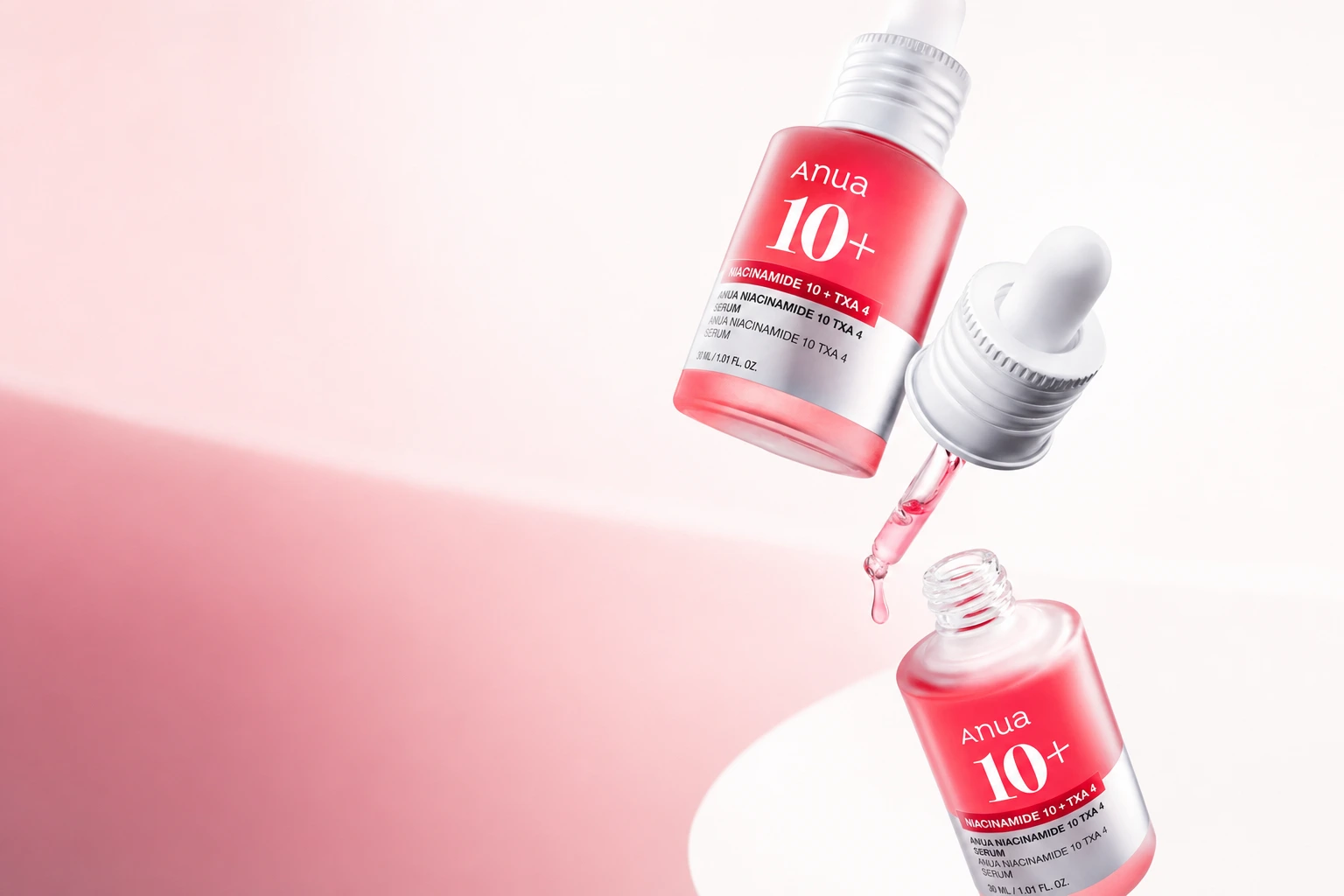
The serum is a prominent choice in Anua’s lineup, focusing on skin tone concerns. Niacinamide 10 TXA 4 Serum for Brightening and Dark Spots is a central part of Anua’s brightening collection.
Product availability also matters for buyers comparing Korean skincare serums. The serum expanded into 470 Boots retail locations in late 2024 and was reported as Anua’s number one bestseller in the United Kingdom (Qogita, 2024).
If you are comparing this serum inside a broader routine, the natural hub is the Anua serums guide, where serum type, texture, and concern fit can be evaluated together.
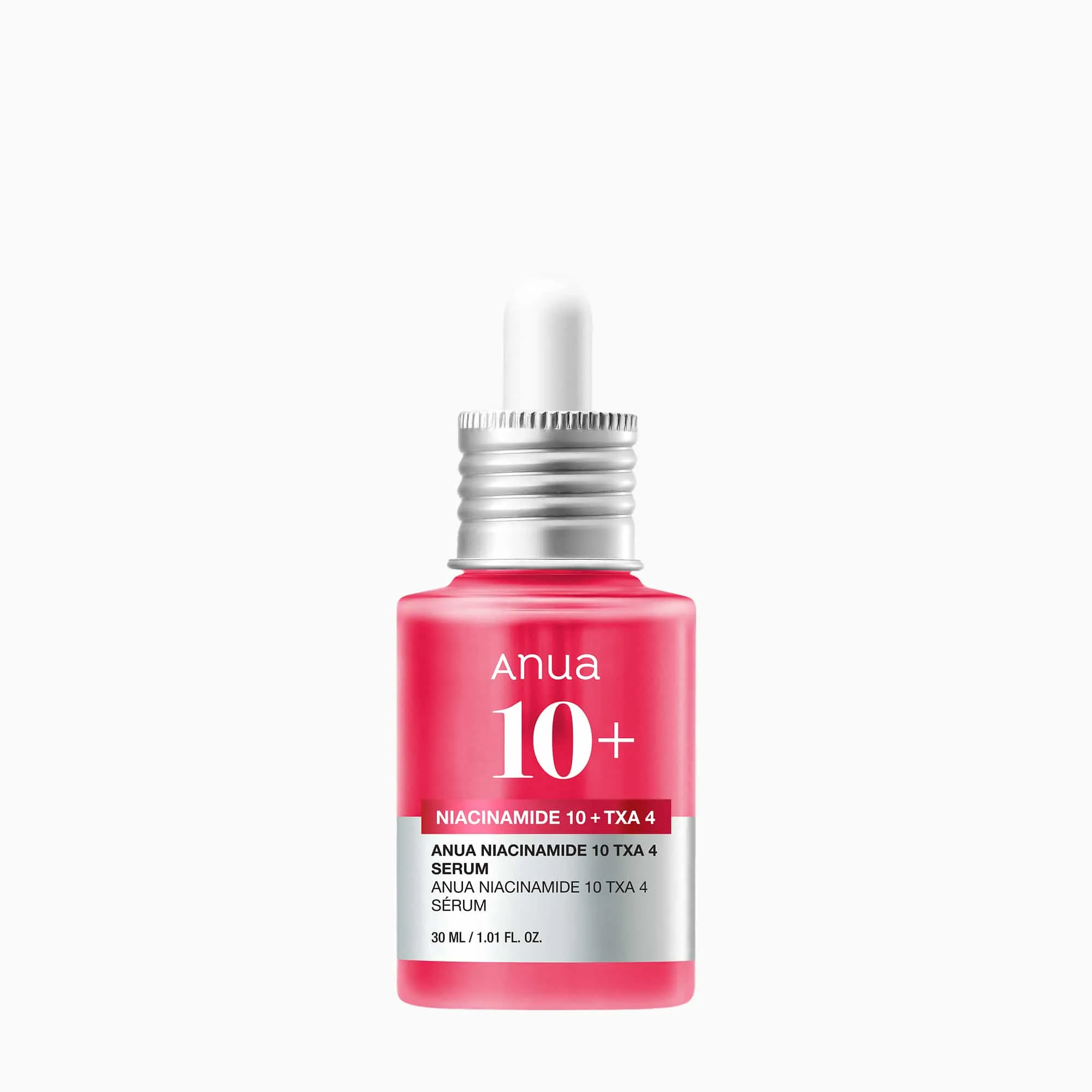
Niacinamide 10 TXA 4 Serum for Brightening and Dark Spots
A serum formulated with niacinamide and TXA, designed to support a balanced skin tone.
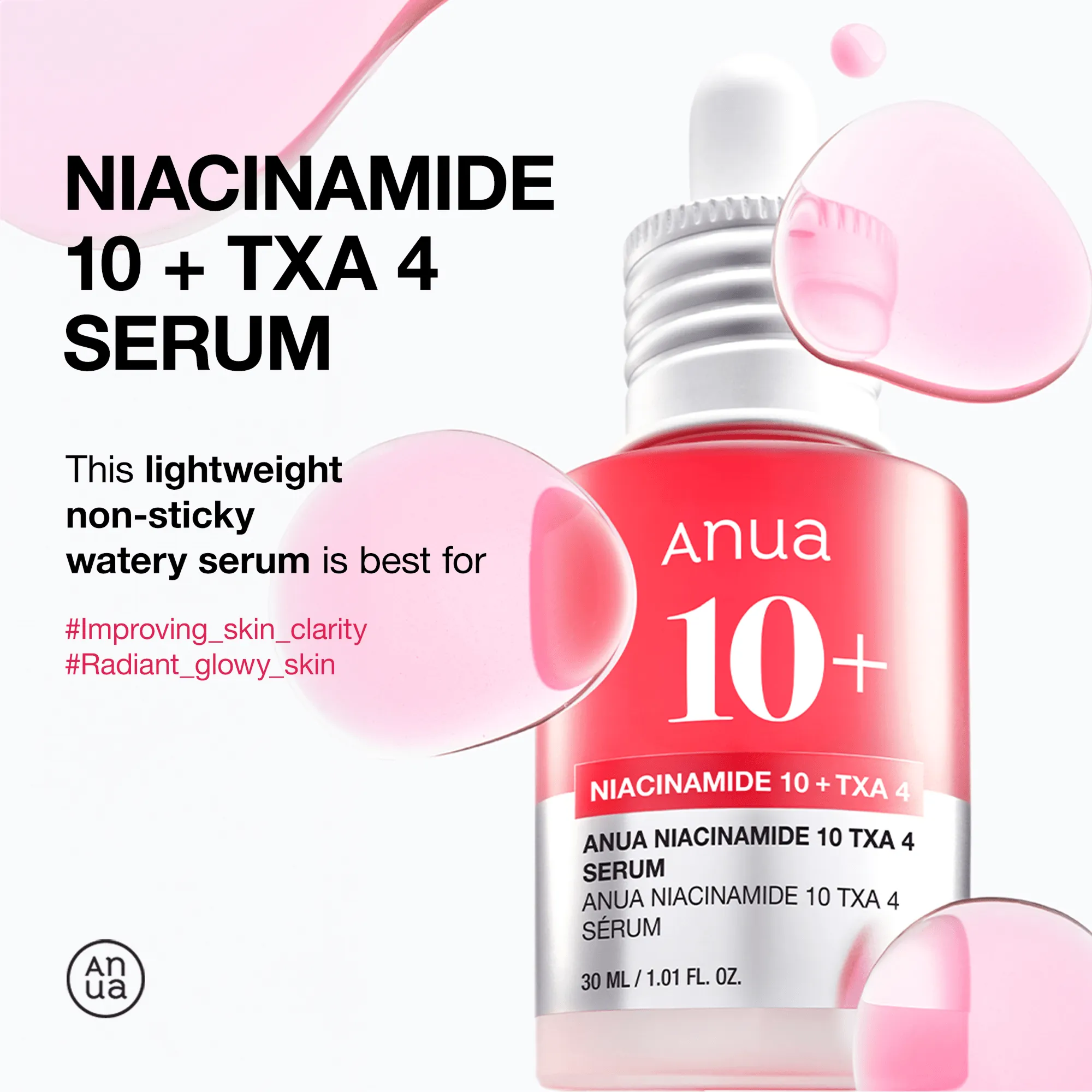
Who is this niacinamide serum best for?
This serum best fits people targeting post-acne marks and uneven tone, rather than users treating active fungal acne.
Choose Niacinamide 10 TXA 4 Serum for Brightening and Dark Spots if your main goal is to fade the look of lingering discoloration after blemishes or other pigmentation concerns. It is especially relevant when a basic niacinamide serum feels too general for dark spots.
It is less ideal as a first active for highly reactive skin, active fungal acne, or routines already packed with exfoliating acids. A third-party ingredient review by Beautybydaz notes that the formula is not considered fungal-acne-safe (Beautybydaz). That does not mean every acne-prone user will react, but it does mean patch testing is more important than it would be with a shorter ingredient list.
A practical match looks like this:
| Buyer goal | Fit with this serum | Why |
|---|---|---|
| Post-acne marks | Strong fit | Niacinamide and TXA target visible uneven tone |
| General oil control | Moderate fit | The formula contains niacinamide, though its primary focus is on skin tone |
| Fungal-acne-safe routine | Weak fit | Ingredient reviews flag the formula as not fungal-acne-safe |
| Severe melasma management | Dermatologist-guided fit | Persistent melasma may need prescription evaluation |
| Sensitive beginner routine | Cautious fit | Start slowly and patch test because of active strength and formula complexity |
If breakouts are your main concern and you are comparing acid-based options, see Azelaic Acid vs Salicylic Acid for Acne-Prone Skin before choosing a pigment serum.
What ingredients make the formula work?
The formula uses multiple ingredients to address skin tone, which suggests a patch test for those with sensitive skin.
Niacinamide is a common component in many brightening products. This is why gradual introduction is helpful for those with sensitive skin.
A multi-ingredient formula can feel cosmetically elegant and hydrating, but it may also create more opportunities for contact sensitivity. If you react easily to new products, patch test behind the ear or along the jawline before applying it across the face.
What evidence supports its dark spot claims?
The serum's approach to brightening relies on a combination of actives, though individual results vary by usage and skin type.
Consistency is key because visible changes in skin tone often take time. A serum may feel lightweight on day one, but progress usually requires steady use as recommended by the manufacturer. The ingredient strategy focuses on niacinamide and other brightening agents, which are widely recognized in skincare for addressing tone concerns. For shoppers evaluating topical options, this profile offers a practical starting point before considering more aggressive treatments.
How should you use it without irritating your skin?
Start 2 to 3 nights weekly, apply 2 to 3 drops after cleansing, then moisturize and use SPF 50 every morning for pigment control.
The official usage guidance recommends starting Niacinamide 10 TXA 4 Serum for Brightening and Dark Spots 2 to 3 times per week before increasing toward morning and evening use if your skin tolerates it (Anua). That slow ramp is especially useful for people who already use retinoids, exfoliating acids, or acne treatments.
- Cleanse with a gentle, pH-balanced cleanser that does not leave skin tight.
- Apply a hydrating toner or essence if your skin feels dry after cleansing.
- Use 2 to 3 drops of the serum on affected areas or across the face.
- Seal with a moisturizer, especially one with barrier-supporting ingredients such as ceramides.
- Apply SPF 50 every morning, even when you use the serum only at night.
Daily sunscreen is not optional for a dark spot routine. A review of the serum’s usage strategy warns that skipping SPF 50 can allow ultraviolet exposure to trigger pigment rebound, which can reduce visible progress (Beautybydaz). If sunscreen stings or worsens redness, the guide to Sunscreen for Rosacea-Prone Sensitive Skin can help you choose a gentler daily option.
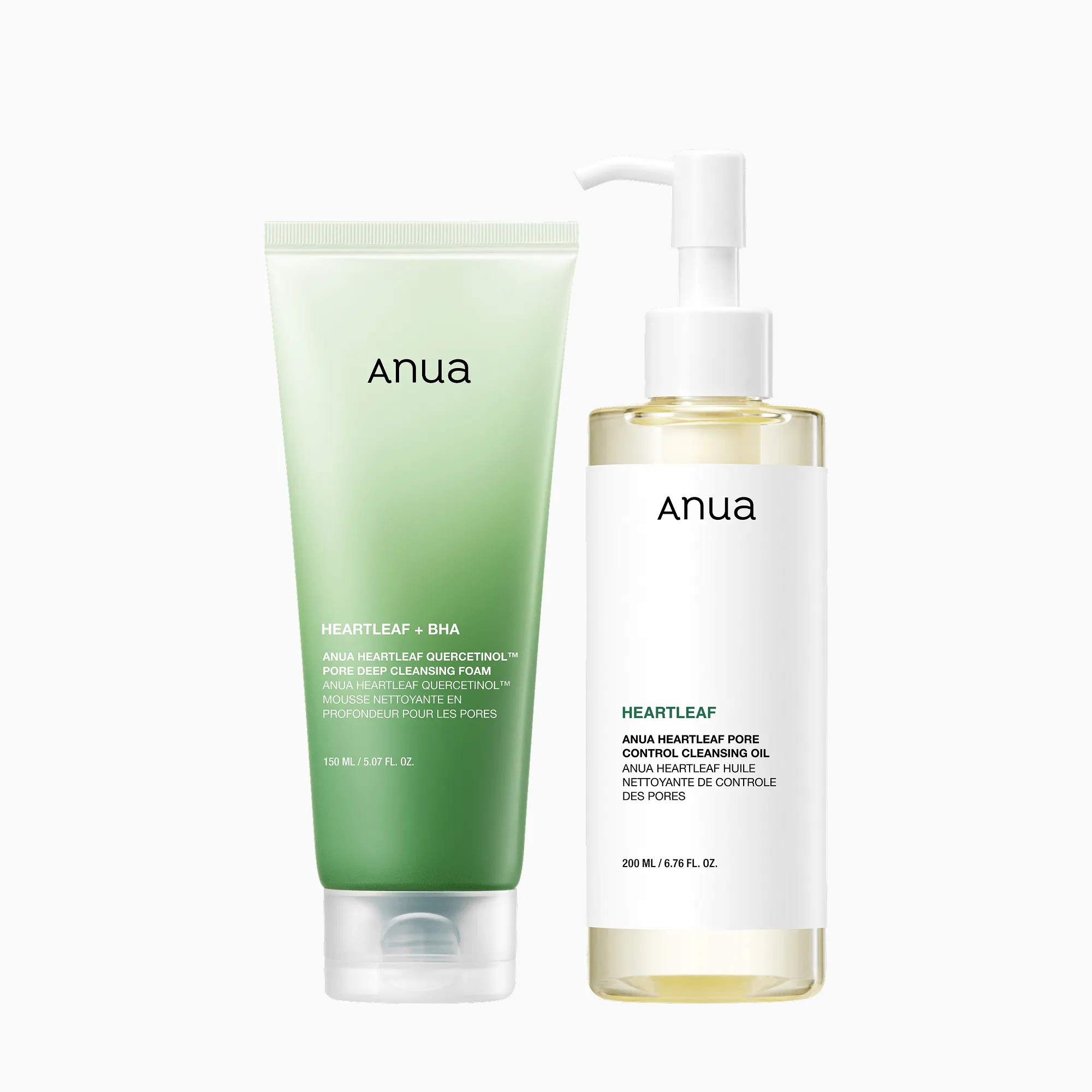
Cleansing also affects tolerance. If you wear water-resistant sunscreen or long-wear makeup, a proper first cleanse can reduce residue without relying on harsh scrubbing. For that step, see Oil Cleanser for Sunscreen Removal and Double Cleansing.
How does it compare with other dark spot options?
Compared with basic niacinamide serums, this option adds TXA and arbutin for stubborn spots while avoiding prescription hydroquinone.
A standard niacinamide serum is usually selected for oil balance, visible pores, texture, and mild uneven tone. Niacinamide 10 TXA 4 Serum for Brightening and Dark Spots is targeted because it combines niacinamide with TXA.
Prescription hydroquinone remains a reference point for severe hyperpigmentation and melasma, but it can be irritating and should be used with medical guidance. Anua’s serum is a cosmetic option for people who want a topical brightening routine before considering prescription treatment.
| Option | Active focus | Best fit | Main caution |
|---|---|---|---|
| Niacinamide 10 TXA 4 Serum for Brightening and Dark Spots | Niacinamide, TXA | Stubborn dark spots and uneven tone | Patch test if sensitive or fungal-acne-prone |
| Basic niacinamide serum | Niacinamide only | Oil balance, texture, mild uneven tone | May feel too general for persistent discoloration |
| Prescription hydroquinone | Hydroquinone | Severe pigment concerns under clinician care | Irritation risk and medical-use limitations |
The most useful comparison is not which ingredient is strongest in isolation. It is whether the product matches your concern, tolerance, sunscreen habits, and willingness to use it consistently for 8 to 12 weeks.
When should you avoid or slow down?
Slow down if stinging, peeling, or breakouts persist, and avoid the formula if fungal-acne safety is your top requirement.
Some tingling can happen when a routine includes stronger actives, but persistent burning, hot redness, peeling, or clusters of new bumps are signs to reduce frequency or pause. The formula contains salicylic acid along with high-strength niacinamide, and reviewers note that this combination may cause initial purging for some users (Beautybydaz).
Use extra caution if your skin barrier is already compromised. That includes skin that feels raw after exfoliation, recent overuse of retinoids, active dermatitis, or a routine with multiple acids. In those cases, introduce only one active at a time and give your skin several weeks before adding another treatment.
Avoid using the serum as a shortcut around sun protection. Pigment routines fail most often when brightening actives are used at night while UV exposure continues unchecked during the day. If you cannot commit to daily sunscreen, wait to start a dark spot serum until that habit is stable.
Build a dark spot routine that protects your results
A brightening routine works best when treatment, moisturizer, and daily sunscreen are treated as one system, not separate steps.
For many users, Niacinamide 10 TXA 4 Serum for Brightening and Dark Spots makes the most sense in a simple routine: gentle cleanser, hydrating layer, serum, moisturizer, and SPF 50. That structure gives the active ingredients a consistent place to work while reducing the chance that dryness or irritation interrupts use.
If your goal is visible tone improvement, track progress with the same lighting every 2 weeks rather than checking daily. Dark spots often look unchanged from one morning to the next, but a dated photo series can show whether marks are softening over an 8-week period.
Shop a routine built around tone care
Choose the serum, then pair it with gentle cleansing, moisturizer, and daily sunscreen so your dark spot routine is easier to keep consistent.
FAQS